How 0.1 Class Clip-On Current Clamps Improve High-Current Energy Audits Without System Shutdown
How 0.1 Class Clip-On Current Clamps Improve High-Current Energy Audits Without System Shutdown
High-current energy audits are becoming increasingly important in factories, commercial buildings, data centers, renewable energy facilities, and power distribution systems. Facility managers and electrical engineers need accurate current data to identify energy waste, evaluate equipment loads, verify power distribution performance, and support maintenance decisions.
However, traditional current measurement methods may require conductors to be disconnected, circuits to be modified, or equipment to be shut down before a measurement device can be installed. In facilities where production continuity is critical, even a short interruption can create significant costs.
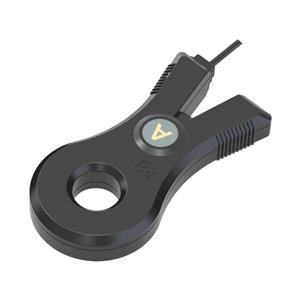
High-accuracy clip-on current clamps provide a practical alternative. Products designed around 0.1 class measurement accuracy can be installed around an existing conductor without disconnecting the circuit. For energy auditing companies, electrical monitoring equipment manufacturers, and procurement teams, this combination of measurement accuracy and non-intrusive installation can improve both operational efficiency and data quality.
1. Why Non-Intrusive Current Measurement Matters in High-Current Energy Audits
Many industrial and commercial facilities operate continuously. Production lines, HVAC systems, server rooms, pumps, motors, switchgear, and other electrical equipment may run around the clock. Shutting down these systems simply to install a current measurement device is often impractical.
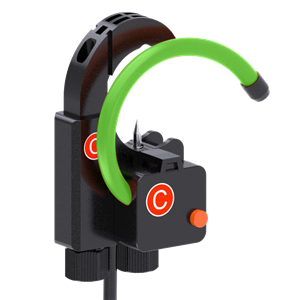
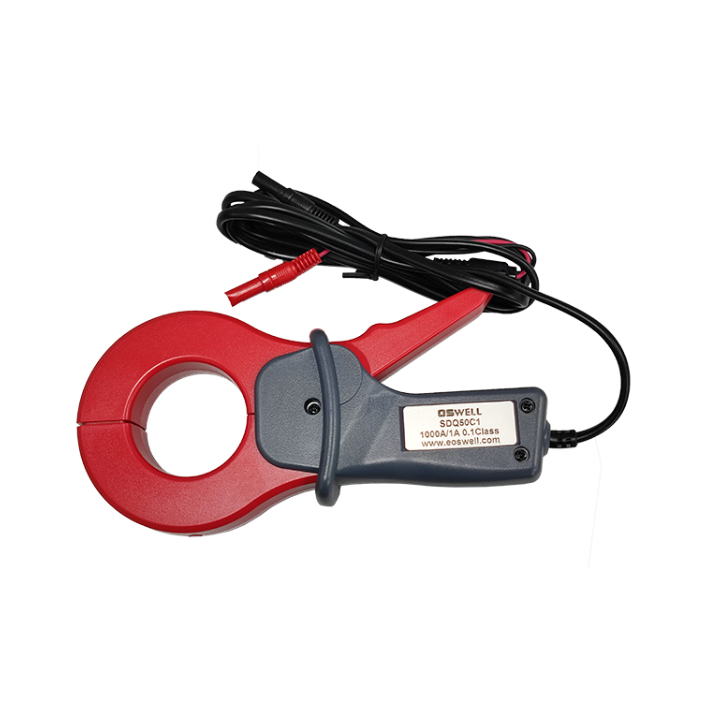
A clip-on current clamp solves this problem by opening around the existing cable or bus conductor and closing after installation. The measurement can therefore be added without cutting the conductor or changing the electrical connection.
This provides several advantages for energy auditing applications:
No need to disconnect the measured conductor
Reduced installation time
Lower risk of disrupting production
Easier temporary measurement
Convenient installation in existing electrical systems
Faster relocation between measurement points
This flexibility is particularly valuable when an audit requires measurements at dozens or even hundreds of locations. Engineers can move the clamp between distribution panels, large motors, transformers, and production equipment without rebuilding the electrical circuit at every measurement point.
For high-current applications, the benefit becomes even more significant. Large conductors and busbars can be difficult to disconnect safely, and shutdown procedures may require coordination between production, maintenance, and safety teams.
A clip-on current clamp designed for high-current measurement can therefore reduce installation complexity while allowing energy audits to be performed during normal operation.
For procurement teams, mechanical design should be evaluated carefully. The clamp opening, internal window size, closing force, locking structure, and cable compatibility all affect how easily the product can be installed in real electrical cabinets.
2. How 0.1 Class Accuracy Improves the Value of Energy Audit Data
Convenient installation alone is not enough for professional energy auditing. The measurement must also provide sufficient accuracy for engineers to trust the collected data.
A 0.1 class current measurement solution is designed for applications where relatively high measurement precision is required. In energy auditing, improved accuracy can help engineers distinguish between normal load variations and meaningful efficiency problems.
Accurate current data can support:
Equipment load analysis
Energy consumption comparison
Phase balance evaluation
Peak demand investigation
Power distribution optimization
Preventive maintenance planning
For example, a small measurement error across one machine may appear unimportant. However, when an energy audit covers many high-power machines operating for thousands of hours each year, inaccurate measurements can distort projected energy savings and influence investment decisions.
High-accuracy measurement is also important when comparing equipment before and after an efficiency improvement project. Engineers need stable data to determine whether motor replacement, process optimization, load balancing, or equipment maintenance has actually reduced electrical demand.
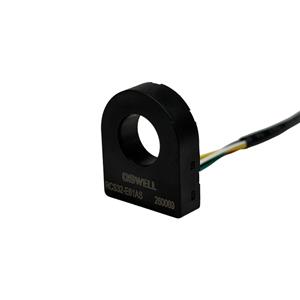
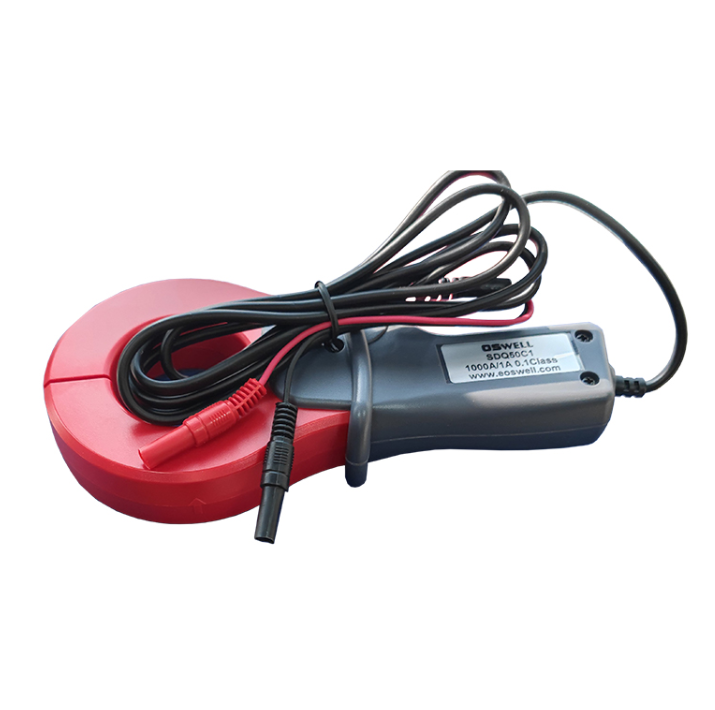
Products such as the OSWELL SDQ50C1 0.1 Class clip-on current clamp can be considered for applications requiring high-current measurement with convenient installation. For example, a 1000A/1A configuration allows large primary currents to be converted into a lower secondary signal suitable for compatible measurement equipment.
However, buyers should evaluate the complete measurement chain rather than only the stated accuracy class of the clamp. Meter accuracy, cable length, secondary burden, installation position, conductor alignment, temperature conditions, and external magnetic fields may all affect total system performance.
For this reason, professional buyers should ask suppliers for application guidance, electrical characteristics, dimensional drawings, and relevant testing information before final product approval.
3. What Procurement Teams Should Evaluate When Sourcing Clip-On Current Clamps
For energy monitoring equipment manufacturers and professional audit companies, selecting a current clamp is not simply a question of maximum current rating. Long-term measurement stability, mechanical durability, repeatability, and supplier consistency can be equally important.
Procurement teams should evaluate:
Accuracy class across the required measurement range
Rated primary and secondary current
Phase error performance
Frequency characteristics
Window size and conductor compatibility
Clamp opening and closing durability
Core alignment after repeated use
Temperature stability
Insulation performance
Batch-to-batch manufacturing consistency
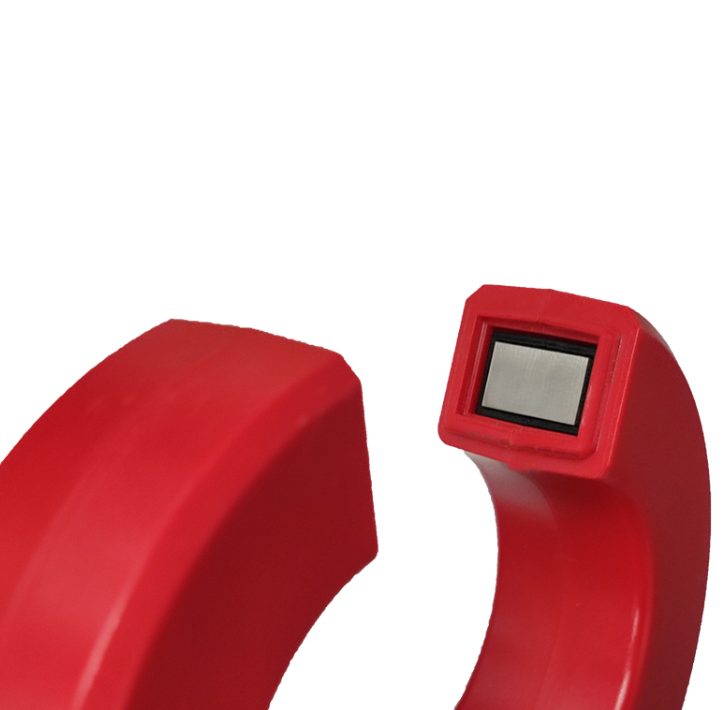
Core alignment deserves particular attention in split or clip-on designs. Because the magnetic core must separate each time the clamp is opened, the two core surfaces must return to a consistent position when closed. Poor mechanical alignment may affect magnetic performance and reduce measurement repeatability.
Mechanical durability is also important for portable audit applications. Current clamps may be opened and closed repeatedly, transported between facilities, and installed in crowded electrical cabinets. A weak hinge, unstable locking mechanism, or poorly controlled core interface can reduce the useful life of the product.
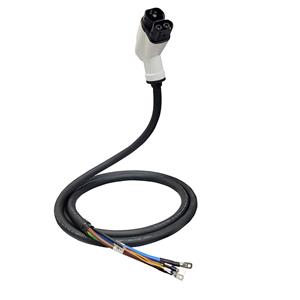
For OEM manufacturers integrating these clamps into energy monitoring systems, supplier customization capability can provide additional value. Different projects may require specific current ratios, cable lengths, connectors, output configurations, enclosure structures, or opening dimensions.
Mass-production consistency should also be considered. A prototype may perform well, but buyers need confidence that future production batches will maintain similar accuracy and mechanical performance. Stable material sourcing, controlled core processing, assembly procedures, and final electrical testing all contribute to reliable production quality.
By evaluating both electrical specifications and supplier manufacturing capability, procurement teams can select clip-on current clamps that provide dependable performance throughout long-term energy monitoring projects.
Conclusion
0.1 class clip-on current clamps provide an effective combination of high measurement accuracy and non-intrusive installation for high-current energy audits. By allowing engineers to measure existing electrical circuits without disconnecting conductors or shutting down equipment, they can reduce installation time, avoid unnecessary production interruptions, and make large-scale auditing more efficient. For procurement teams, the most important factors include accuracy, phase performance, mechanical durability, core alignment, conductor compatibility, temperature stability, and manufacturing consistency. Selecting a reliable clip-on current clamp and an experienced supplier can help energy monitoring professionals obtain more dependable data while reducing the operational cost and disruption associated with high-current measurement.