How 100A DC-Immunity Current Transformers Reduce Calibration Variation in Three-Phase Smart Meter Production
How 100A DC-Immunity Current Transformers Reduce Calibration Variation in Three-Phase Smart Meter Production
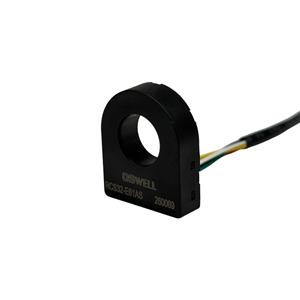
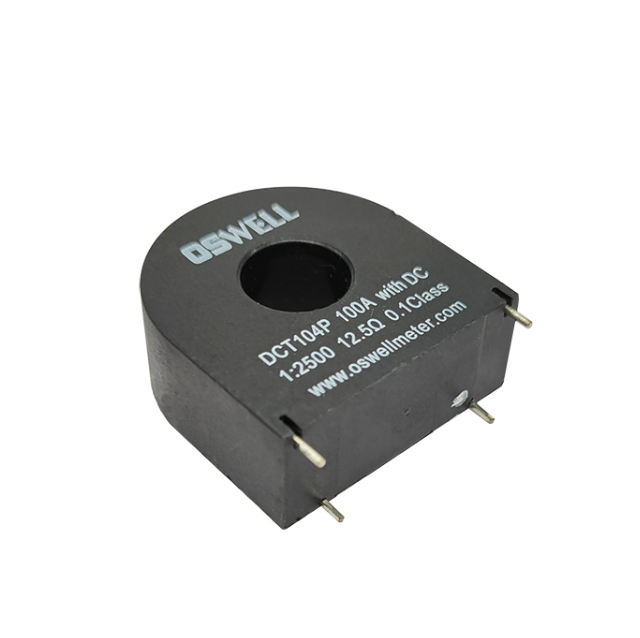
Three-phase smart meter manufacturers need every measurement channel to deliver stable and repeatable accuracy across large production volumes. This becomes more difficult when modern electrical loads introduce DC components, harmonic distortion, phase imbalance, and rapidly changing current conditions. A 100A DC-immunity current transformer is designed to reduce the influence of DC magnetic bias while maintaining predictable ratio and phase performance. For OEM engineering and procurement teams, better CT consistency can reduce calibration variation, improve first-pass yield, and simplify automated production of three-phase smart meters.
1. Why DC Bias and Three-Phase Variation Make Smart Meter Calibration More Difficult
A current transformer normally converts the primary load current into a smaller secondary signal that can be processed by the metering circuit. In a traditional sinusoidal AC environment, this relationship can remain highly stable. Modern electrical systems, however, increasingly contain EV chargers, variable-frequency drives, LED power supplies, inverters, industrial electronics, and other non-linear loads.
These loads may introduce DC components or distorted waveforms into the current being measured. A DC component can shift the magnetic operating point of the CT core, reducing the available magnetic margin and potentially increasing ratio error or phase displacement.
In a three-phase meter, the problem becomes more demanding because three current channels must be calibrated together. If each CT responds slightly differently to DC bias, temperature, or load level, the production line may require different correction values for each phase and each meter.
Differences in magnetic core characteristics
DC bias sensitivity
Variation in winding turns and positioning
Phase error differences between CTs
Temperature-dependent magnetic behavior
Inconsistent secondary burden conditions
A well-designed DC-immunity CT helps reduce these variables by maintaining more stable magnetic behavior when unwanted DC components are present. For smart meter manufacturers, this can make calibration values more predictable and reduce the amount of adjustment required during production.
2. Stable Ratio and Phase Performance Can Improve Automated Calibration Efficiency
In high-volume smart meter manufacturing, calibration speed has a direct influence on production cost. Automated calibration equipment measures the meter output, compares it with a reference, and applies compensation values to correct measurement error. The more consistent the current transformers are, the easier it becomes to keep this process within a narrow and repeatable adjustment range.
CT variation can create additional calibration time, repeated testing, or higher rejection rates. This is especially important when thousands or millions of meters are produced using the same current-sensing architecture.
Reduces variation in the relationship between primary current and secondary output across production units.
Helps keep active power, reactive power, and power-factor calculations more consistent across three phases.
Reduces measurement deviation when DC components or asymmetrical waveforms are present.
More consistent CT characteristics can reduce excessive calibration correction and repeated inspection.
Secondary burden must also be controlled. The CT, burden resistor, PCB traces, metering IC, and signal-conditioning circuit form one measurement system. Even a high-quality CT may show different performance if the actual secondary loading differs from the design condition.
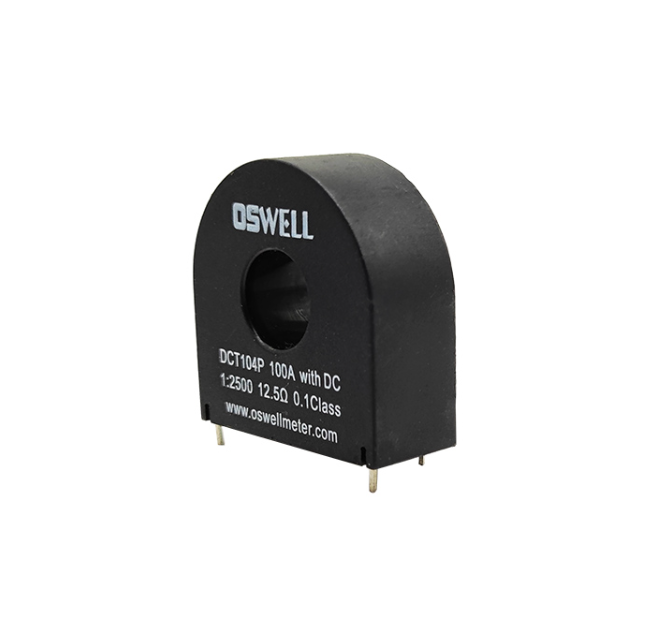
For this reason, OEM manufacturers should validate the 100A DC-immunity CT inside the real meter platform rather than evaluating the sensor alone. Testing should include low, medium, and rated current, representative DC bias, temperature variation, and all three measurement channels.
In projects involving suppliers such as Liding, the value of the component partnership is not limited to delivering a CT. Matching the CT structure, current range, secondary characteristics, and mechanical integration to the customer's meter platform can help reduce calibration and assembly problems before the product reaches mass production.
3. What Procurement Teams Should Check Before Approving a 100A DC-Immunity CT Supplier
A successful laboratory sample is only the beginning of supplier qualification. For a three-phase smart meter project, the more important question is whether the manufacturer can maintain the same magnetic and electrical performance across continuous production batches.
100A rated current capability
DC-immunity performance
Ratio accuracy
Phase displacement
Three-phase consistency
Secondary burden compatibility
Temperature stability
Mechanical dimensional tolerance
End-of-line electrical testing
Batch-to-batch repeatability
Procurement teams should ask suppliers how magnetic core materials, winding turns, assembly position, housing dimensions, and final electrical characteristics are controlled. Small differences in any of these areas can increase the amount of calibration compensation required on the meter production line.
Sample validation should ideally include CTs from several production lots. Engineers can compare ratio error, phase error, DC-immunity behavior, and temperature performance across samples to understand the real manufacturing distribution rather than relying on one optimized prototype.
Customization capability is another important factor. Different three-phase meter platforms may require specific current ratios, apertures, busbar structures, mounting methods, PCB interfaces, or secondary outputs. A supplier that can adapt the current transformer to the complete meter architecture can help the OEM avoid additional mechanical and calibration compromises.
For companies such as Liding, supporting smart meter customers with current transformers and related metering components creates an opportunity to participate earlier in the OEM design process. When component selection, mechanical integration, and production requirements are considered together, customers can obtain a solution that is better suited to long-term high-volume manufacturing rather than simply purchasing a standard CT by specification.
Conclusion
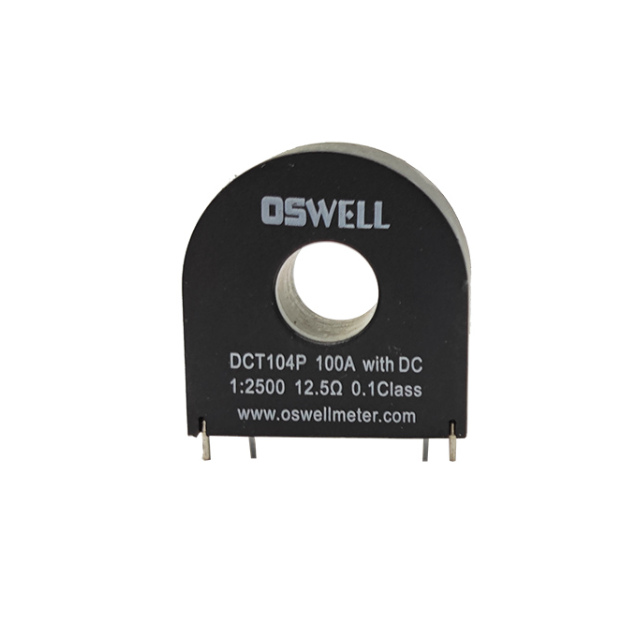
100A DC-immunity current transformers can reduce calibration variation in three-phase smart meter production by providing more stable ratio accuracy, phase performance, and magnetic behavior under DC-biased and distorted load conditions. For OEM manufacturers, better CT consistency can reduce calibration adjustment, repeated testing, and unit-to-unit measurement differences while improving production yield. Procurement teams should evaluate DC immunity, three-phase consistency, burden matching, temperature stability, mechanical tolerances, and batch repeatability together. Working with an experienced smart meter component supplier such as Liding can also help OEM customers match the current transformer more closely to the complete meter architecture, supporting smoother development and more reliable long-term mass production.