How 100A Monitoring and Protection CTs Balance Normal-Load Accuracy and Fault-Current Response
How 100A Monitoring and Protection CTs Balance Normal-Load Accuracy and Fault-Current Response
Current transformers used in monitoring and protection equipment face a difficult design challenge. During normal operation, they need to provide accurate and stable current information for energy monitoring, load analysis, and system diagnostics. During an overload or fault, however, they must continue producing a useful secondary signal when primary current rises far above the normal operating level. For OEM manufacturers and procurement teams selecting a 100A monitoring and protection CT, accuracy, saturation behavior, phase performance, burden, thermal stability, and manufacturing consistency all need to be evaluated together.
1. Normal-Load Monitoring Requires Accuracy While Fault Detection Requires Measurement Headroom
Under normal operating conditions, a 100A current transformer may be used to monitor load current, evaluate equipment utilization, calculate power, or provide data to an industrial controller. In this operating range, ratio accuracy, linearity, and phase displacement are important because measurement errors can affect the quality of the monitoring data.
Protection requirements are different. During a short circuit, severe overload, or other abnormal event, current may rise significantly above the rated operating level. The protection system still needs enough current information to determine that a fault has occurred and initiate the required response.
This creates a design trade-off. A CT optimized only for very high measurement sensitivity during normal current may approach magnetic saturation too early during a fault. On the other hand, a CT designed with excessive fault-current headroom may not provide the most efficient normal-load measurement solution for a compact OEM product.
Low and medium current measurement accuracy
Performance close to the 100A rated operating point
Short-duration overload conditions
Fault-current signal availability
Core saturation behavior
Recovery after abnormal current events
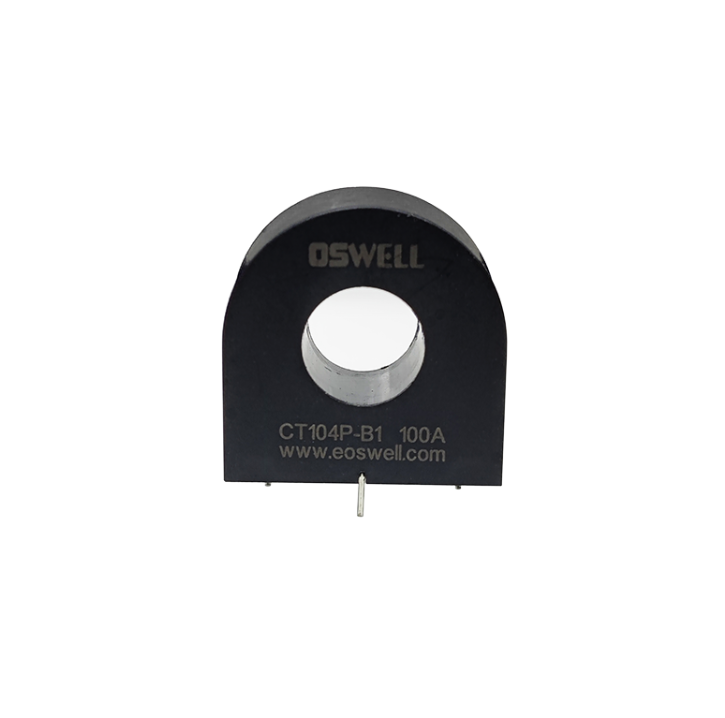
For procurement teams, this means rated current alone provides very limited information. Two 100A CTs can behave very differently during overload conditions depending on magnetic core material, winding turns, secondary burden, and internal construction.
2. Core Saturation, Burden and Phase Performance Determine Real Protection Capability
Magnetic core behavior is one of the most important factors separating a good monitoring and protection CT from a general-purpose current transformer. As primary current rises, the magnetic flux in the core also increases. If the core approaches saturation, the secondary signal may no longer increase proportionally with primary current.
For normal monitoring, controlled magnetic characteristics support good ratio accuracy and phase performance. For protection, sufficient magnetic margin helps the CT continue providing a meaningful signal during elevated current conditions.
Important for normal-load monitoring and comparison of operating current between equipment and circuits.
Influences power, power-factor, and energy calculations when current data is combined with voltage measurement.
Helps maintain a usable secondary signal when fault or overload current rises above normal operating levels.
The secondary circuit influences both measurement accuracy and the point at which the magnetic core approaches saturation.
Secondary burden deserves particular attention during OEM design. The CT may be connected to a burden resistor, ADC, protection circuit, cable, and other electronics. If the actual burden is higher than expected, the transformer must develop more secondary voltage, increasing magnetic stress inside the core.
This means a CT that performs well during supplier testing may behave differently after integration into the customer's electronics. Procurement and engineering teams should therefore define the actual secondary circuit before approving the component.
Temperature stability is also important. Protection equipment may operate inside switchgear, distribution cabinets, industrial control panels, or other environments where ambient temperature and internal heating vary considerably. Core behavior and winding resistance should remain sufficiently stable across these conditions.
3. What OEM Procurement Teams Should Check Before Selecting a 100A Monitoring and Protection CT
For equipment manufacturers, approving a CT is a long-term design decision. Once the device is integrated into the PCB, enclosure, conductor path, monitoring circuit, and protection algorithm, changing the transformer later may require additional hardware and software validation.
100A rated current capability
Ratio accuracy at normal loads
Phase displacement
Fault-current response
Core saturation characteristics
Secondary burden requirements
Temperature stability
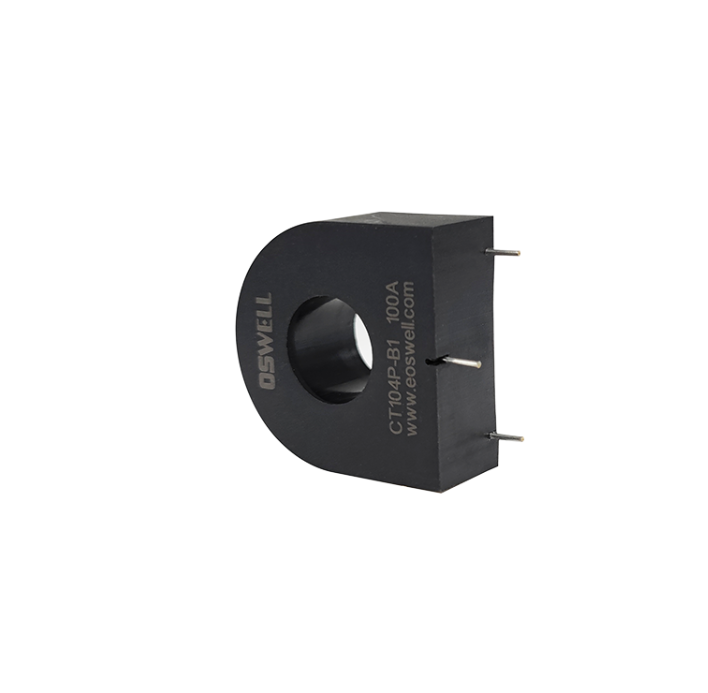
Mechanical aperture dimensions
Production testing capability
Batch-to-batch repeatability
Sample validation should include more than normal-current accuracy testing. Engineers should evaluate the CT at several current levels and also examine its behavior during representative overload conditions. The objective is not necessarily perfect linearity at extreme fault current, but a predictable output that allows the protection circuit to recognize abnormal conditions reliably.
Supplier manufacturing consistency is equally important. Variations in core material, winding turns, air gaps, mechanical assembly, and secondary resistance can influence both normal-load accuracy and saturation behavior. In high-volume industrial products, inconsistent CT characteristics may require additional calibration or increase protection-threshold variation.
Mechanical integration should also be reviewed carefully. Aperture size, conductor position, PCB mounting, lead length, enclosure space, and nearby magnetic sources can all affect installation and repeatability. A sensor that fits the electrical requirement but creates difficult assembly may increase total production cost.
Procurement teams should therefore consider total lifecycle value rather than unit price alone. A well-balanced monitoring and protection CT can improve current measurement quality during normal operation while providing reliable fault information when the system is under stress.
Conclusion
A 100A monitoring and protection current transformer must balance two different requirements: accurate and stable current information during normal operation, and a sufficiently reliable secondary response when overload or fault current rises above the normal range. Core material, saturation margin, ratio accuracy, phase displacement, secondary burden, temperature stability, and production consistency all influence this balance. For OEM manufacturers and procurement teams, the best CT should therefore be evaluated across both normal and abnormal operating conditions rather than selected by rated current alone. By choosing a supplier with strong magnetic design, testing capability, and stable mass production, equipment manufacturers can improve both everyday monitoring accuracy and protection reliability.