How 120A Magnetic Latching Relays Support Higher-Current Smart Meter Platforms Without Increasing Standby Power
How 120A Magnetic Latching Relays Support Higher-Current Smart Meter Platforms Without Increasing Standby Power
Smart meter platforms are moving toward higher current ratings as utilities and commercial energy users require meters capable of supporting larger residential loads, commercial distribution systems, EV charging loads, and other high-power applications. This creates a design challenge: the meter must switch higher current reliably without adding unnecessary standby power consumption or excessive internal heat. A 120A magnetic latching relay provides an effective solution because it uses energy mainly during switching and maintains its contact position without continuous coil energization. For OEM manufacturers and procurement teams, this combination of high-current capability and low holding-power demand can help improve meter efficiency, thermal design, and long-term reliability.
1. Higher-Current Smart Meters Need Reliable Switching Without Continuous Coil Consumption
Traditional electromechanical switching devices often require continuous coil power to remain in the energized state. In a smart meter, this creates a constant power loss and contributes to internal temperature rise. As switching current increases, meter designers are already managing heat generated by terminals, busbars, shunts, relays, and power electronics, so additional standby heating is undesirable.
A magnetic latching relay works differently. A short electrical pulse changes the relay state, and the magnetic structure then holds the contacts in that position without requiring continuous coil power. Another pulse is used when the meter needs to return the relay to the opposite state.
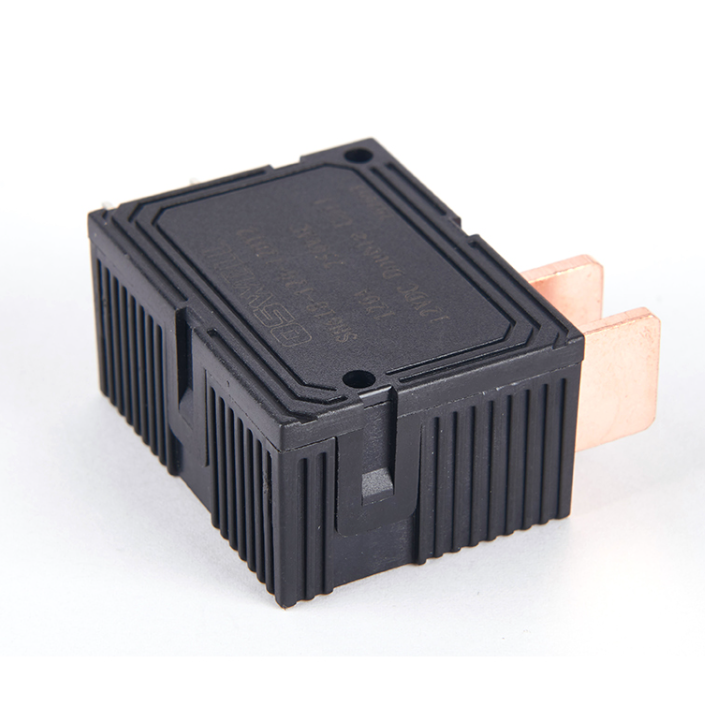
Lower relay holding-power consumption
Reduced standby heat inside the meter
Efficient remote connect and disconnect functions
Support for higher-current load control
More compact meter power-supply design
Lower continuous demand on the control circuit
These advantages are particularly useful in smart meters that remain energized for many years. Even a small amount of continuous coil power can become significant over the lifetime of millions of installed meters.
For procurement teams, the relay should therefore be evaluated not only according to switching current but also according to how much power the meter must supply during normal standby operation. A high-current relay that avoids continuous coil consumption can contribute to a more efficient overall product architecture.
2. Contact Resistance and Thermal Design Become More Critical at 120A
Increasing the current capability of a smart meter places greater demands on the relay contact system. At 120A, even a small amount of additional contact resistance can generate noticeable heat. This means contact material, contact pressure, terminal construction, internal current path, and manufacturing consistency all become important purchasing factors.
The relay must maintain a stable low-resistance connection during long periods of load operation. If contact resistance increases because of wear, contamination, poor alignment, or inconsistent contact pressure, temperature rise can increase and place additional stress on nearby components.
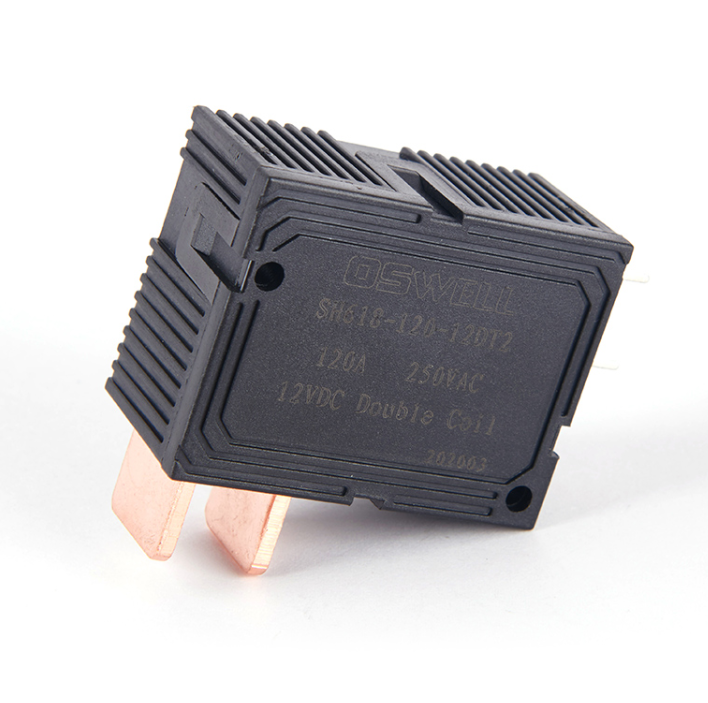
Helps reduce power loss and heating when the meter carries high continuous current.
Consistent mechanical force supports reliable conduction throughout the relay service life.
Low-resistance current paths help control localized temperature rise at terminals and internal joints.
Stable performance helps protect the PCB, meter case, busbars, and nearby sensing components.
OEM engineers should test the relay inside the actual meter architecture rather than judging thermal performance from the relay alone. Busbar width, conductor size, enclosure ventilation, mounting position, and nearby heat-generating components can significantly influence final operating temperature.
Switching endurance also matters. A relay may remain closed for long periods, but it still needs to perform reliably during prepaid control, remote service disconnect, overload response, or utility switching commands. Contact condition after repeated cycling is therefore just as important as the initial specification.
3. What Procurement Teams Should Check Before Approving a 120A Latching Relay Supplier
Once a high-current magnetic latching relay has been integrated into a smart meter platform, replacing it later can require changes to the busbar, enclosure, PCB, coil-drive circuit, firmware timing, terminal structure, and validation process. Procurement teams should therefore qualify both the relay design and the supplier's production capability before mass production.
120A switching capability
Initial contact resistance
Temperature rise under continuous load
Contact resistance after endurance cycling
Electrical switching life
Mechanical endurance
Coil pulse requirements
Latching stability
Terminal and busbar compatibility
Batch-to-batch production consistency
Sample validation should include several relays rather than one engineering unit. Testing can compare contact resistance, switching behavior, temperature rise, and coil response across different samples and after repeated operation. This helps buyers understand manufacturing distribution instead of relying on the performance of one optimized prototype.
Supplier process control is especially important for high-current switching products. Variations in contact materials, spring pressure, welding, magnetic parts, terminal dimensions, or assembly alignment can influence both electrical and thermal behavior.
Customization capability can also provide value. Different smart meter platforms may require different terminal positions, busbar geometries, coil voltages, mounting structures, auxiliary connections, or enclosure dimensions. A supplier able to adapt the relay to the complete meter architecture can reduce additional mechanical parts and simplify assembly.
Procurement teams should therefore compare total lifecycle value rather than unit price alone. A reliable 120A magnetic latching relay can help reduce standby power, control internal temperature, support high-current load switching, and lower field-failure risk throughout the meter's service life.
Conclusion
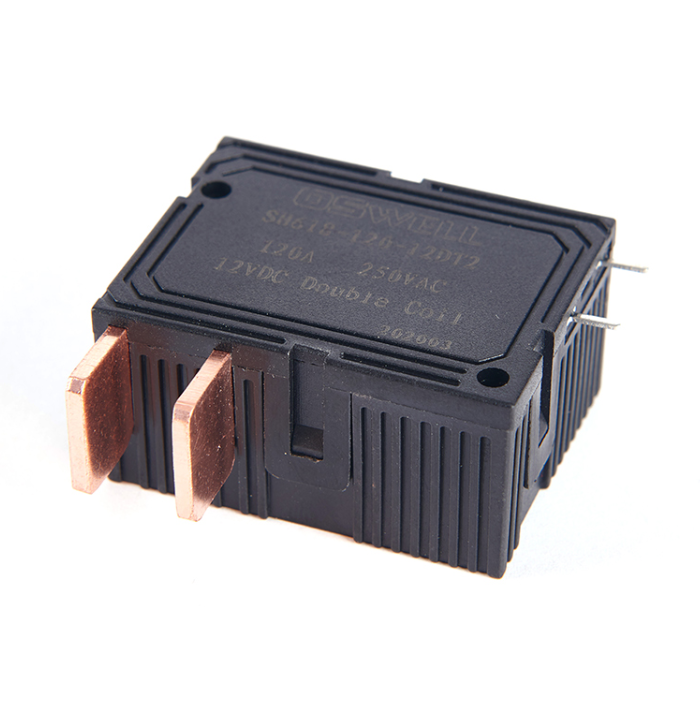
120A magnetic latching relays allow higher-current smart meter platforms to control large electrical loads without requiring continuous coil power to maintain the switching state. This helps reduce standby energy consumption and unnecessary internal heat while supporting remote connection, disconnection, and intelligent load-control functions. For OEM manufacturers and procurement teams, the best relay should be evaluated according to contact resistance, temperature rise, switching endurance, latching stability, coil-drive requirements, mechanical integration, and production consistency. By selecting a reliable high-current magnetic latching relay and a supplier with strong process control, smart meter manufacturers can support higher load ratings while maintaining efficient and dependable long-term operation.