How 1500V GB/T DC Charging Cables Balance Insulation Strength and High-Current Reliability
How 1500V GB/T DC Charging Cables Balance Insulation Strength and High-Current Reliability
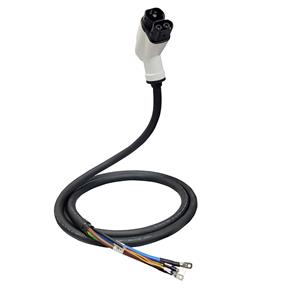
As DC fast-charging systems move toward higher voltage and higher power, charging cable design must balance several demanding requirements at the same time. A 1500V GB/T DC charging cable needs sufficient insulation capability for high-voltage operation while also carrying substantial current without excessive voltage drop, contact heating, or mechanical stress. At the same time, the cable must remain flexible enough for everyday use and durable enough to withstand repeated connection cycles and outdoor environments. For EV charger manufacturers, infrastructure operators, and procurement teams, selecting the right cable therefore requires evaluating the complete electrical, thermal, mechanical, and manufacturing design rather than relying only on voltage and current ratings.
1. 1500V Operation Requires More Than Simply Increasing Insulation Thickness
High-voltage DC charging places greater electrical stress on the cable insulation, connector structure, internal terminals, and separation between conductive parts. The insulation system must provide dependable electrical separation throughout the expected service life of the charging assembly.
However, stronger insulation does not simply mean adding more material. Excessive insulation thickness can increase cable diameter, weight, and stiffness, making the charging cable more difficult to handle. A well-designed 1500V cable therefore needs to achieve the required dielectric performance while controlling overall cable size and flexibility.
Insulation material quality
Insulation thickness consistency
Electrical separation between conductors
Connector internal creepage and clearance design
Resistance to temperature and environmental aging
Manufacturing consistency across long cable lengths
Material quality becomes especially important because charging cables may operate outdoors and experience heat, cold, moisture, abrasion, repeated bending, and long charging sessions. Insulation that performs well when new must also remain stable after years of mechanical and thermal stress.
For procurement teams, this means the high-voltage rating should be supported by a complete insulation design and controlled manufacturing process. Cable buyers should review not only the nominal voltage specification but also insulation materials, connector construction, production testing, and long-term environmental performance.
2. High-Current Reliability Depends on Conductor Design, Contact Resistance and Thermal Control
High voltage helps charging systems transfer more power, but the cable must still carry substantial current. Current flowing through conductors and connector contacts creates resistive losses, which appear as both voltage drop and heat. In high-power DC charging, even small resistance differences can significantly affect thermal performance.
Conductor cross-sectional area is therefore a major design factor. Larger copper conductors generally reduce electrical resistance, but they also increase cable weight and reduce flexibility. The engineering challenge is to select a conductor structure that provides sufficiently low resistance while keeping the cable practical for everyday operation.
Lower resistance helps reduce voltage drop, energy loss, and temperature rise during high-current charging.
Stable contact pressure and suitable conductive surfaces help control local heating at the connector interface.
Consistent crimping or joining processes help reduce additional resistance between conductor and terminal.
Controlled temperature rise helps protect connector housings, insulation, seals, and internal conductive parts.
Connector contact resistance deserves particular attention. A cable may use a sufficiently large conductor while still experiencing excessive heating if the terminal or mating contact creates a localized resistance point. Repeated insertion, contamination, mechanical wear, and dimensional variation can all affect contact quality over time.
Procurement teams should therefore evaluate the complete charging assembly under sustained current. Temperature measurements should include the cable body, conductor-to-terminal interface, connector contacts, and other critical areas rather than focusing on only one point.
3. What OEM Buyers Should Check When Sourcing 1500V GB/T DC Charging Cables
For charger manufacturers and infrastructure projects, selecting a 1500V GB/T DC cable is a long-term reliability decision. Once cable length, connector structure, conductor specification, charger enclosure, and cable-management system have been defined, changing the cable later can require additional validation and mechanical redesign.
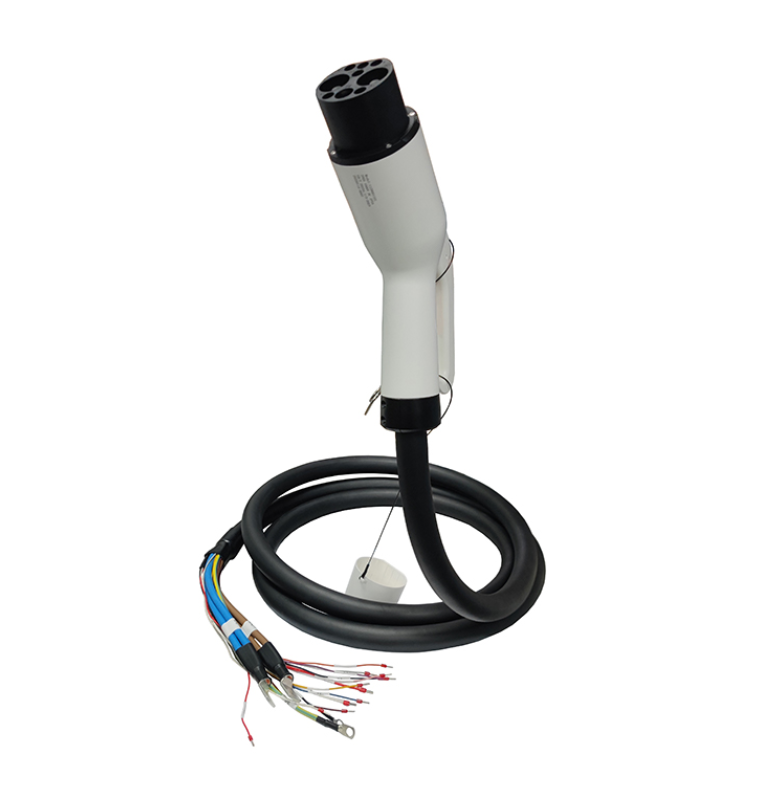
Rated DC voltage
Continuous current capability
Conductor cross-sectional area
Insulation and dielectric performance
Contact resistance
Temperature rise under load
Connector insertion durability
Cable flexibility and bending life
Environmental protection
Batch-to-batch manufacturing consistency
Buyers should also consider mechanical usability. A cable with excellent electrical performance may still create poor user experience if it is excessively heavy, rigid, or difficult to position. Charger type, cable length, installation height, and parking layout should all influence the final selection.
Supplier production control is equally important. Variations in conductor area, insulation extrusion, terminal crimping, contact plating, connector molding, or sealing can affect both electrical and environmental reliability. High-volume charging projects require stable performance across every production batch, not only a successful engineering sample.
Customization capability can also reduce project risk. Different chargers may require specific cable lengths, communication conductors, connector orientation, strain-relief structures, or mechanical configurations. A supplier that understands the complete charging application can help OEM customers balance voltage capability, current capacity, flexibility, and cost.
Procurement teams should therefore evaluate lifecycle value rather than unit price alone. Reliable insulation, low resistance, controlled temperature rise, durable contacts, and stable manufacturing can reduce field failures, charger downtime, cable replacement, and maintenance cost over the complete service life of the charging system.
Conclusion
A 1500V GB/T DC charging cable must balance strong electrical insulation with reliable high-current performance, practical flexibility, and long-term mechanical durability. Insulation materials and internal spacing help support high-voltage operation, while conductor size, terminal quality, contact resistance, and thermal design determine how efficiently the cable carries charging current. For EV charger manufacturers and procurement teams, the best sourcing decision should consider voltage capability, conductor design, temperature rise, connector durability, environmental performance, manufacturing consistency, and user handling together. By selecting a supplier that can control both high-voltage insulation and high-current connection quality, charging equipment manufacturers can build more reliable fast-charging systems with lower lifecycle risk.