How 200A Miniature Split-Core CTs Reduce Installation Time in Commercial Retrofit Energy Monitoring
How 200A Miniature Split-Core CTs Reduce Installation Time in Commercial Retrofit Energy Monitoring
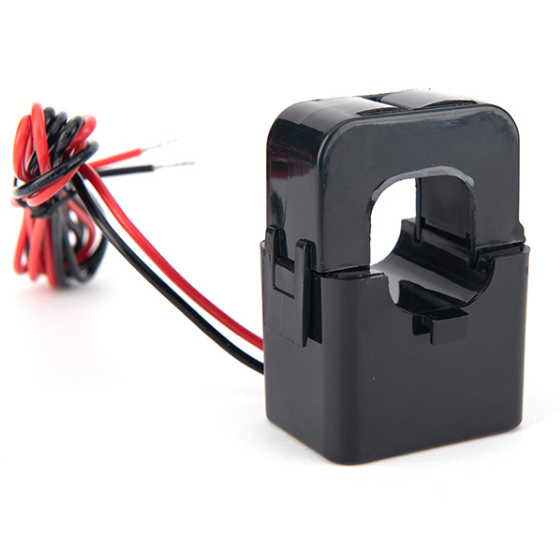
Commercial buildings increasingly need circuit-level energy data for cost control, equipment monitoring, sustainability programs, and energy management systems. However, adding measurement to an existing electrical installation can be difficult when shutting down power or disconnecting conductors is not practical. A 200A miniature split-core current transformer provides a convenient retrofit solution because the magnetic core can open around an existing conductor and close again after installation. For panel builders, energy management integrators, monitoring equipment manufacturers, and procurement teams, this design can reduce installation time, minimize disruption, and simplify the expansion of existing power monitoring systems.
1. Split-Core Installation Avoids Many of the Steps Required by Conventional CT Retrofits
Installing a conventional solid-core current transformer normally requires the measured conductor to pass through the CT opening before the electrical connection is completed. In an existing commercial distribution panel, this may mean disconnecting the cable, shutting down the circuit, removing conductors from terminals, installing the CT, and reconnecting the electrical system.
These operations take time and may require coordination with building management, electrical contractors, tenants, or production departments. In facilities that operate continuously, the cost of downtime may be much greater than the cost of the current transformer itself.
Need to disconnect the measured conductor
Electrical shutdown time
Installation labor per monitoring point
Changes to existing distribution wiring
Coordination required with building occupants
Risk associated with rebuilding existing power connections
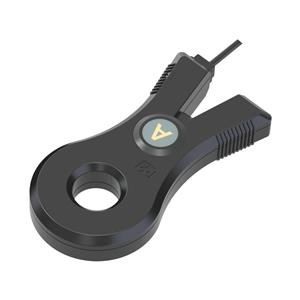
The installer can open the sensor, place it around the conductor, close the magnetic core, and connect the secondary output to the monitoring equipment. When dozens or hundreds of circuits need to be instrumented, the time savings can become substantial.
For procurement teams, this means the value of a split-core CT should be evaluated in terms of installed project cost rather than sensor price alone. A slightly more expensive sensor may lower the total project cost if it reduces labor hours and avoids planned shutdowns.
2. Miniature Size Improves Access in Crowded Commercial Distribution Panels
Retrofit installations often have another challenge: limited physical space. Existing electrical panels may already contain circuit breakers, contactors, busbars, wiring ducts, communication equipment, and other monitoring devices. A large split-core CT may fit around the conductor but still be difficult to position inside the cabinet.
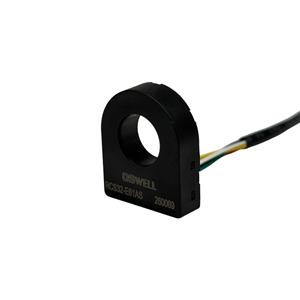
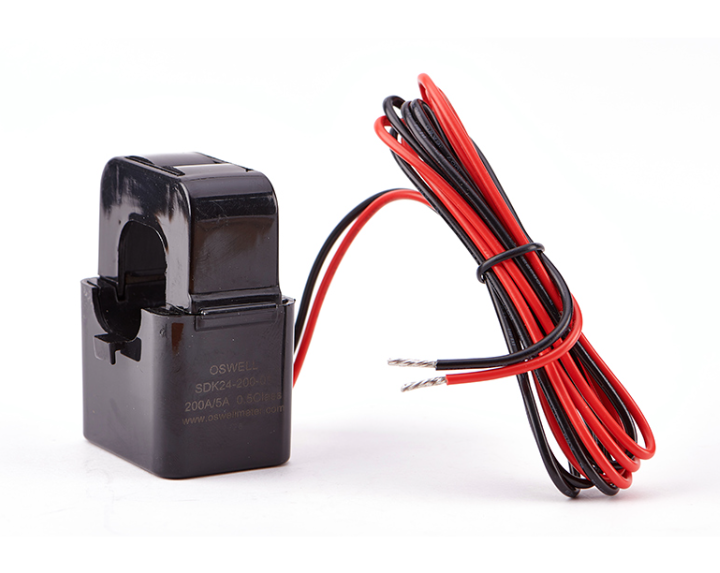
Miniature 200A split-core CTs are useful because they combine a practical current range with a compact housing. This allows them to be installed around feeder cables and branch circuits where larger sensors would interfere with nearby components.
Smaller dimensions help the sensor fit into crowded panels and narrow cable-routing areas.
Suitable for many commercial feeders, HVAC loads, lighting circuits, and equipment monitoring points.
The sensor can be removed or relocated without permanently modifying the primary conductor.
Fast installation makes it easier to expand monitoring from a few circuits to a complete commercial facility.
Compact size should not come at the expense of mechanical quality. The split-core surfaces must align correctly when closed, and the locking structure must maintain sufficient pressure to keep the magnetic path stable.
If the core does not close completely, the effective air gap can increase and affect ratio accuracy, phase performance, and measurement repeatability. For this reason, buyers should evaluate the opening mechanism and closure consistency together with electrical specifications.
Conductor position should also be considered. The selected CT aperture should provide enough clearance for installation without being unnecessarily large compared with the measured conductor. A well-matched window size can make installation easier and help improve repeatability between monitoring points.
3. What Commercial Energy Monitoring Buyers Should Check Before Selecting a 200A Split-Core CT
Fast installation is valuable only if the resulting energy data remains dependable. For commercial monitoring projects, procurement teams should therefore evaluate electrical accuracy, mechanical durability, installation repeatability, and supplier consistency before deploying sensors across many circuits.
200A rated current range
Ratio accuracy
Phase displacement
Internal aperture size
Core closing repeatability
Locking mechanism durability
Temperature stability
Secondary output compatibility
Lead wire and connector options
Batch-to-batch consistency
Sample validation should include repeated installation tests. Engineers can open and close the sensor several times, compare readings after each installation, and test the CT with the conductor positioned slightly differently inside the aperture. This provides useful information about real field repeatability.
Buyers should also consider how the secondary output integrates with the meter, data logger, gateway, or power monitoring device. Output type, cable length, burden requirements, connector format, and signal conditioning should all be confirmed before a large retrofit project begins.
Supplier manufacturing consistency becomes particularly important when hundreds of CTs are installed across one building or portfolio of facilities. Variations in magnetic core materials, winding turns, closure pressure, or mechanical dimensions can create differences in monitoring data between circuits.
Procurement teams should therefore consider total lifecycle value. Faster installation, reduced shutdown requirements, compact size, stable measurements, easy replacement, and reliable long-term supply can make a well-designed 200A miniature split-core CT significantly more economical than a lower-priced sensor that creates installation or data-quality problems.
Conclusion
200A miniature split-core current transformers can significantly reduce installation time in commercial retrofit energy monitoring because they allow sensing to be added around existing conductors without disconnecting the circuit. Their compact size also makes them easier to install inside crowded electrical panels where space is limited. For procurement teams, however, installation convenience should be evaluated together with ratio accuracy, phase performance, aperture size, core closing repeatability, mechanical durability, secondary compatibility, and production consistency. By selecting a reliable miniature split-core CT, energy monitoring integrators can reduce labor and shutdown requirements while maintaining dependable measurement across large commercial retrofit projects.