How All-in-One Type B Residual Current Sensors Simplify RDC-PD Design in Mode 3 EV Chargers
How All-in-One Type B Residual Current Sensors Simplify RDC-PD Design in Mode 3 EV Chargers
Mode 3 AC EV chargers must combine reliable charging control with effective residual current protection in a compact and cost-efficient architecture. Because modern electric vehicles contain rectifiers, power converters, filters, and high-voltage battery systems, fault currents may include AC, pulsating DC, and smooth DC components. This makes residual current detection more complex than in conventional AC equipment. All-in-one Type B residual current sensors help EVSE manufacturers simplify RDC-PD design by integrating multiple detection functions into one sensing platform. For OEM engineering and procurement teams, this can reduce component count, simplify validation, and support more consistent mass-production protection performance.
1. Why Mode 3 EV Chargers Need More Advanced Residual Current Detection
Mode 3 charging equipment connects the vehicle to an AC supply through dedicated EVSE that manages communication, switching, and protection functions. During normal charging, the EVSE must monitor the power circuit continuously and respond if current begins flowing through an unintended path.
The challenge is that leakage current in an EV charging system may not have one simple waveform. Vehicle-side power electronics can produce residual currents containing AC components, pulsating DC, or smooth DC. A protection design that responds correctly to only one waveform may not provide the same level of protection under another condition.
Sinusoidal AC residual current
Pulsating DC leakage
Smooth DC residual current
Mixed AC and DC fault conditions
Distorted leakage waveforms
Small DC residual currents such as 6mA detection levels
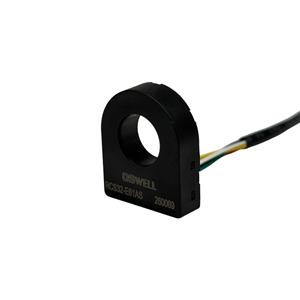
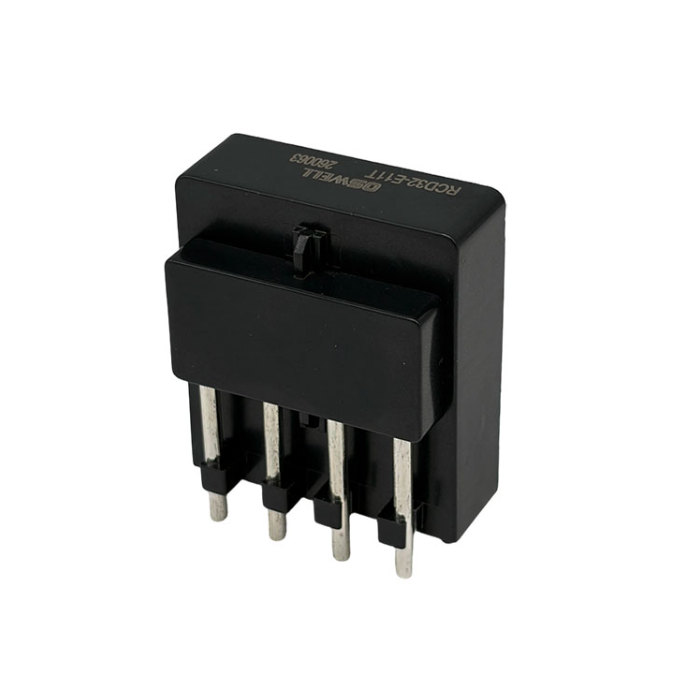
An all-in-one Type B residual current sensor brings these detection requirements into a more integrated architecture. Instead of designing several separate sensing circuits for different fault-current conditions, EVSE manufacturers can use one sensor platform to provide the residual current information required by the charger controller.
For procurement teams, this can simplify BOM management and reduce the number of critical protection components that must be qualified. Fewer independent sensing devices can also reduce PCB space, connector count, and potential mismatch between different protection channels.
The result is not only a smaller design. It can also create a more standardized protection architecture across different charger models, which is useful for OEMs developing several 7kW, 11kW, or 22kW Mode 3 products from the same platform.
2. Integrated Type B Sensing Can Reduce Hardware Complexity and Validation Risk
Residual current protection is not only a sensor problem. The complete RDC-PD architecture includes the sensing element, signal processing, power supply, controller interface, contactor logic, fault thresholds, and shutdown strategy. When these functions are spread across multiple sensing devices, engineering teams must validate more interfaces and manage more sources of variation.
An integrated Type B residual current sensor can simplify this process by providing a more unified detection platform for several residual-current conditions.
Integrated sensing can reduce the need for multiple separate residual-current detection components.
A compact sensing structure can free PCB area and simplify conductor routing inside the EVSE.
A unified output can simplify coordination between leakage detection and charger shutdown control.
Fewer sensing subsystems can reduce interface testing and make system qualification more manageable.
For high-volume charger manufacturers, integration can also improve production repeatability. Every additional component introduces another tolerance, solder joint, connector, calibration point, and supply-chain dependency. Reducing these variables can make the final RDC-PD system easier to control in mass production.
Temperature stability and waveform recognition remain critical. A well-designed integrated sensor should maintain predictable trip-current behavior over the charger's intended operating range. OEMs should therefore evaluate actual sensor performance under realistic leakage waveforms and temperatures rather than only checking a nominal threshold at room temperature.
3. What OEM Buyers Should Check Before Selecting an All-in-One Type B Residual Current Sensor
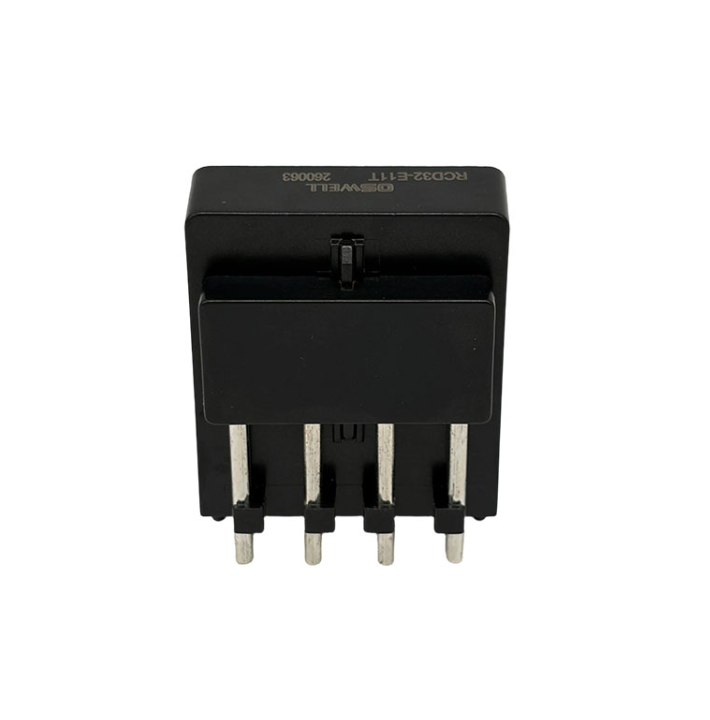
Once a residual current sensor has been integrated into the charger PCB, conductor path, firmware, contactor logic, and protection strategy, replacing it later may require substantial redesign. Procurement teams should therefore qualify the product and supplier carefully before moving to mass production.
Supported residual-current waveform types
6mA DC detection consistency
Trip-current tolerance
Response time
Temperature stability
Noise and interference immunity
Electrical isolation
Aperture and PCB dimensions
Production calibration capability
Batch-to-batch repeatability
Buyers should also confirm how the sensor interfaces with the EVSE controller. Output format, supply requirements, fault indication, self-check functions, and reset behavior should match the charger control architecture. A sensor that offers strong detection capability but requires extensive additional circuitry may reduce the benefit of an integrated design.
Sample validation should use the actual charger power stage whenever possible. Engineers can test AC leakage, pulsating DC, smooth DC, temperature variation, startup behavior, switching noise, and repeated fault cycles to understand how the sensor behaves in the real system.
Supplier production capability is equally important. High-volume EVSE programs require stable calibration, controlled electronic components, consistent magnetic structures, end-of-line testing, and production traceability. Procurement teams should ask how trip thresholds are verified and how manufacturing variation is controlled.
Total lifecycle cost should therefore be considered rather than unit price alone. An integrated sensor that reduces PCB complexity, validation workload, production screening, nuisance-trip risk, and field troubleshooting can create significantly more value over the charger lifecycle.
Conclusion
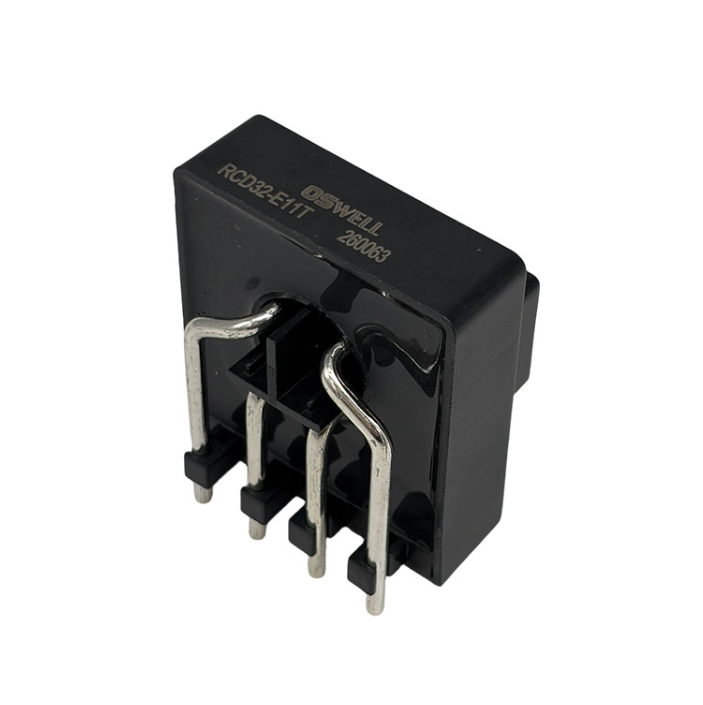
All-in-one Type B residual current sensors can simplify RDC-PD design in Mode 3 EV chargers by combining multiple residual-current detection functions into a more integrated protection architecture. This can reduce component count, save PCB space, simplify protection logic, and improve mass-production consistency. For EVSE manufacturers and procurement teams, the best sensor should be evaluated according to waveform capability, 6mA DC detection, trip-current stability, response time, temperature performance, controller compatibility, calibration control, and supplier production consistency. By selecting a reliable integrated Type B sensing solution, charger manufacturers can reduce development complexity while building safer and more dependable Mode 3 EV charging products.