How Busbar-Mount DC-Immunity CT Design Simplifies High-Current Smart Meter Assembly
How Busbar-Mount DC-Immunity CT Design Simplifies High-Current Smart Meter Assembly
High-current smart meters require accurate current measurement, compact mechanical integration, and efficient mass-production assembly. As meter current ratings increase, the relationship between the current transformer, busbar, PCB, terminal block, and enclosure becomes increasingly important. Busbar-mount DC-immunity current transformers provide a practical solution by combining direct mechanical integration with resistance to DC bias and distorted current conditions. For smart meter manufacturers and procurement teams, this architecture can reduce wiring complexity, simplify positioning, improve calibration consistency, and support faster high-volume assembly.
1. Busbar-Mount CTs Reduce Mechanical Complexity Inside High-Current Smart Meters
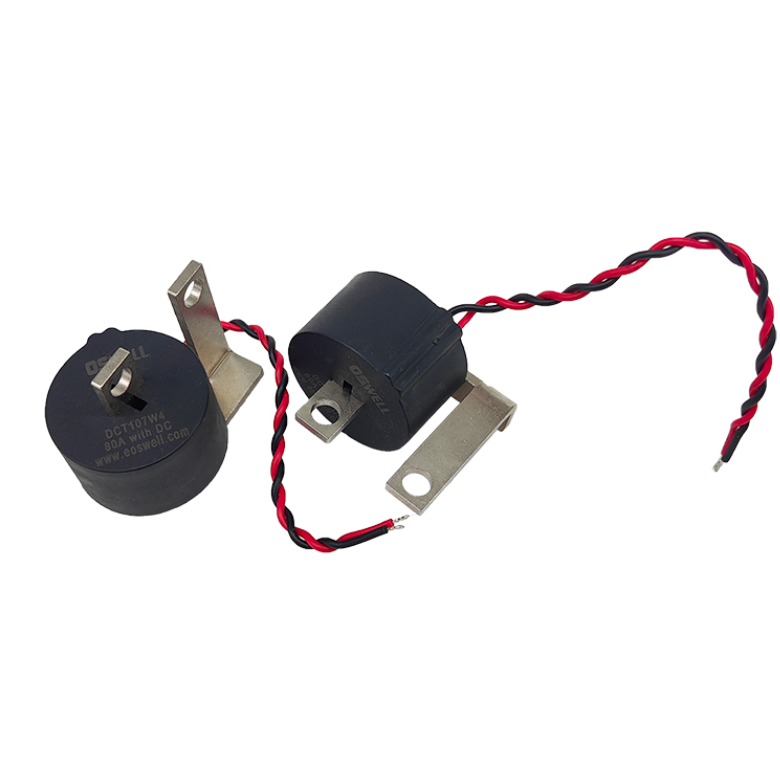
In a high-current smart meter, the primary current path is usually carried through a rigid conductor or busbar rather than through small PCB traces. This creates a natural opportunity to integrate the current transformer directly around the busbar instead of using a separate cable-based sensing structure.
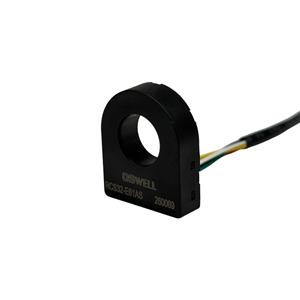
A busbar-mount current transformer can be designed around a specific conductor size, allowing the CT to become part of the meter's mechanical architecture. This can reduce the number of brackets, wires, and positioning steps required during assembly.
Direct integration with the meter busbar
Fewer separate mounting components
More repeatable conductor positioning
Reduced internal wiring complexity
Cleaner PCB and enclosure layout
Faster high-volume meter assembly
Consistent conductor positioning is particularly important for measurement repeatability. If the busbar passes through the CT in the same position on every meter, mechanical variation between production units can be reduced. This supports more stable calibration and can simplify automated testing.
For procurement teams, mechanical dimensions should therefore be evaluated as carefully as electrical specifications. Busbar width, thickness, mounting direction, insulation clearance, PCB position, and enclosure space all need to match the intended CT design.
A technically suitable transformer that requires additional brackets or manual alignment may create higher assembly cost than a slightly more customized solution designed around the actual meter platform.
2. DC-Immunity Design Helps Maintain Accuracy Under Modern Distorted Load Conditions
Mechanical integration is only one part of the value. Modern smart meters increasingly measure loads created by EV chargers, switching power supplies, inverters, LED systems, and other power electronic equipment. These loads may contain harmonics, asymmetrical waveforms, and DC components that can influence conventional magnetic current transformers.
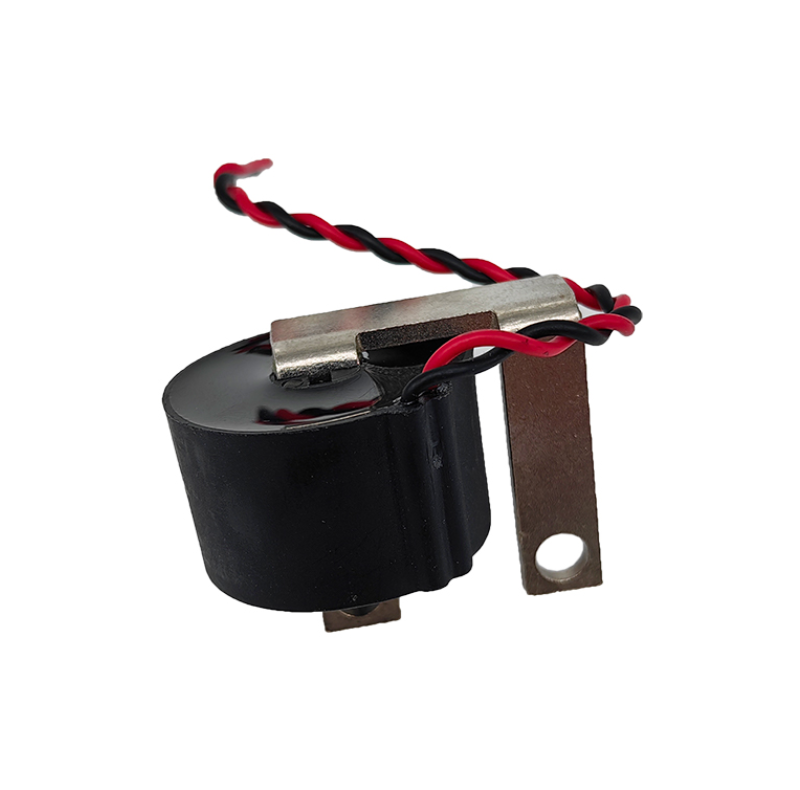
DC-immunity CTs are designed to reduce measurement errors caused by unwanted magnetic bias. When a DC component shifts the operating point of the magnetic core, ratio error and phase displacement may increase. A properly designed DC-immunity CT provides additional magnetic stability under these more demanding conditions.
Helps maintain more predictable current transformation under distorted and DC-biased load conditions.
Supports more accurate active power, reactive power, and energy calculations.
Stable sensor behavior can reduce adjustment differences between meters during production testing.
More consistent performance supports reliable metering across a wider range of real customer loads.
Temperature stability should also be considered. Busbars can carry substantial current and may become warm during operation. The CT is therefore exposed to both ambient temperature changes and heat generated by nearby conductive parts.
OEM engineers should validate the complete meter under realistic current and temperature conditions. The busbar geometry, CT magnetic core, secondary burden, PCB circuitry, and enclosure all contribute to final measurement performance.
For procurement teams, this reinforces the importance of evaluating the CT as part of the complete meter architecture rather than as an isolated component.
3. What OEM Buyers Should Check Before Approving a Busbar-Mount DC-Immunity CT
Once a busbar CT has been designed into the meter, replacing it later can require changes to the busbar, PCB, enclosure, mounting fixtures, and calibration process. Procurement teams should therefore qualify both electrical performance and manufacturing consistency before mass production.
Rated primary current
DC-immunity performance
Ratio accuracy
Phase displacement
Busbar aperture dimensions
PCB connection method
Temperature stability
Mechanical positioning repeatability
End-of-line testing capability
Batch-to-batch consistency
Sample validation should use the actual busbar whenever possible. Engineers should test several CTs at low, medium, and rated current while also checking performance under representative DC-bias and temperature conditions. This provides a more realistic understanding of both electrical and mechanical repeatability.
Supplier process control is equally important. Variations in magnetic core properties, winding turns, housing dimensions, pin position, or assembly alignment can create differences in accuracy and calibration. For high-volume smart meter programs, these small differences can increase production time and reduce first-pass yield.
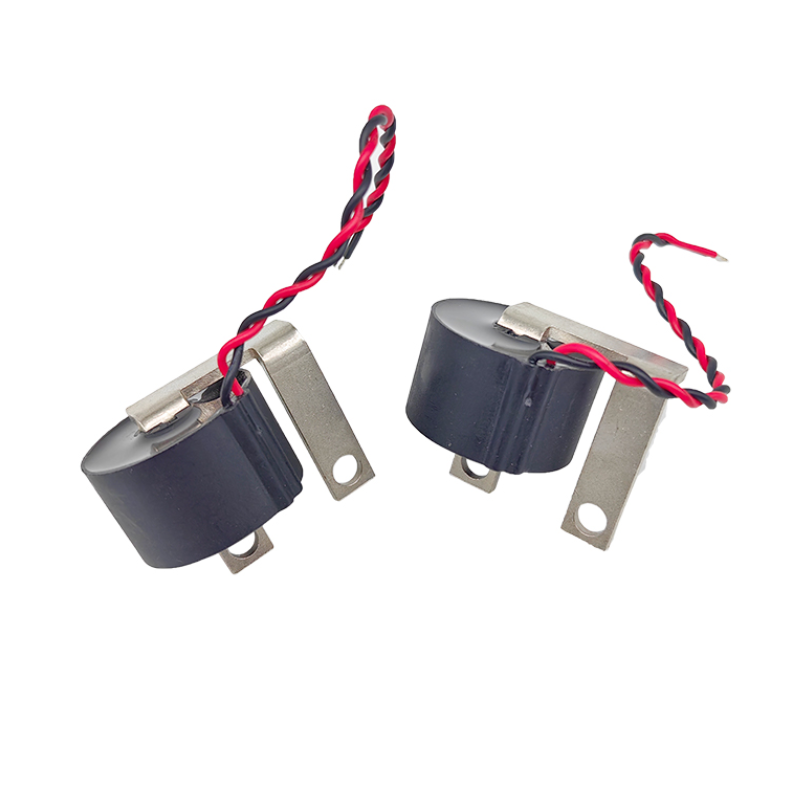
Customization capability can provide additional value. Different meter platforms may require unique busbar widths, current ranges, PCB interfaces, mounting directions, or secondary characteristics. A supplier that can adapt the CT to the final meter structure can help simplify assembly and reduce unnecessary mechanical parts.
Procurement teams should therefore consider total lifecycle cost rather than component price alone. A well-integrated busbar-mount CT may reduce assembly labor, simplify calibration, improve production consistency, and lower redesign risk over the complete smart meter program.
Conclusion
Busbar-mount DC-immunity current transformers can simplify high-current smart meter assembly by combining accurate current measurement with direct mechanical integration around the primary conductor. A well-designed solution can reduce separate mounting parts, improve conductor positioning, simplify PCB connection, and support more repeatable calibration. At the same time, DC-immunity design helps maintain measurement stability under distorted and DC-biased load conditions. For OEM manufacturers and procurement teams, the best CT should be evaluated according to busbar compatibility, accuracy, phase performance, temperature stability, DC immunity, production consistency, and supplier customization capability. By selecting a well-integrated busbar CT solution, smart meter manufacturers can reduce assembly complexity while improving long-term metering reliability.