How Case-Mount 120A DC-Immunity CTs Simplify High-Current Three-Phase Meter Assembly
How Case-Mount 120A DC-Immunity CTs Simplify High-Current Three-Phase Meter Assembly
High-current three-phase smart meters must integrate current sensing, busbars, terminals, metering electronics, relays, communication modules, and insulation structures within a tightly controlled enclosure. At 120A, current-transformer selection is no longer only a question of measurement accuracy. Mechanical installation, conductor alignment, assembly repeatability, DC-immunity performance, and production efficiency all become important. A case-mount 120A DC-immunity current transformer can help meter manufacturers create a more stable sensing structure while reducing the number of manual positioning steps required on the production line.
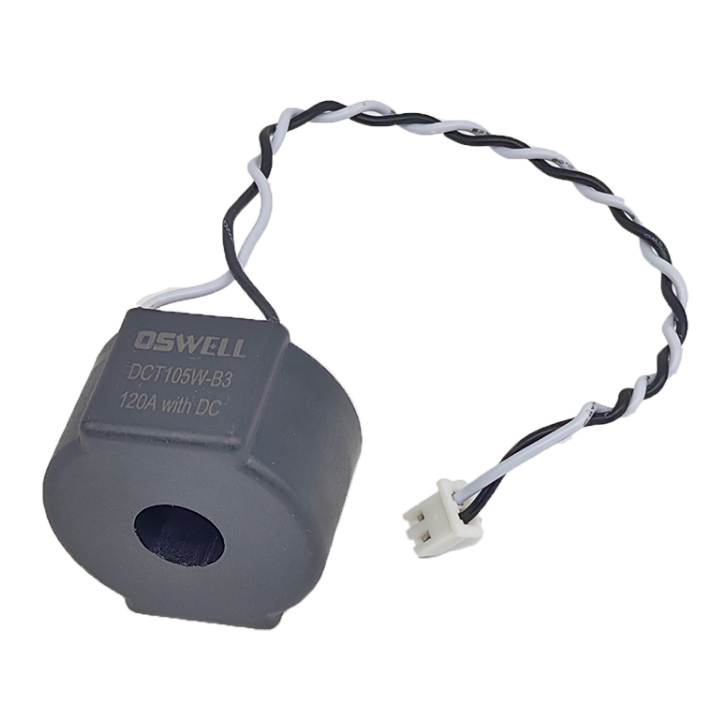
1. Case-Mount Structures Help Control CT Position in High-Current Meter Assembly
In a high-current three-phase meter, the physical position of the current transformer can affect both production efficiency and measurement consistency. A loosely positioned CT may require additional brackets, manual alignment, wiring adjustments, or assembly checks before the meter can move to calibration.
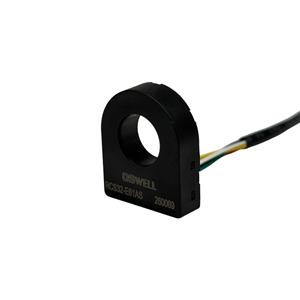
A case-mount structure gives the CT a defined mechanical position inside the meter. Instead of relying only on wires or surrounding components to hold the transformer in place, the housing can be fixed to the meter structure so that the primary conductor and sensing element remain aligned more consistently.
Manual CT positioning during assembly
Variation in conductor-to-core alignment
Additional brackets and fixing hardware
Internal wiring and routing complexity
Assembly differences between operators
Rework before electrical calibration
This becomes particularly valuable in three-phase meters because three sensing channels must fit into the same mechanical platform. If each CT requires independent adjustment, assembly time increases and phase-to-phase consistency becomes more difficult to control.
A case-mounted architecture can also make automated or semi-automated assembly easier. Once the housing location, fixing points, busbar path, and PCB connection are defined, the production line can use more repeatable fixtures and installation procedures.
For procurement teams, this means mechanical dimensions should be reviewed together with electrical parameters. Housing tolerance, fixing-hole position, aperture location, busbar clearance, and connector position can be just as important as the nominal 120A rating.
2. DC-Immunity and Stable Installation Can Reduce Calibration and Phase-to-Phase Variation
Modern three-phase electrical networks increasingly contain non-linear loads such as EV chargers, variable-speed drives, switch-mode power supplies, industrial electronics, and renewable-energy equipment. These loads can introduce distorted waveforms and DC components that influence the magnetic operating condition of a conventional current transformer.
A DC-immunity CT is designed to maintain more predictable measurement behavior when unwanted DC components are present. In a 120A meter platform, this helps the sensing system maintain better consistency across a wide operating range and under more demanding load conditions.
Defined mounting helps reduce changes caused by conductor position and CT movement during assembly.
Helps the current measurement system remain more stable when distorted or asymmetrical load currents are present.
Better matching between sensing channels can reduce calibration differences between phases.
Consistent CT placement and electrical characteristics can simplify automated calibration procedures.
Mechanical integration and electrical accuracy should therefore be treated as one system. A high-quality CT can still show unnecessary variation if the primary conductor position changes significantly from one meter to another or if the secondary burden is inconsistent.
This is also where a component supplier can contribute more than a standard catalog part. In smart meter projects, Liding can work around the customer's current range, mechanical layout, connection method, and production requirements so that the current-transformer design fits more naturally into the complete meter architecture.
For OEM customers, early cooperation between the meter designer and CT supplier can reduce later changes to busbars, housings, PCB interfaces, and calibration processes.
3. What Procurement Teams Should Evaluate Before Selecting a 120A Case-Mount DC-Immunity CT
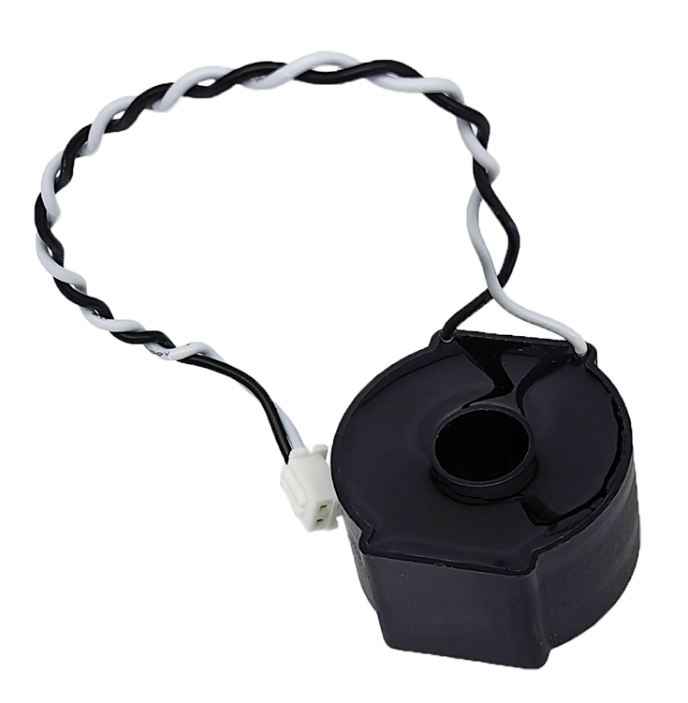
Once a current transformer has been designed into a high-current smart meter, replacing it can affect the enclosure, busbar, PCB, calibration software, assembly fixture, and production test process. Procurement teams should therefore qualify both the electrical performance and the mechanical integration before moving into volume production.
120A current measurement capability
DC-immunity performance
Ratio accuracy and phase error
Three-phase matching consistency
Case-mount dimensional tolerance
Busbar and conductor compatibility
Secondary output and burden matching
Temperature stability
Production testing capability
Batch-to-batch repeatability
Sample evaluation should use the actual meter housing and busbar whenever possible. Engineers can verify whether the CT installs smoothly, whether the conductor remains centered and repeatable, whether the PCB connection is convenient, and whether all three sensing channels maintain similar performance after assembly.
Buyers should also test more than one production sample. Comparing ratio error, phase displacement, DC-immunity behavior, mechanical dimensions, and temperature performance across different units provides a better indication of mass-production quality than testing one carefully selected prototype.
Supplier capability becomes especially important when the meter manufacturer needs a customized structure. Housing dimensions, mounting points, conductor openings, secondary leads, connectors, current ratios, and other details may need to match an existing meter platform.
This is an area where Liding can create practical value for smart meter OEMs. By combining current-sensing components with engineering support for mechanical and electrical integration, Liding can help customers move from component selection to a solution that is easier to assemble, calibrate, and reproduce in volume production.
For procurement teams, the lowest CT unit price is therefore not always the lowest project cost. A well-integrated case-mount design may reduce hardware, assembly labor, calibration variation, rework, and future redesign, creating greater value over the complete meter lifecycle.
Conclusion
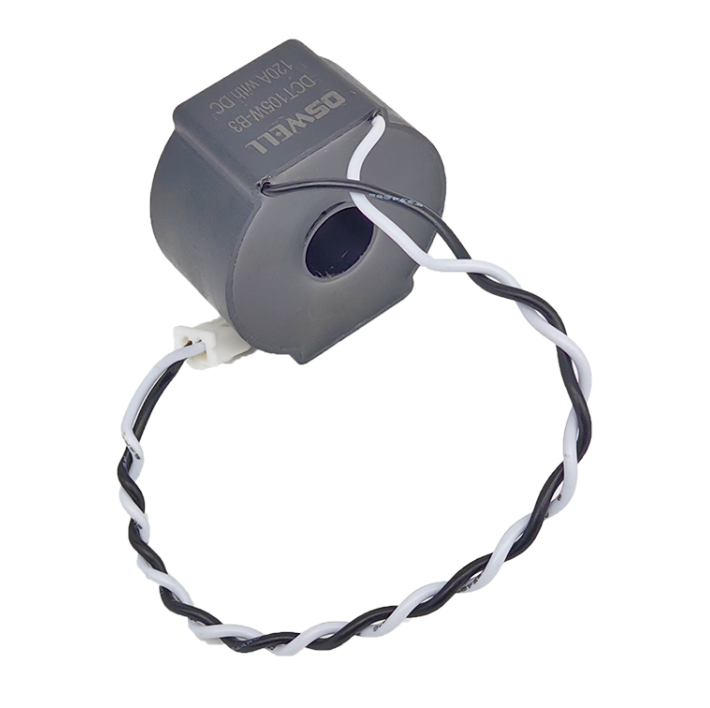
Case-mount 120A DC-immunity current transformers can simplify high-current three-phase meter assembly by combining stable mechanical positioning with reliable current measurement under demanding load conditions. A defined mounting structure can reduce manual alignment, improve conductor positioning, support more repeatable three-phase assembly, and make automated calibration easier to manage. For procurement teams, the best solution should be evaluated according to DC-immunity performance, ratio and phase consistency, case dimensions, busbar compatibility, temperature stability, and mass-production repeatability. Working with a smart meter component partner such as Liding can further help OEM customers coordinate current sensing, mechanical integration, and production requirements, reducing overall development and assembly risk while supporting reliable high-volume meter manufacturing.