How Charging Cable Thermal Design Affects Reliability in High-Power CCS2 Fast Charging
How Charging Cable Thermal Design Affects Reliability in High-Power CCS2 Fast Charging
High-power EV fast charging places demanding requirements on every component in the charging system, especially the charging cable and connector. As charging current increases, heat generated by electrical resistance becomes more significant. If that heat is not controlled effectively, it can increase connector temperature, accelerate material aging, reduce charging performance, and create additional reliability risks.
For CCS2 charging equipment manufacturers, charging station operators, and procurement teams, cable selection should therefore involve more than checking current and voltage ratings. Conductor design, contact resistance, insulation materials, terminal structure, connector geometry, temperature monitoring, and manufacturing consistency all influence actual field performance. A well-designed CCS2 charging cable can support stable high-current charging while helping manufacturers reduce maintenance requirements and improve product lifetime.
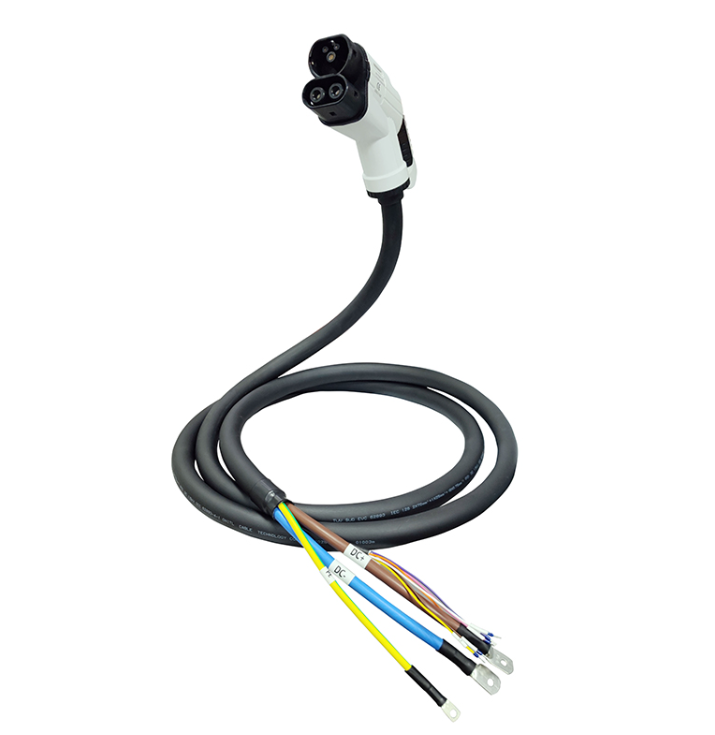
1. Why Thermal Performance Becomes Critical in High-Power CCS2 Charging
During fast charging, large amounts of electrical current pass through the cable conductors, terminals, and connector contacts. Every conductive path has some electrical resistance, and this resistance generates heat as current increases. Because heat generation rises rapidly at higher current levels, thermal design becomes increasingly important in fast-charging applications.
Several areas contribute to charging cable temperature:
Conductor resistance
Connector contact resistance
Terminal crimp quality
Cable cross-sectional area
Ambient temperature
Charging duration
Cable bending and installation conditions
The connector interface is particularly important. Poor contact pressure, contamination, dimensional inconsistency, or unstable terminal manufacturing can increase local resistance. This may create hot spots even when the cable conductor itself remains within an acceptable temperature range.
For procurement teams, this means that current rating alone does not provide a complete picture of cable performance. Two charging cables with similar nominal electrical specifications may behave very differently during continuous high-current charging if their contact structure, conductor quality, terminal assembly, or thermal design is different.
Excessive temperature can affect insulation materials, sealing components, connector housings, and nearby electrical parts. Repeated thermal cycling can also contribute to long-term mechanical and electrical degradation. For charging station manufacturers, these issues may eventually result in derating, unstable charging, increased maintenance, or premature component replacement.
A reliable CCS2 fast charging cable should therefore be evaluated under realistic operating conditions rather than only through short-duration electrical testing.
2. How Cable Construction and Connector Design Improve Thermal Reliability
Thermal performance begins with the complete charging cable structure. Conductor size is one of the most important factors because a larger conductive area generally helps reduce electrical resistance for a given current level. However, increasing conductor size also affects weight, flexibility, cost, and handling, so cable design must balance thermal performance with practical usability.
High-quality conductor materials and stable manufacturing processes are also important. Variations in conductor dimensions, strand quality, terminal crimping, or connection surfaces can influence resistance and create inconsistent heating between production batches.
Connector design is equally critical. Important factors include:
Contact surface area
Contact pressure stability
Terminal material
Connection resistance
Heat transfer path
Connector housing materials
Mechanical durability
For high-power applications, temperature monitoring may also be integrated into the connector or cable assembly. Temperature feedback can help the charging system detect abnormal heating and adjust charging current or stop charging when necessary.
Procurement teams should pay close attention to the relationship between cable flexibility and thermal capability. A cable designed only for low resistance may become too heavy or rigid for practical charging station use. Conversely, an excessively lightweight cable may struggle to maintain acceptable temperature performance under sustained high-current conditions.
The right design depends on the target charging power, installation environment, duty cycle, and user experience requirements.
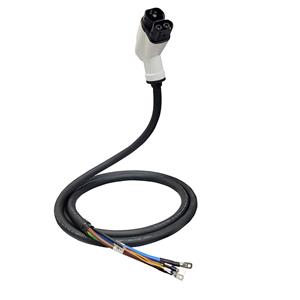
Products such as CCS2 charging cables used in fast-charging equipment should therefore be evaluated as complete assemblies rather than as simple power conductors. Connector durability, cable insulation, terminal stability, sealing performance, and thermal behavior must work together throughout the product lifecycle.
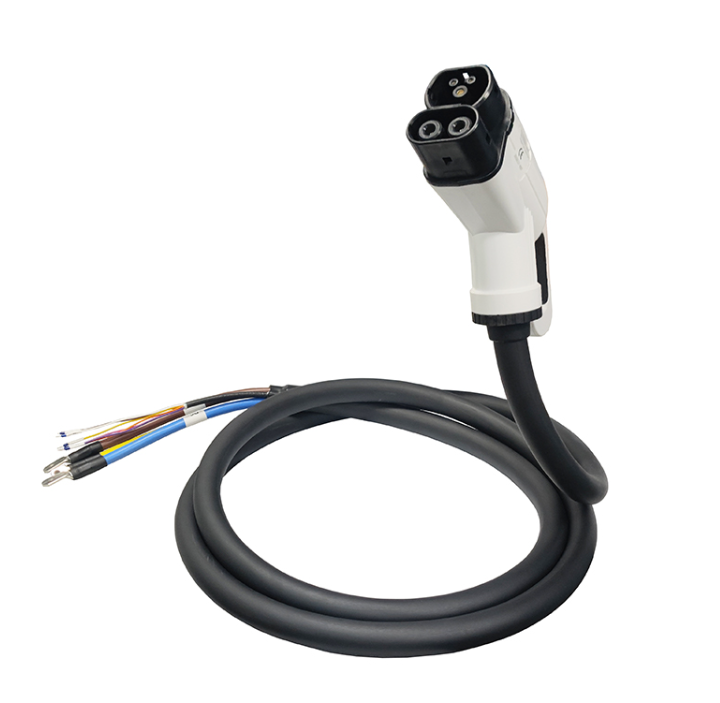
3. What Procurement Teams Should Check Before Sourcing CCS2 Charging Cables
For OEM charger manufacturers and charging infrastructure companies, supplier evaluation should go beyond basic catalog specifications. Charging cables are frequently exposed to repeated insertion cycles, outdoor temperature changes, bending, pulling, moisture, dirt, and long charging sessions. This makes long-term manufacturing quality especially important.
Before approving a CCS2 charging cable supplier, buyers should evaluate:
Conductor specification and material consistency
Contact resistance control
Temperature-rise testing under rated load
Connector insertion and withdrawal durability
Terminal crimping quality
Insulation and cable jacket performance
Environmental resistance
Production testing procedures
Batch-to-batch consistency
Long-term production and supply capability
Temperature-rise testing is particularly valuable because it helps buyers understand how the complete assembly performs under sustained electrical load. Testing should consider the connector, terminal, conductor, and cable body rather than measuring only one location.
Procurement teams should also consider application-specific customization. Different charging station designs may require different cable lengths, conductor sizes, connector configurations, communication wiring, or mechanical structures. A supplier with engineering support can help match the cable design to the actual charger instead of forcing the manufacturer to adapt its complete system around a standard cable.
Another important purchasing consideration is lifecycle cost. A slightly lower initial cable price may provide little value if the product experiences overheating, connector degradation, frequent replacement, or inconsistent production quality. For charging station operators, service calls and downtime can quickly exceed the original component cost difference.
For this reason, experienced buyers increasingly evaluate charging cables according to total reliability, manufacturing consistency, technical support, and long-term supply stability rather than focusing only on unit price.
Conclusion
Thermal design is one of the most important factors affecting the reliability of high-power CCS2 fast charging cables. Conductor resistance, connector contact quality, terminal design, insulation materials, cable structure, and production consistency all influence temperature performance during sustained charging. For OEM manufacturers and procurement teams, selecting a CCS2 charging cable should therefore involve careful evaluation of temperature rise, contact resistance, mechanical durability, manufacturing quality, and supplier engineering capability. A well-designed charging cable can help reduce overheating risks, improve charging stability, extend component lifetime, and lower total maintenance costs across the charging infrastructure lifecycle.