How COG LCD Modules Reduce Display Thickness and Interconnection Complexity in Smart Meter Design
How COG LCD Modules Reduce Display Thickness and Interconnection Complexity in Smart Meter Design
Smart meter manufacturers are continually trying to reduce enclosure size while adding more communication, metering, control, and display functions. The display architecture therefore has a direct influence on PCB layout, mechanical thickness, assembly efficiency, and long-term reliability. Chip-on-Glass, or COG, LCD modules integrate the driver IC directly onto the LCD glass, helping reduce additional PCB structures and interconnections. For OEM engineers and procurement teams, this can simplify compact smart meter design while lowering the number of parts and connection points that must be managed during mass production.
1. COG Architecture Helps Reduce Display Thickness and Internal Component Count
In a traditional display module, the LCD glass may connect to a separate PCB that carries the driver IC and other interface components. This structure is practical, but it increases module thickness and adds additional mechanical and electrical connections. In compact smart meter enclosures, even a few millimeters of extra height can influence PCB placement, display-window design, terminal spacing, and overall product dimensions.
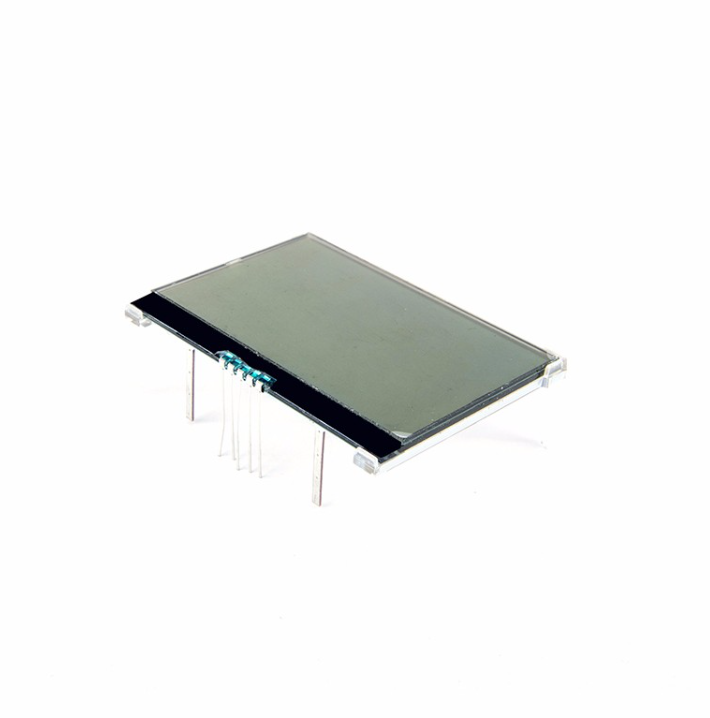
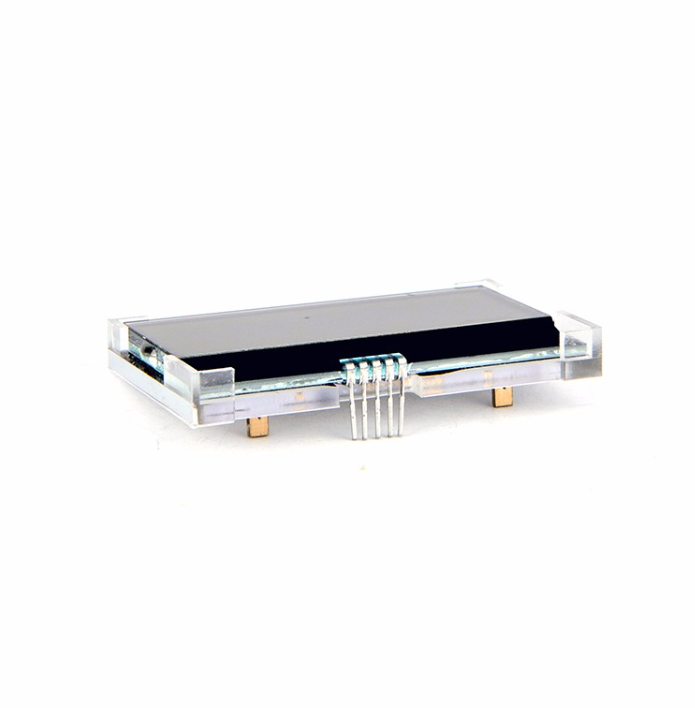
COG technology mounts the driver IC directly onto the LCD glass. This allows the display structure to become thinner and can reduce the need for a separate driver PCB. The result is a more compact module that is easier to integrate into slim meter housings.
Lower overall display thickness
Reduced number of separate PCB components
More available space for metering and communication electronics
Greater flexibility in enclosure design
Fewer internal mechanical interfaces
Cleaner integration with compact smart meter platforms
For OEM designers, reduced thickness can make it easier to position the LCD closer to the enclosure window while maintaining space behind the display for the main meter PCB. This can be valuable in single-phase and three-phase meters where terminals, relays, current transformers, communication modules, and power-supply components already compete for limited internal space.
Procurement teams should therefore compare display architecture in addition to display size. A slightly more integrated COG solution may reduce the number of surrounding parts and simplify the complete meter design.
2. Fewer Interconnections Can Improve Assembly Efficiency and Long-Term Reliability
Every electrical connection inside a smart meter represents a potential source of assembly variation or long-term failure. Connectors, solder joints, separate driver boards, pin headers, and flexible cables all require manufacturing control. Reducing these interfaces can make production simpler and improve repeatability.
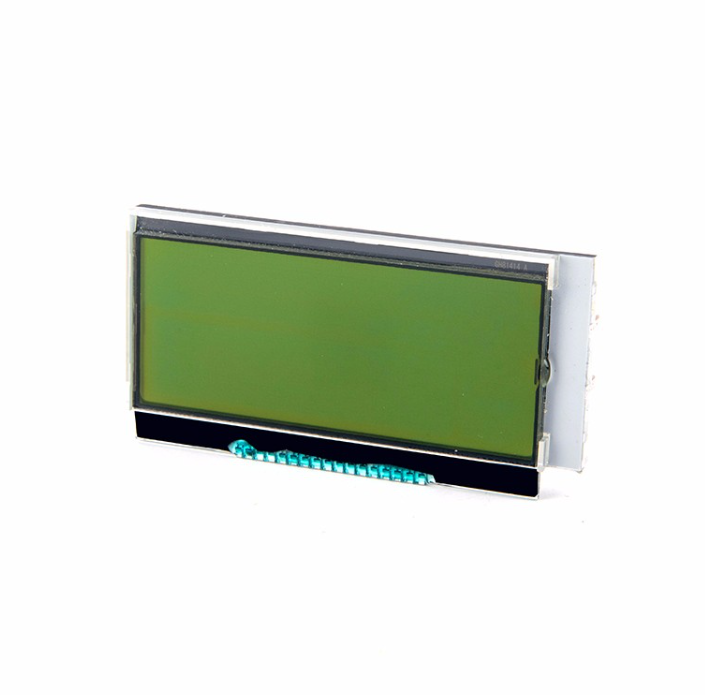
In a COG module, the driver IC is bonded directly to the glass, which reduces the need for separate connections between the LCD panel and a driver PCB. The display can then connect to the main meter electronics through an FPC, conductive interface, or other compact connection method.
Reduced component interfaces can lower the number of possible mechanical or electrical failure points.
A more integrated module can reduce manual installation steps and simplify display alignment.
Removing unnecessary PCB structure can reduce module weight and mechanical load on mounting points.
FPC length, pin layout, segment design, and backlight options can be adapted to the meter architecture.
For high-volume meter manufacturing, these advantages can reduce production time and simplify quality inspection. Instead of checking several separate display assemblies, manufacturers can work with a more integrated module whose dimensions, connection points, and optical performance are controlled as one product.
COG bonding quality is therefore critical. The connection between the IC and glass must remain stable across temperature changes, vibration, and long service periods. Buyers should evaluate bonding consistency and not assume that every COG display provides the same reliability.
OEM manufacturers should also consider the FPC or interface design. A compact display provides little benefit if the connection to the main PCB is difficult to assemble or creates excessive bending stress. Display and meter PCB layouts should be designed together.
3. What Smart Meter Procurement Teams Should Check When Sourcing COG LCD Modules
Once a display has been integrated into a smart meter enclosure, replacing it later can require changes to the window size, PCB interface, firmware, FPC position, mounting features, and production fixtures. Procurement teams should therefore evaluate both the optical requirements and the supplier's long-term manufacturing capability before approving a COG module.
Overall module thickness
Display and viewing-area dimensions
COG bonding reliability
FPC and interface configuration
Operating temperature range
Viewing angle and contrast
Segment or graphic customization
Backlight options
Dimensional consistency
Batch-to-batch display uniformity
Sample validation should use the actual meter housing and PCB whenever possible. Engineers can evaluate display alignment, viewing angle, contrast, FPC routing, assembly pressure, and readability under different lighting conditions. Temperature cycling can also help verify bonding and optical stability.
Supplier customization capability is particularly valuable for smart meter projects. Different markets may require different tariff indicators, warning icons, communication symbols, units, digit layouts, viewing directions, and backlight configurations. A supplier that can customize the glass and connection structure around the meter platform can reduce additional PCB and enclosure changes.
Production consistency is equally important. Small variations in bonding position, polarizer alignment, FPC dimensions, glass thickness, or optical properties can create visible differences between finished meters. For large OEM programs, buyers should review inspection procedures, process control, and long-term supply capability.
The best purchasing decision should therefore consider the complete lifecycle cost. A well-designed COG display can reduce meter thickness, simplify assembly, lower interconnection complexity, and reduce redesign risk even if the module price is not the lowest available.
Conclusion
COG LCD modules can help smart meter manufacturers reduce display thickness and interconnection complexity by mounting the driver IC directly onto the LCD glass. This architecture can save internal space, reduce separate components, simplify assembly, and provide more flexibility for compact meter platforms. For procurement teams, however, the best COG solution should be evaluated according to bonding reliability, FPC design, temperature performance, viewing quality, customization capability, dimensional consistency, and supplier process control. By selecting a reliable COG LCD supplier, smart meter OEMs can create thinner products while reducing assembly complexity and improving long-term display integration reliability.