How CT Window Size and Sensitivity Affect Ground Fault Detection in Protection Equipment
How CT Window Size and Sensitivity Affect Ground Fault Detection in Protection Equipment
Ground fault current transformers are critical sensing components in electrical protection equipment because they help identify small current imbalances that may indicate insulation failure, leakage to earth, or developing electrical faults. For protection equipment manufacturers, choosing a CT with the correct window size and sensitivity is essential. A device that is too small may create installation problems, while an oversized or poorly matched CT can make accurate low-level fault detection more difficult. For OEM engineering and procurement teams, mechanical dimensions and electrical sensitivity therefore need to be evaluated together.
1. Why CT Window Size Matters More Than Simple Conductor Clearance
In many ground fault protection systems, the current transformer is installed around multiple live conductors so that the magnetic effects of normal load current cancel each other. Under healthy operating conditions, the vector sum of the currents passing through the CT should be close to zero. When current leaks to ground, an imbalance appears and the CT produces a secondary signal that can be detected by the protection electronics.
Because several conductors may need to pass through the same opening, window size becomes an important mechanical design parameter. However, buyers should not simply select the largest aperture available. A larger opening can provide easier installation, but it may also influence magnetic coupling, conductor positioning, external field susceptibility, and the physical size of the complete protection device.
Number and diameter of conductors
Busbar or cable arrangement
Required installation clearance
Enclosure and PCB dimensions
Conductor centering and positioning
Retrofit or new-equipment installation requirements
Conductor position can influence measurement repeatability, especially when the system is designed to detect very small residual currents compared with the normal load current flowing through the primary conductors. If cables are placed very close to one side of a large window, the magnetic field distribution may differ from the ideal centered condition.
For protection equipment manufacturers, this means mechanical integration should be considered during the CT selection stage rather than after the enclosure and conductor arrangement have already been finalized.
A properly sized ground fault CT should provide enough installation space without introducing unnecessary dimensions or making conductor positioning difficult to control. For high-volume OEM projects, easier and more repeatable installation can also help reduce assembly variation between finished units.
2. How CT Sensitivity Determines the Ability to Detect Small Ground Fault Currents
Ground fault protection requires a different measurement priority from conventional load current monitoring. In many applications, the CT must detect a relatively small residual current while much larger normal currents are simultaneously flowing through the conductors inside the core.
Sensitivity therefore becomes one of the most important performance characteristics. The CT must generate a sufficiently clear and repeatable secondary signal when a fault current appears, while avoiding unstable behavior under normal load conditions.
Magnetic core material and geometry influence low-level signal response and measurement stability.
Secondary turns and winding consistency affect output level and repeatability.
The CT and protection circuit must be electrically matched to maintain dependable response.
Stable performance helps maintain detection consistency across changing environments.
Higher sensitivity is useful, but it should not be considered independently from immunity to interference. Protection systems may operate near large conductors, switching devices, contactors, transformers, and power electronics. External magnetic fields and electrical noise can create unwanted signals if the CT and surrounding circuit are poorly designed.
For OEM buyers, the objective is therefore not simply to purchase the most sensitive CT. The correct solution should provide a stable detection margin between normal operating conditions and the minimum fault level the equipment is designed to identify.
Engineers should also evaluate the complete signal chain. The CT output, burden resistor, amplifier, filtering circuit, comparator, ADC, and protection algorithm all influence final detection capability. A high-performance CT cannot compensate for poorly matched downstream electronics.
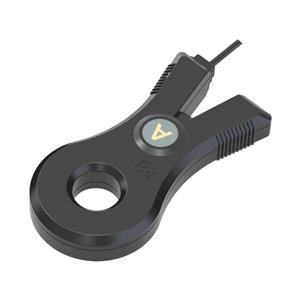
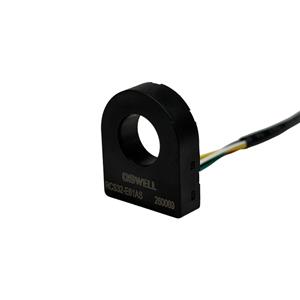
Ground fault current transformer solutions such as those designed for dedicated protection applications can be evaluated according to aperture size, residual current sensitivity, mechanical structure, and compatibility with the protection circuit. Early supplier involvement can help optimize these parameters before the product enters validation.
3. What Procurement Teams Should Check When Sourcing Ground Fault Current Transformers
For protection equipment manufacturers, a ground fault CT is a safety-related sensing component that should be evaluated according to real operating conditions rather than catalog dimensions alone. Once the transformer is integrated into the enclosure, conductor routing, PCB, and protection logic, replacing it later may require additional mechanical and electrical validation.
Procurement teams should therefore work closely with engineering departments when qualifying a supplier.
CT window dimensions
Minimum detectable residual current
Output sensitivity
Linearity and repeatability
Phase and frequency performance
Core material consistency
External magnetic field immunity
Temperature stability
Insulation performance
Batch-to-batch consistency
Sample testing should reproduce the actual conductor arrangement whenever possible. Engineers can evaluate different conductor positions, normal load currents, fault levels, temperatures, and nearby magnetic sources to determine whether the CT provides sufficient detection margin.
Buyers should also examine supplier manufacturing control. Small variations in core assembly, winding turns, mechanical dimensions, or material properties can affect low-level residual current performance. This becomes particularly important in high-volume protection equipment where thousands of units must provide consistent response.
Customization capability can provide additional value. Different protection products may require specific window shapes, mounting methods, secondary outputs, wire lengths, terminals, or enclosure structures. A supplier that can adapt the CT to the final product can help OEM manufacturers reduce mechanical compromises and shorten development cycles.
Finally, procurement decisions should consider lifecycle value rather than unit price alone. A lower-cost CT may create additional expense if inconsistent sensitivity leads to calibration problems, nuisance trips, missed faults, production rework, or field replacements. Stable manufacturing, application engineering support, testing capability, traceability, and long-term supply availability can therefore be more important than a small difference in initial component cost.
Conclusion
CT window size and sensitivity have a direct influence on the performance of ground fault detection systems. The window must provide sufficient space for the required conductors while maintaining controlled positioning and practical installation, while the sensing design must detect small residual currents reliably without becoming excessively sensitive to external interference. For OEM protection equipment manufacturers, the best ground fault CT should therefore be selected by considering aperture dimensions, residual current sensitivity, core and winding consistency, temperature stability, signal-chain compatibility, and mass-production repeatability together. Working with an experienced current transformer supplier can help procurement and engineering teams reduce development risk, improve protection reliability, and achieve more consistent performance across large production volumes.