How DC Immunity Current Transformers Maintain Metering Accuracy Under Distorted Load Conditions
How DC Immunity Current Transformers Maintain Metering Accuracy Under Distorted Load Conditions
Modern smart meters are increasingly required to measure current from loads containing power electronics, switching power supplies, variable-frequency drives, EV chargers, LED lighting, and other non-linear devices. These loads can create distorted waveforms and DC components that challenge conventional current measurement technologies. For smart meter manufacturers and procurement teams, DC immunity current transformers provide an important solution for maintaining stable measurement performance under these more demanding operating conditions.
1. Why Distorted Current Waveforms Create Measurement Challenges for Conventional CTs
A conventional current transformer measures alternating current through electromagnetic coupling between the primary conductor and the secondary winding. Under a clean sinusoidal AC waveform, this technology can provide excellent accuracy and long-term stability. However, real electrical networks are becoming increasingly complex.
Power electronic equipment can generate harmonic distortion, asymmetrical waveforms, and small DC components. When a DC component is present in the primary current, it can shift the magnetic operating point of the CT core. In severe cases, this magnetic bias can push part of the core closer to saturation.
When saturation or magnetic imbalance occurs, the relationship between primary and secondary current becomes less linear. This can cause ratio error, phase error, waveform distortion, and unstable measurement results. For smart meters, even relatively small errors can influence energy calculation and calibration consistency.
Switching power supplies
Variable-frequency drives
EV charging equipment
Solar and battery power electronics
LED lighting systems
Electronic household appliances
For utilities and meter manufacturers, this means the CT must be evaluated under more than an ideal laboratory sine wave. Procurement teams should understand how the sensing component behaves when the current waveform contains DC offset, harmonics, or rapidly changing load conditions.
A CT that performs well under standard AC conditions but becomes unstable under distorted loads can increase meter calibration variation and create additional quality-control challenges during mass production.
2. How DC Immunity CT Design Helps Maintain Accuracy and Linearity
DC immunity current transformers are designed specifically to reduce the measurement errors that can occur when the primary current contains a DC component or highly distorted waveform. Their performance depends on the magnetic core system, winding design, mechanical structure, and manufacturing consistency.
The objective is to prevent unwanted magnetic bias from significantly changing the CT's transfer characteristics. A properly designed DC immunity CT can maintain a more stable relationship between primary current and secondary output over a wider range of real-world load conditions.
This provides several important benefits for smart meter manufacturers:
More stable current measurement under non-sinusoidal and asymmetrical loads.
Helps maintain predictable output across different current levels and waveform conditions.
Reduces unexpected variation between laboratory calibration and field operation.
Supports more consistent meter performance across diverse customer loads.
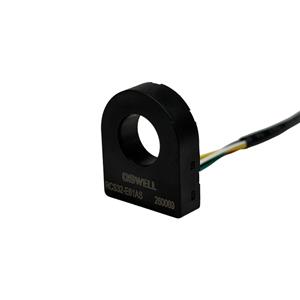
Products such as DC immunity CTs used in smart meter applications can be especially valuable where the meter must operate reliably across a wide range of residential, commercial, and industrial loads.
However, buyers should avoid evaluating DC immunity only as a marketing label. Important performance factors include ratio accuracy, phase displacement, DC bias resistance, core consistency, thermal stability, current range, conductor geometry, and repeatability between production units.
For high-volume smart meter projects, manufacturing consistency is particularly important. Variations in magnetic materials, winding position, core assembly, or air-gap control can change the performance of the finished CT. The supplier therefore needs stable process control and suitable testing methods to ensure that mass-production units behave similarly to approved samples.
3. What Procurement Teams Should Check Before Selecting a DC Immunity CT Supplier
For OEM smart meter manufacturers, choosing a DC immunity current transformer is not simply a component purchasing decision. Once the CT is integrated into the meter's PCB, busbar, enclosure, calibration process, and metering algorithm, changing the component later can require significant validation work.
Procurement and engineering teams should therefore evaluate both component performance and supplier capability before approving a long-term source.
DC immunity performance
Ratio accuracy
Phase error
Linearity
Temperature stability
Rated current range
Mechanical dimensions
Busbar or PCB compatibility
Production testing capability
Batch-to-batch consistency
Buyers should also review how the supplier validates the CT under distorted waveform conditions. Testing only with ideal sinusoidal current may not reveal how the device performs when DC offset or harmonic content is present.
For large OEM projects, customized mechanical and electrical options may also be important. Smart meter designs can differ in busbar dimensions, PCB layout, enclosure space, rated current, secondary output, and installation method. A supplier that can support application-specific development can help the meter manufacturer avoid unnecessary mechanical or calibration redesign.
Total lifecycle cost should also be considered. A low-cost CT that creates higher calibration variation, additional testing, or unstable field accuracy may ultimately cost more than a component with stronger DC immunity and better production consistency.
For long-term smart meter programs, engineering support, production capacity, traceability, quality control, and supply stability are therefore just as important as the initial component price.
Conclusion
DC immunity current transformers help smart meters maintain more stable measurement accuracy when real-world loads introduce DC components, harmonic distortion, and asymmetrical current waveforms. By reducing magnetic bias effects and supporting better linearity, these CTs can improve calibration consistency and field reliability. For procurement teams, the most important selection factors include DC immunity performance, ratio and phase accuracy, temperature stability, mechanical compatibility, production consistency, and supplier testing capability. Choosing an experienced DC immunity CT supplier can help smart meter manufacturers reduce calibration risk, improve mass-production consistency, and build metering products that remain dependable across increasingly complex electrical load conditions.