How Electron-Beam Welding Improves BMS Shunt Resistor Stability in High-Current Battery Systems
How Electron-Beam Welding Improves BMS Shunt Resistor Stability in High-Current Battery Systems
High-current battery systems depend on accurate and stable current measurement for state-of-charge calculation, energy management, fault detection, and battery protection. Precision BMS shunt resistors are widely used to convert hundreds of amperes into a small voltage signal that can be measured by the battery management system. However, the long-term performance of a shunt depends not only on the resistance alloy itself, but also on how the resistive element is joined to the conductive terminals. Electron-beam welding provides a highly controlled joining process that can help improve connection stability, reduce unwanted resistance variation, and support more consistent performance in EV and energy storage battery packs.
1. Why the Welding Joint Is Critical in High-Current BMS Shunt Resistors
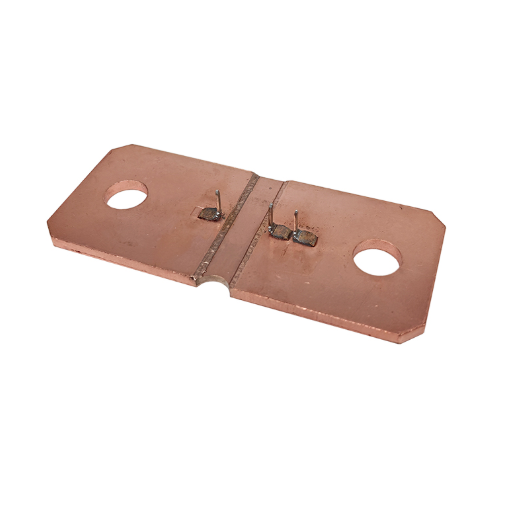
A BMS shunt resistor typically combines a low-resistance alloy element with highly conductive copper or copper-alloy terminals. Current flows through the complete structure, while the BMS measures the very small voltage drop across the precision resistance section.
Because the nominal resistance can be extremely low, any additional resistance introduced by the welded joint may influence both electrical and thermal performance. An unstable joint can create localized heating, resistance drift, or inconsistent current measurement between production units.
Additional electrical resistance at the material interface
Localized hot spots under high current
Mechanical weakness during vibration or thermal cycling
Variation in resistance between production batches
Measurement drift after repeated charge and discharge cycles
Reduced long-term calibration stability
These risks become more important as battery current increases. In EV traction batteries, battery energy storage systems, and industrial battery platforms, a shunt may carry several hundred amperes during normal operation and significantly higher current during transient events.
For procurement teams, this means the joining process should be evaluated as part of the precision measurement design. A shunt can use a high-quality resistance alloy and still deliver inconsistent performance if the connection between the resistance element and terminals is not sufficiently controlled.

2. How Electron-Beam Welding Supports Electrical, Thermal and Mechanical Stability
Electron-beam welding uses a concentrated beam of high-energy electrons to generate heat at a precisely controlled joining area. Compared with less controlled joining methods, the process can create a narrow and consistent weld zone while limiting unnecessary heat input to surrounding material.
For precision shunt resistors, this controlled process can provide several advantages when properly engineered and manufactured.
A controlled weld interface helps reduce unwanted resistance variation between the alloy element and conductive terminals.
Consistent joint quality can help reduce localized heating and improve temperature distribution under heavy current.
Reliable material joining supports durability during vibration, installation stress, and repeated thermal cycling.
Controlled welding parameters can help maintain more consistent electrical characteristics across mass-production batches.
Heat-affected-zone control is particularly important in precision resistance components. Excessive or uneven heat during joining can influence material properties around the weld area and create additional variation. A carefully controlled electron-beam process can reduce this risk and help preserve the intended electrical behavior of the resistance element.
In battery systems, improved joint stability can also support more predictable temperature behavior. Because high-current shunts generate heat during operation, thermal cycling occurs repeatedly as battery load changes. A strong and consistent welded interface helps the component withstand this cycling without significant changes in resistance or mechanical integrity.
For BMS designers, this means more stable current data for SOC calculation, charge and discharge monitoring, energy estimation, and protection decisions.
3. What OEM Buyers Should Check When Sourcing Electron-Beam-Welded BMS Shunts
Electron-beam welding can provide significant manufacturing advantages, but the welding technology alone does not guarantee a high-quality BMS shunt. OEM buyers should evaluate the complete resistor design, production control, and validation capability of the supplier.
Nominal resistance value
Resistance tolerance
Temperature coefficient
Rated and peak current capability
Weld joint consistency
Temperature-rise performance
Mechanical strength
Kelvin or sense-pin configuration
Batch-to-batch repeatability
Production traceability
Procurement teams should ask how welding parameters are controlled and how finished products are inspected. Resistance testing, dimensional inspection, joint-quality verification, thermal testing, and high-current validation can all help demonstrate that the production process is stable.
Sample testing should also reproduce real battery conditions whenever possible. Engineers can evaluate resistance before and after high-current loading, repeated thermal cycling, vibration, mechanical mounting, and long-duration operation. Comparing several production samples can reveal whether the manufacturing process provides the consistency required for an OEM battery program.
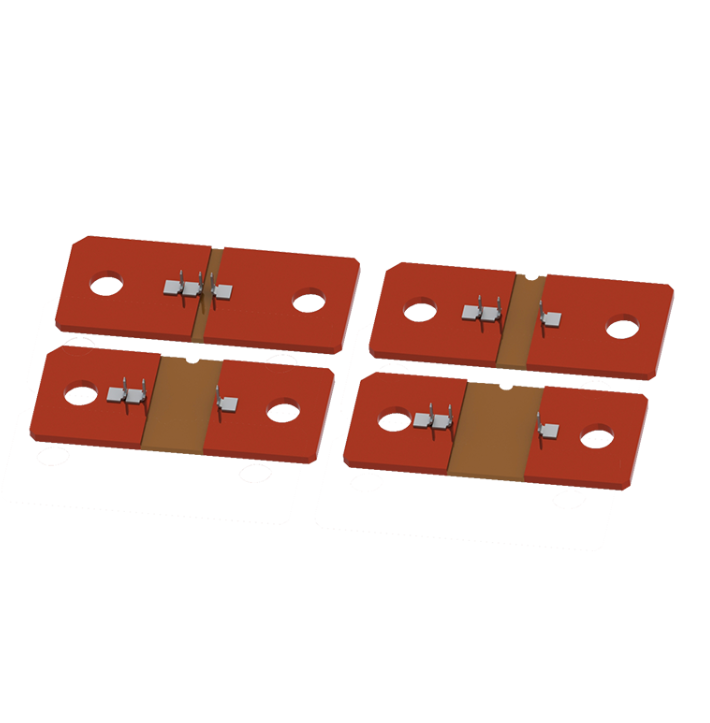
Customization capability is another important consideration. Different EV and energy storage platforms may require specific resistance values, terminal sizes, mounting holes, busbar interfaces, sense pins, or overall dimensions. A supplier capable of combining precision resistance design with controlled electron-beam welding can help OEM customers optimize the shunt around the complete battery architecture.
Total lifecycle cost should therefore be considered instead of component price alone. A stable welded joint can reduce calibration variation, thermal problems, rework, field failures, and measurement drift, potentially delivering greater value throughout the battery system's service life.
Conclusion
Electron-beam welding can improve BMS shunt resistor stability by creating a highly controlled connection between the precision resistance element and conductive terminals. Stable joint resistance, controlled heat input, strong mechanical bonding, and improved production repeatability can help reduce thermal hot spots, resistance drift, and measurement variation in high-current battery systems. For EV and energy storage procurement teams, the best shunt should be evaluated according to resistance accuracy, temperature coefficient, welding consistency, thermal cycling performance, mechanical strength, sensing structure, and mass-production control. By selecting an electron-beam-welded BMS shunt from an experienced supplier, manufacturers can improve current measurement consistency and build more reliable high-current battery platforms.