How FOG LCD Modules Improve Flexible Display Integration in Compact Smart Meter Enclosures
How FOG LCD Modules Improve Flexible Display Integration in Compact Smart Meter Enclosures
Compact smart meters must integrate displays, metering circuits, communication modules, relays, power supplies, terminals, and protection components within increasingly limited enclosure space. This creates challenges for display positioning and internal connection design. FOG, or Film-on-Glass, LCD modules use a flexible film connection directly bonded to the glass, allowing the display to connect to the main PCB without requiring a rigid driver board immediately behind the screen. For OEM smart meter manufacturers and procurement teams, this structure can improve layout flexibility, reduce internal space conflicts, and simplify display integration in compact meter platforms.
1. Flexible Film Connections Give Smart Meter Designers More Freedom in PCB and Enclosure Layout
One of the main challenges in smart meter development is aligning the display window with the internal PCB architecture. The LCD must sit close to the front cover for good readability, while the main electronics may need to be positioned deeper inside the enclosure to accommodate terminals, current sensors, relays, and high-voltage spacing requirements.
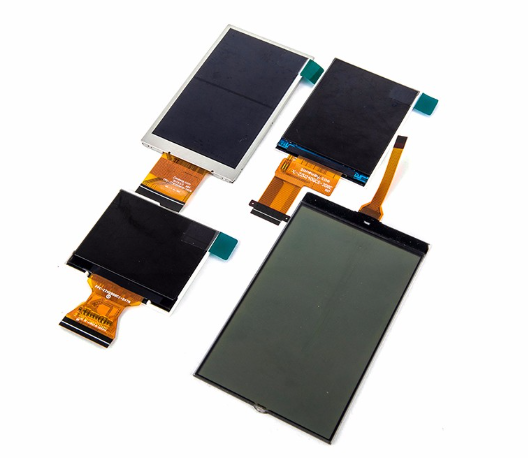
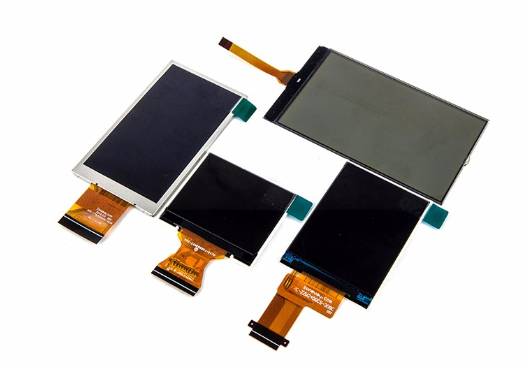
FOG LCD modules help solve this problem by using a flexible film connection between the glass display and external electronics. Instead of forcing the main PCB to sit directly behind the LCD, the flexible connection can route around other components and allow the display and PCB to occupy different positions.
Greater freedom in PCB placement
More flexible routing inside compact enclosures
Reduced need for rigid display-side circuit boards
More available space around terminals and relays
Easier alignment between the display and front window
More options for thin or irregular meter enclosure designs
This flexibility can be especially valuable in compact single-phase meters, DIN rail meters, and smart metering devices where internal space is highly constrained. Designers can place the display where it is easiest to read while positioning the main PCB where electrical spacing and heat management are easier to control.
For procurement teams, this means the display should not be evaluated only by visible area and price. FPC length, bending direction, connector location, glass dimensions, and installation space should all be checked against the actual enclosure design.
2. FOG Integration Can Reduce Interconnection Complexity While Supporting Reliable Assembly
Every connection inside a smart meter adds a potential source of assembly variation. Separate driver boards, pin headers, connectors, and manually routed wires all require space and additional production steps. A FOG structure can reduce some of these interfaces by allowing the flexible film to connect the display more directly to the control electronics.
Fewer rigid interconnections can also help simplify mechanical assembly. The display can be positioned independently from the main PCB and connected through the flexible film, reducing the need to align multiple rigid boards at the same time.
The film connection can route around internal components and reduce mechanical layout restrictions.
Display positioning and PCB placement can be optimized separately while remaining electrically connected.
Reduced rigid PCB structure around the display can free space for other meter components.
Defined film routing can reduce differences caused by manually installed display wiring.
However, flexible integration requires careful mechanical design. The film should not be sharply bent, repeatedly flexed, or compressed between enclosure parts. Excessive strain near the bonded area can affect long-term connection reliability.
Vibration and temperature variation should also be considered. Smart meters may operate for many years in distribution cabinets or outdoor enclosures. The FOG bonding interface and flexible film need to maintain stable electrical contact during thermal cycling and long-term mechanical stress.
For OEM designers, the best result comes from defining the LCD, film routing, enclosure supports, and PCB connector location together during the early product-development stage.
3. What Procurement Teams Should Check When Selecting FOG LCD Modules
Once a FOG LCD has been integrated into the meter enclosure, changing it later may require modifications to the front window, FPC routing, connector position, PCB layout, mechanical supports, and production fixtures. Procurement teams should therefore evaluate both the display quality and the supplier's customization capability before mass production.
Display and viewing-area dimensions
Film length and routing direction
FOG bonding reliability
Connector or interface configuration
Operating temperature range
Viewing angle and contrast
Mechanical bending requirements
Custom segment and icon capability
Dimensional consistency
Batch-to-batch display uniformity
Sample validation should be performed inside the real smart meter housing. Engineers can check whether the flexible film routes naturally without excessive stress, whether the display aligns correctly with the enclosure window, and whether the connector remains secure after assembly.
Temperature cycling and vibration testing can provide additional information about long-term bonding and interconnection stability. Buyers should also inspect several samples to confirm that FPC position, glass dimensions, viewing area, and optical appearance remain consistent between production units.
Supplier customization capability is especially important because different meter platforms may require unique film lengths, bending directions, connector positions, display segments, symbols, viewing directions, or backlight structures. A supplier that can customize the FOG module around the actual enclosure can reduce mechanical compromise and PCB redesign.
Procurement teams should therefore consider total lifecycle value rather than module price alone. A well-integrated FOG LCD can reduce enclosure constraints, simplify assembly, improve internal space utilization, and lower redesign risk across high-volume smart meter programs.
Conclusion
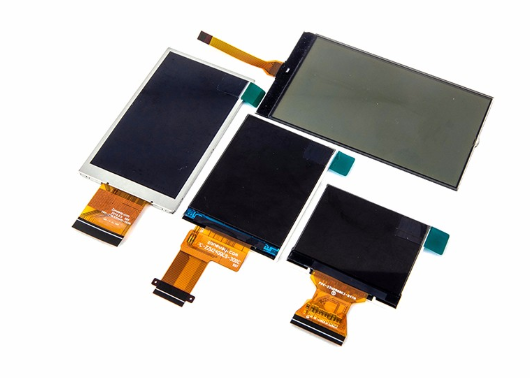
FOG LCD modules improve flexible display integration in compact smart meter enclosures by allowing the LCD glass and main PCB to be positioned more independently. Flexible film routing can reduce rigid interconnection requirements, improve internal space utilization, and simplify the integration of displays with relays, current sensors, terminals, and communication electronics. For procurement teams, the best FOG module should be evaluated according to bonding reliability, film routing, temperature performance, optical quality, mechanical stress, customization capability, dimensional consistency, and supplier process control. By selecting a reliable FOG LCD partner, smart meter manufacturers can build more compact products while reducing display-integration complexity and long-term assembly risk.