How GBT-to-GBT 32A Three-Phase Helix Cables Improve Cable Management in Commercial EV Charging
How GBT-to-GBT 32A Three-Phase Helix Cables Improve Cable Management in Commercial EV Charging
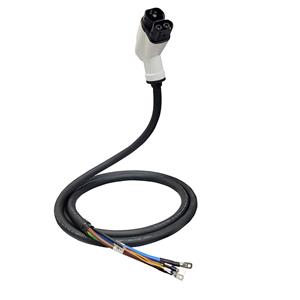
Commercial EV charging equipment must deliver reliable electrical performance while remaining convenient for drivers, operators, and maintenance teams. In parking facilities, fleet depots, workplaces, and destination charging locations, loose charging cables can create storage problems, increase wear, and make charging areas look disorganized. A GBT-to-GBT 32A three-phase helix cable provides a practical solution by combining three-phase AC charging capability with a coiled structure that can extend during charging and retract after use. For EVSE manufacturers and procurement teams, cable management is therefore not only a user-experience issue but also an important factor in durability, installation efficiency, and lifecycle cost.
1. Why Helix Cable Design Helps Keep Commercial Charging Areas Cleaner and Safer
Commercial EV charging stations are used repeatedly throughout the day. Drivers pull charging cables toward vehicles, connect them for charging, and return them after use. With a conventional straight cable, part of the cable may remain on the ground, be dragged across pavement, or become tangled around charging equipment.
A helix cable is designed to remain compact when not extended. During charging, the cable stretches to reach the vehicle. After disconnection, the coiled structure helps pull the cable back toward its original shape. This can improve cable organization without requiring a large external cable management system.
Reduced loose cable on the ground
Cleaner charger appearance
Lower risk of cable tangling
Reduced dragging and abrasion
Easier cable return after charging
More organized parking and fleet charging areas
For fleet depots and commercial parking facilities, these advantages become more important because many charging points may be installed next to each other. Good cable management helps keep each charging bay organized and can reduce unnecessary contact between cables, vehicles, and the ground.
From a procurement perspective, however, a helix structure must maintain its recovery performance over time. A cable that permanently stretches after repeated use can lose the main advantage of the coiled design. Buyers should therefore evaluate recovery performance, extension length, cable weight, and mechanical durability rather than judging the product only by appearance.
2. Electrical Performance, Flexibility and Helix Recovery Must Work Together
Cable management should never compromise charging performance. A GBT-to-GBT 32A three-phase cable must carry the required current reliably while remaining flexible enough for daily handling. This creates a design balance between conductor size, insulation thickness, jacket material, mechanical strength, and coil elasticity.
At 32A three-phase operation, conductor resistance and terminal contact quality can influence temperature rise. Charging sessions may continue for several hours, so buyers should evaluate the complete cable assembly under sustained load rather than focusing only on nominal current rating.
Conductor and terminal design should support continuous 32A three-phase charging without excessive temperature rise.
The cable should repeatedly return to a compact form after extension without permanent deformation.
A balanced construction makes the cable easier to pull and connect while maintaining mechanical durability.
Reliable GBT connector interfaces help maintain stable electrical contact through repeated charging cycles.
Jacket materials also matter in commercial environments. Charging cables may be exposed to sunlight, moisture, dust, low temperatures, heat, abrasion, and repeated contact with the ground. Poor material selection can reduce flexibility or cause premature surface wear.
OEM buyers should also examine the strain-relief structure at each connector. A helix cable naturally experiences repeated tension as it extends and contracts. If this stress is concentrated near the cable entry point, conductor or insulation damage may occur over time.
The best cable design therefore balances electrical performance with mechanical recovery. A cable that carries current well but is too stiff can be inconvenient for users, while a cable that is highly flexible but thermally weak may not be suitable for sustained commercial charging.
3. What Commercial EV Charging Buyers Should Check Before Approving a Helix Cable Supplier
For EVSE manufacturers, charging network operators, and distributors, a helix cable should be evaluated as a long-term operating component rather than a simple accessory. High utilization, repeated extension, frequent connector insertion, and outdoor exposure can quickly reveal weaknesses that may not appear during initial sample inspection.
32A three-phase current capability
Conductor specification
Temperature-rise performance
Helix recovery consistency
Extension and working length
Connector insertion durability
Strain-relief strength
Jacket abrasion resistance
Environmental performance
Batch-to-batch consistency
Buyers should request repeated extension and recovery testing rather than evaluating only a new cable. The cable should also be tested under actual current load, because temperature can influence jacket flexibility and coil behavior.
Supplier manufacturing consistency is especially important. Variations in conductor construction, cable extrusion, coil forming, connector assembly, or terminal crimping can create differences in both electrical performance and mechanical recovery. For commercial charging networks, inconsistent cables across multiple charging points can increase maintenance and replacement costs.
Customization capability may also be valuable. Different charger installations may require specific retracted lengths, extended lengths, connector orientations, cable colors, conductor sizes, or mechanical structures. A supplier capable of adapting the cable to the charging station layout can help OEMs reduce unnecessary external cable-management components.
Finally, procurement teams should consider lifecycle cost rather than unit price alone. A higher-quality helix cable that reduces ground abrasion, remains organized, maintains stable contact resistance, and requires fewer replacements can offer better value over years of commercial operation.
Conclusion
GBT-to-GBT 32A three-phase helix cables can improve commercial EV charging environments by keeping cables more organized, reducing ground contact, and simplifying cable return after each charging session. However, effective cable management depends on more than the coiled shape. Electrical current capacity, temperature rise, helix recovery, jacket flexibility, connector durability, strain relief, and manufacturing consistency all influence long-term performance. For EVSE manufacturers and procurement teams, selecting a reliable helix cable supplier can help reduce maintenance, improve charging-site appearance, simplify daily operation, and lower lifecycle costs across commercial and fleet charging installations.