How Ground Fault Current Transformers Improve Electrical Protection in Modern Power Distribution Systems
How Ground Fault Current Transformers Improve Electrical Protection in Modern Power Distribution Systems
Modern power distribution systems are becoming more complex as commercial buildings, industrial facilities, renewable energy installations, data centers, and smart infrastructure rely on increasingly large and sensitive electrical networks. In these systems, quickly detecting abnormal current flowing to ground is essential for protecting equipment, reducing downtime, and improving electrical safety.
Ground fault current transformers provide a practical measurement solution by detecting current imbalance within electrical conductors. When the current flowing through the monitored conductors does not return as expected, the transformer can provide a signal to protection equipment, allowing the system to identify a possible ground fault.
For switchgear manufacturers, protection relay suppliers, panel builders, industrial equipment OEMs, and procurement teams, selecting the right ground fault CT can directly affect fault detection sensitivity, protection reliability, mechanical integration, and the long-term performance of the complete electrical protection system.
1. Why Ground Fault Detection Is Critical in Modern Electrical Distribution
A ground fault occurs when electrical current flows through an unintended path to earth or grounded equipment. This may happen because of insulation deterioration, damaged cables, moisture, wiring problems, contamination, or equipment failure.
Unlike a large short circuit, some ground faults may begin with relatively small leakage currents. If these conditions are not identified early, they can develop into more serious failures that may damage equipment or interrupt facility operation.
Ground fault monitoring is especially important in applications such as:
Industrial switchgear and distribution panels
Commercial building electrical systems
Motor control centers
Data centers and critical infrastructure
Renewable energy installations
Large industrial machines
Power distribution and protection equipment
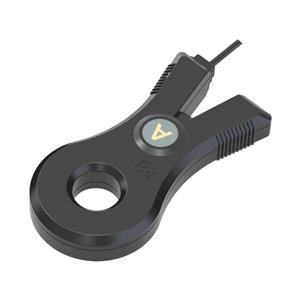
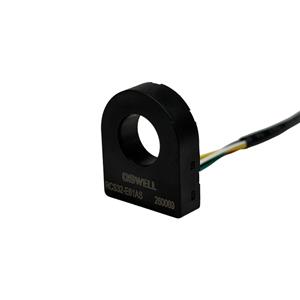
A ground fault CT typically monitors multiple conductors passing through a common magnetic core. Under normal operating conditions, the vector sum of current flowing through the conductors is close to zero. When part of the current leaves the intended circuit through ground, an imbalance appears and the CT produces a corresponding output signal.
This signal can be connected to a protection relay, monitoring device, or control system that triggers an alarm or disconnects the affected circuit according to the protection strategy.
2. What Buyers Should Consider When Selecting a Ground Fault Current Transformer
Ground fault current transformers are not selected in exactly the same way as standard metering CTs. Their primary purpose is detecting relatively small residual or fault currents rather than measuring normal load current for billing or energy analysis.
Procurement teams should therefore evaluate several application-specific characteristics.
Detection Sensitivity:
The CT should provide sufficient sensitivity for the protection threshold required by the system. A protection application designed to identify small leakage conditions may require different characteristics from one focused on higher fault currents.
Core Aperture Size:
All required conductors must fit through the CT window while maintaining proper mechanical positioning. Switchgear manufacturers should confirm conductor quantity, cable diameter, busbar dimensions, and available installation space before selecting the sensor.
Accuracy and Output Consistency:
Reliable protection depends on repeatable sensor output. Variations between production units can influence relay thresholds and system calibration, making manufacturing consistency particularly important for OEM applications.
Frequency and Electrical Characteristics:
The CT must be suitable for the electrical frequency and fault characteristics of the intended application. Engineers should confirm compatibility between the CT output and the connected protection device.
Insulation and Environmental Performance:
Ground fault CTs may operate inside switchgear, distribution cabinets, or industrial equipment for many years. Temperature, humidity, insulation requirements, and mechanical durability should therefore be considered during supplier evaluation.
Mounting and Installation:
Mechanical design can significantly affect production efficiency. Fixed-core designs may work well for new equipment, while other structures may provide advantages when installation access is limited.
For customized switchgear or protection equipment, manufacturers may also require specific apertures, terminals, lead wires, mounting brackets, or output characteristics.
3. How Ground Fault CTs Support Smarter and More Reliable Protection Systems
Electrical protection is becoming increasingly intelligent. Modern facilities are moving beyond simple fault tripping toward continuous condition monitoring, remote alarms, automated diagnostics, and predictive maintenance.
Ground fault CTs can provide important input data for these systems. When integrated with digital protection relays or monitoring platforms, residual current trends can help operators identify developing insulation problems before they cause complete equipment failure.
This creates additional value in applications where downtime is expensive, including manufacturing facilities, data centers, commercial complexes, and critical power systems.
For OEM manufacturers and procurement teams, supplier capability becomes particularly important when ground fault CTs are used in high-volume protection equipment. Buyers should evaluate:
Magnetic core consistency
Winding process control
Electrical testing capability
Insulation and withstand testing
Dimensional consistency
Production traceability
Customization support
Stable mass-production capability
The cost of a CT is only one part of the overall protection system. An inconsistent sensor can create calibration problems, nuisance alarms, missed detection thresholds, or additional testing requirements during equipment production.
Working with an experienced current transformer manufacturer can help OEM customers select suitable magnetic designs, apertures, output characteristics, and mechanical structures during the product development stage.
As electrical networks become more complex and the cost of downtime increases, reliable ground fault detection will continue to be an important part of modern power distribution protection.
Conclusion
Ground fault current transformers provide a critical measurement function in modern electrical protection systems by detecting current imbalance that may indicate leakage or a developing fault to ground. For switchgear manufacturers, industrial equipment OEMs, panel builders, and procurement teams, selecting a reliable ground fault CT requires careful consideration of sensitivity, aperture size, output consistency, insulation performance, mechanical integration, and supplier manufacturing capability. A properly selected ground fault current transformer can improve fault detection, reduce equipment risk, and provide a stronger foundation for intelligent and reliable power distribution protection.