How Integrated OCPP and Multi-Network Connectivity Simplify 7kW AC Charger Platform Deployment
How Integrated OCPP and Multi-Network Connectivity Simplify 7kW AC Charger Platform Deployment
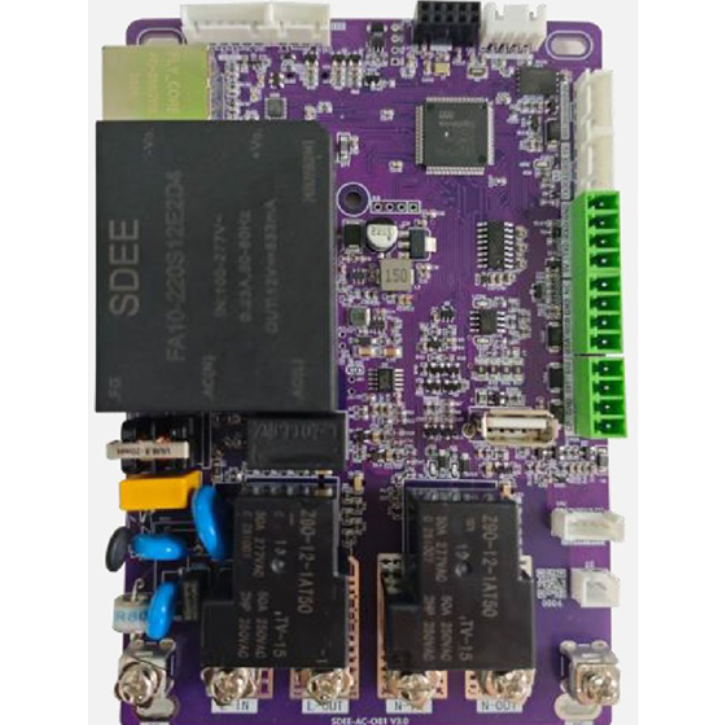
Developing a 7kW AC EV charger today involves much more than controlling power delivery between the grid and the vehicle. Commercial operators, residential charging brands, property managers, and charging networks increasingly expect remote monitoring, user management, firmware updates, energy data, fault diagnostics, and cloud-platform connectivity. An AC charger control board with integrated OCPP support and multiple communication options can significantly reduce the engineering work required to build these functions into a new EVSE platform. For OEM manufacturers and procurement teams, this integration can shorten development cycles, reduce external modules, simplify deployment, and make one charging platform easier to adapt to different markets and network environments.
1. Integrated OCPP Reduces the Work Required to Connect Chargers to Management Platforms
One of the biggest challenges in deploying connected EV chargers is communication between the charger and the central management system. Operators need to know whether chargers are online, when charging sessions start and stop, how much energy is delivered, whether a fault has occurred, and whether remote commands have been completed successfully.
OCPP provides a standardized communication framework between charging equipment and backend management platforms. When OCPP functionality is already integrated into the AC charger control board, OEM manufacturers can avoid developing every communication function from the beginning.
Remote charger status monitoring
Charging session start and stop control
Energy consumption data reporting
User authorization and charging management
Fault and alarm reporting
Remote configuration and platform integration
For an OEM developing a 7kW wallbox, this can reduce both firmware development and backend integration work. Instead of building a charger that functions only as a local electrical device, the manufacturer can develop a connected platform suitable for residential communities, workplaces, commercial parking areas, and charging service operators.
Procurement teams should therefore evaluate a control board not only by its charging control functions but also by how easily it can connect to the customer's existing cloud or charging management architecture.
2. Multi-Network Connectivity Makes One Charger Platform Easier to Deploy in Different Locations
EV chargers are installed in very different environments, and no single communication method is ideal for every location. A residential charger may have reliable WiFi, while a public parking facility may depend on 4G. Commercial buildings may prefer Ethernet for network stability, while Bluetooth can be useful for local commissioning or maintenance.
A control board that supports several communication methods gives charger manufacturers greater deployment flexibility without requiring a completely different hardware platform for every project.
Useful for public and remote charging locations where fixed network infrastructure may not be available.
Provides convenient connectivity for residential, office, and small commercial charging installations.
Supports stable wired communication in commercial facilities and managed charging networks.
Can simplify local setup, commissioning, maintenance, and short-range device interaction.
Multi-network support can also reduce inventory complexity. Instead of maintaining several charger control platforms for different communication environments, manufacturers may be able to standardize more of the hardware and configure the required network option according to each project.
This standardization becomes particularly valuable when a manufacturer sells into multiple markets or works with several charging operators. The same basic 7kW charger platform can be adapted to residential, commercial, fleet, or public charging applications with fewer hardware changes.
OTA firmware support can provide an additional advantage by allowing software improvements and configuration updates after chargers have been deployed. For operators managing large fleets of charging points, reducing on-site service visits can significantly lower maintenance costs.
3. What OEM Buyers Should Evaluate When Selecting a Connected 7kW AC Charger Control Board
Once a control board has been integrated into the charger enclosure, contactor system, residual current protection, charging connector, display, communication architecture, and backend platform, replacing it later can require significant engineering work. Procurement teams should therefore evaluate the complete platform capability before moving into mass production.
OCPP platform compatibility
4G, WiFi, Ethernet and Bluetooth options
OTA firmware update capability
Remote fault diagnostics
Charging data reporting
Energy management integration
Contactor and protection interfaces
Firmware customization capability
Production testing and traceability
Long-term technical support
Buyers should also evaluate how much additional software development is required before deployment. A board may list OCPP and communication functions, but OEM teams still need to understand API requirements, backend compatibility, configuration tools, commissioning procedures, and how firmware customization is handled.
Network reliability should be tested under realistic conditions. Engineers can evaluate communication recovery after temporary network loss, switching between available communication methods, remote command execution, OTA update behavior, and fault reporting. These functions directly influence the operating cost of a connected charging network.
Supplier engineering support is especially important for OEM projects. Different charger brands may require customized user interfaces, RFID functions, cloud platforms, energy management logic, load balancing, branding, or regional communication settings. A control board supplier capable of supporting firmware and platform adaptation can reduce development time significantly.
Procurement teams should therefore compare total project cost rather than board price alone. A highly integrated control platform can reduce additional communication modules, firmware development, field commissioning, maintenance visits, and future redesign, creating greater lifecycle value for the charger manufacturer.
Conclusion
Integrated OCPP and multi-network connectivity can simplify 7kW AC charger platform deployment by combining charging control, backend communication, remote monitoring, and multiple network options within one scalable architecture. Support for 4G, WiFi, Ethernet, Bluetooth, OTA updates, and energy management integration can help OEM manufacturers adapt one charger platform to different residential and commercial projects while reducing additional hardware and software development. For procurement teams, the best control board should be evaluated according to protocol compatibility, network flexibility, firmware support, diagnostics, customization, production consistency, and long-term technical support. A well-integrated connected control platform can shorten time to market and reduce lifecycle cost across large EV charging deployments.