How Integrated Shunt Relays Reduce Component Count in 100A Smart Meter Current Paths
How Integrated Shunt Relays Reduce Component Count in 100A Smart Meter Current Paths
High-current smart meters must combine load switching and accurate current measurement within a limited internal space. In a traditional architecture, the magnetic latching relay and precision shunt are installed as separate components, requiring additional busbars, fasteners, welding points, and assembly operations. An integrated shunt relay combines these two functions into a more compact current-path structure. For 100A smart meter manufacturers, this approach can reduce component count, simplify assembly, improve connection consistency, and create a more standardized platform for high-volume production.
1. Combining the Relay and Shunt Simplifies the 100A Main Current Path
A conventional smart meter current path may include a magnetic latching relay for remote load switching, a separate precision shunt for current measurement, several copper conductors or busbars, and multiple mechanical or welded connections between these components. Each additional part occupies space and creates another interface that must be controlled during production.
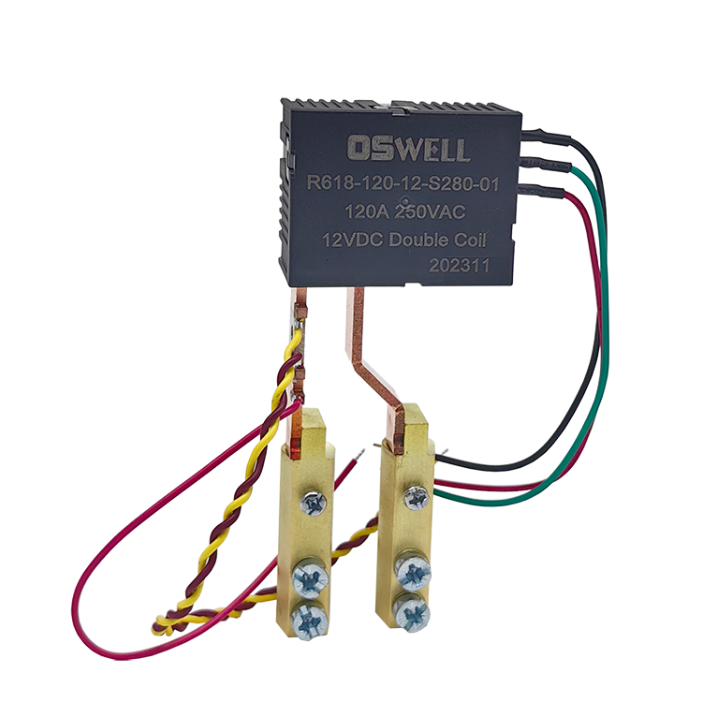
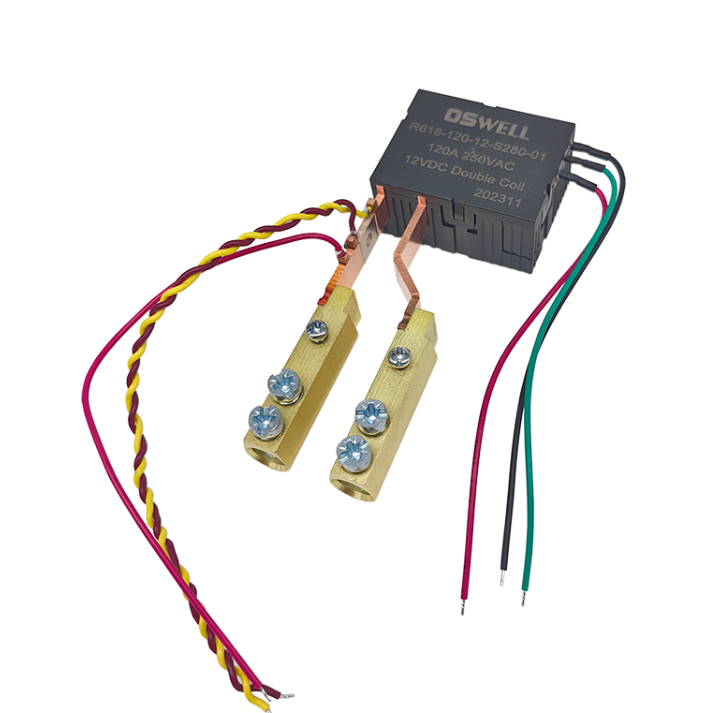
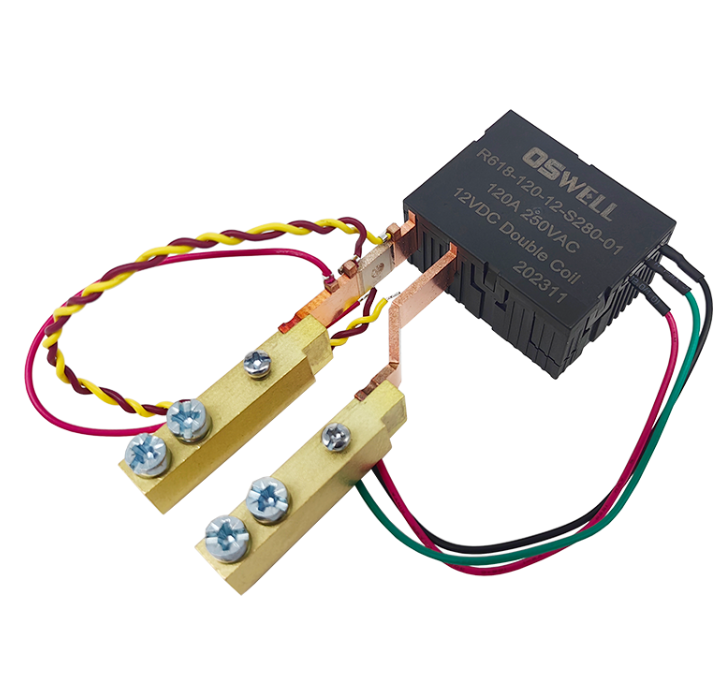
By integrating the shunt directly with the relay structure, smart meter designers can reduce the number of individual components installed in the high-current path. The measured current passes through a more compact assembly while the relay continues to perform the switching function required for remote connection and disconnection.
Separate current-path components
Additional copper busbar sections
Mechanical fastening points
Welding or connection operations
Internal wiring complexity
Assembly and inspection steps
This can be particularly useful in 100A smart meters, where current-path components are physically larger and must handle greater thermal and mechanical loads than components used in lower-current platforms. Saving even a small amount of internal space can make it easier to arrange the terminal block, PCB, display, communication module, power supply, and enclosure structure.
For procurement teams, the benefit is not simply purchasing two functions in one component. The greater value comes from reducing the number of parts that must be sourced, inspected, stored, assembled, and traced during meter production.
2. Fewer Interfaces Can Improve Resistance, Thermal and Assembly Consistency
At 100A, every electrical connection in the main current path matters. Contact resistance at a busbar joint, screw connection, welding point, or terminal interface can create additional voltage drop and heat. When the relay and shunt are installed separately, the current may need to pass through several additional connection points before reaching the meter terminal.
An integrated design can shorten the current path and reduce the number of interfaces that need to remain stable over the meter's service life. This can also make production quality easier to control because fewer connection points need to be inspected.
Fewer independent components reduce positioning and fastening differences between production units.
Reducing intermediate joints can help control unwanted resistance in high-current connections.
Integrated switching and sensing can free valuable enclosure space for other smart meter electronics.
Fewer assembly operations can simplify inspection, traceability, and automated production planning.
The shunt itself must still provide stable resistance and predictable thermal behavior. Because the BMS or metering IC calculates current from the voltage drop across the shunt, changes caused by temperature, welding quality, material variation, or connection stress can directly affect measurement accuracy.
This is where suppliers such as Liding can provide additional value. Rather than treating relays and current-measurement components as unrelated parts, Liding can support smart meter manufacturers with integrated solutions that consider switching, sensing, mechanical installation, and high-current busbar architecture together.
3. What Procurement Teams Should Check Before Selecting a 100A Integrated Shunt Relay
Integration can simplify the meter, but it also means the relay and current-sensing functions must both meet the project requirements. Procurement teams should therefore evaluate the component as a complete current-path assembly rather than comparing only the relay switching rating or the shunt resistance value.
100A switching capability
Shunt resistance accuracy
Contact resistance
Temperature-rise performance
Shunt temperature coefficient
SET and RESET reliability
Busbar connection geometry
Sense-point configuration
Mechanical dimensional consistency
Batch-to-batch production stability
Prototype testing should use the actual meter busbar, enclosure, driver circuit, and measurement electronics. Engineers should check switching performance at rated current, temperature rise during extended loading, shunt output accuracy, and measurement stability after repeated relay operations.
Mechanical interfaces should also be evaluated carefully. Terminal dimensions, welding surfaces, mounting points, current-path alignment, and sense connections need to fit the meter platform without creating unnecessary stress or additional assembly operations.
Supplier customization capability can be especially important for OEM programs. Different meter designs may require changes to shunt resistance, busbar geometry, terminal structure, coil voltage, contact arrangement, sensing points, or mechanical dimensions. Working with a supplier able to coordinate these requirements can reduce redesign work during development.
For smart meter customers, Liding can support this type of integration by combining experience in magnetic latching relays, current-measurement components, and related meter hardware. This allows OEM buyers to evaluate the complete current path instead of sourcing every part independently, which can help improve design compatibility and simplify long-term supply management.
Ultimately, procurement teams should compare total installed cost rather than component price alone. Reducing busbars, joints, assembly operations, inspection points, inventory items, and potential rework can make an integrated relay-and-shunt solution more economical across high-volume 100A smart meter production.
Conclusion
Integrated shunt relays can reduce component count in 100A smart meter current paths by combining high-current switching and precision current sensing within a more compact assembly. Fewer busbars, joints, fasteners, and assembly operations can improve space utilization, reduce production variation, and simplify quality control. For procurement teams, the best solution should be evaluated according to switching performance, shunt accuracy, contact resistance, temperature rise, mechanical integration, sensing configuration, and mass-production consistency. By working with a smart meter component supplier such as Liding, OEM manufacturers can coordinate relay, shunt, and current-path requirements earlier in the design process, helping create a simpler and more production-ready high-current meter platform.