How M4 Tapped-Hole BMS Shunts Improve Mechanical Stability in High-Current Battery Busbar Connections
How M4 Tapped-Hole BMS Shunts Improve Mechanical Stability in High-Current Battery Busbar Connections
High-current EV and energy storage battery packs require current measurement components that provide both electrical accuracy and strong mechanical integration. Precision BMS shunts are installed directly in the main current path, where they may be connected to rigid copper busbars and exposed to vibration, temperature cycling, installation torque, and repeated charge-discharge loads. M4 tapped-hole shunts provide a more robust threaded mounting interface for applications where larger conductors and higher mechanical loads are involved. For OEM battery manufacturers and procurement teams, this structure can help improve busbar positioning, fastening repeatability, thermal stability, and long-term connection reliability.
1. M4 Threaded Connections Provide a Stronger and More Repeatable Busbar Interface
In high-current battery systems, the shunt resistor must become part of a rigid electrical path connecting battery modules, contactors, fuses, and busbars. Unlike a low-current PCB component, the shunt can experience significant mechanical force from heavy conductive parts and battery pack vibration.
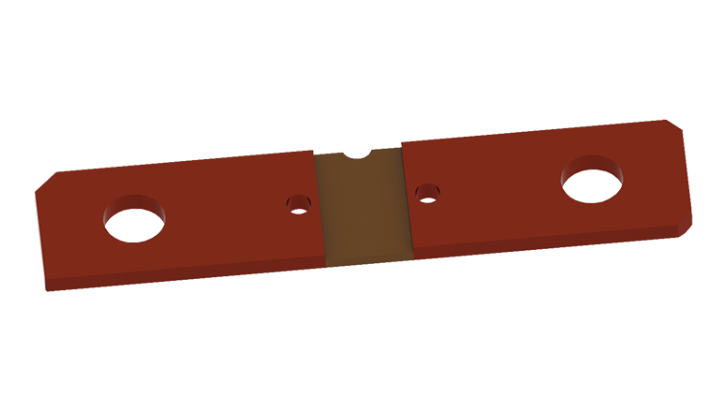
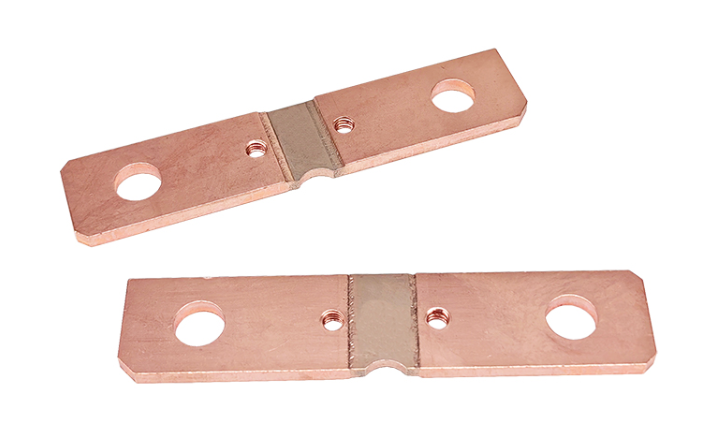
An M4 tapped-hole structure gives engineers a defined threaded connection directly in the shunt terminal. This can simplify fastening while providing greater mechanical engagement than smaller mounting structures in applications using heavier busbars.
More stable attachment to high-current busbars
Reduced dependence on separate nuts or loose hardware
More repeatable positioning during assembly
Improved suitability for heavier copper conductors
Easier use with torque-controlled assembly tools
More predictable mechanical alignment in mass production
For automated and semi-automated battery pack assembly, repeatable threaded positions can also simplify fixture design. The shunt can be placed in a defined location and fastened using standardized tools, helping reduce operator-to-operator variation.
Procurement teams should therefore review more than the thread size itself. Hole position, thread depth, terminal thickness, material strength, busbar flatness, and overall mechanical tolerance all influence the quality of the assembled joint.
2. Stable Mechanical Contact Helps Control Resistance, Temperature Rise and Measurement Drift
Mechanical stability and electrical performance are closely connected in a BMS shunt. High current flows through the shunt terminals and busbar connection, while the BMS measures a very small voltage across the precision resistance element. Any unwanted resistance at the mounting interface can create additional voltage drop and heat.
A stable M4 fastening structure can help manufacturers apply more consistent contact pressure. When mounting torque, screw engagement, contact surfaces, and busbar geometry are tightly controlled, connection resistance can become more repeatable from one battery pack to another.
Consistent fastening helps maintain a reliable conductive interface between the shunt and busbar.
Controlled mounting geometry reduces unit-to-unit differences in the high-current path.
More predictable contact resistance helps limit unexpected hot spots during high-current operation.
A robust threaded connection can help maintain mechanical integrity in demanding battery environments.
Torque control remains essential. Insufficient tightening can create unstable contact resistance, while excessive torque may damage threads, distort terminals, or introduce stress into the shunt assembly. OEM manufacturers should define a controlled fastening process instead of assuming that a larger thread automatically guarantees better reliability.
Thermal cycling also deserves attention. Busbars and shunt terminals expand and contract as current and ambient temperature change. Repeated thermal movement can affect joint pressure over time, so validation should include both electrical loading and temperature cycling.
Dedicated sense points should remain electrically separated from the main high-current fastening path wherever precision Kelvin measurement is required. This helps ensure that the BMS measures the voltage across the intended resistance element rather than unwanted connection resistance.
3. What Procurement Teams Should Check When Sourcing M4 Tapped-Hole BMS Shunts
Once the shunt has been designed into the busbar architecture, changing it later may require modifications to mechanical fixtures, battery pack layout, sensing wires, calibration, and validation procedures. Procurement teams should therefore evaluate both the precision resistor and the complete mechanical structure before mass production.
Nominal resistance and tolerance
Temperature coefficient
Rated and peak current capability
M4 thread position and depth
Mechanical thread strength
Busbar and terminal compatibility
Sense-point configuration
Temperature-rise performance
Vibration and thermal-cycle durability
Batch-to-batch dimensional consistency
Sample testing should reproduce the real battery pack connection whenever possible. Engineers can assemble the shunt with the actual busbar, use the intended torque specification, apply high current, perform thermal cycling, and compare resistance before and after testing.
Buyers should also verify the consistency of threaded machining. Variations in hole position, thread depth, terminal flatness, or material thickness can create assembly problems even when the electrical resistance value is correct.
Supplier customization capability can provide additional value. Different EV and energy storage systems may require specific resistance values, terminal widths, mounting-hole positions, sense pins, busbar layouts, or surface treatments. A supplier able to optimize both electrical and mechanical features around the battery pack can reduce redesign work.
Procurement teams should therefore consider lifecycle cost rather than component price alone. A mechanically stable M4 shunt can reduce assembly variation, connection heating, rework, calibration problems, and field-service risk throughout the battery system lifecycle.
Conclusion
M4 tapped-hole BMS shunts can improve mechanical stability in high-current battery busbar connections by providing a stronger and more repeatable threaded mounting interface. This structure can simplify assembly, support heavier conductors, improve fastening consistency, and help maintain stable contact resistance under vibration and thermal cycling. For EV and energy storage procurement teams, the best shunt should be evaluated according to resistance accuracy, temperature coefficient, M4 thread quality, mounting strength, busbar compatibility, thermal performance, sensing configuration, and production consistency. By selecting a mechanically robust shunt and a supplier with strong process control, battery manufacturers can improve assembly reliability while maintaining accurate long-term current measurement.