How Push-Pull Transformers Support Compact Isolated Power Supplies in Smart Meter and Industrial Electronics
How Push-Pull Transformers Support Compact Isolated Power Supplies in Smart Meter and Industrial Electronics
Smart meters and industrial electronic equipment increasingly require compact, efficient, and electrically isolated power supplies for microcontrollers, communication modules, sensing circuits, displays, relays, and control electronics. Push-pull converter architectures are attractive in these applications because they can transfer power through a high-frequency transformer while providing galvanic isolation between input and output circuits. For OEM manufacturers and procurement teams, the transformer is a critical component: turns ratio, core material, winding symmetry, insulation, leakage inductance, DC resistance, and production consistency can all influence efficiency, output stability, EMC performance, and long-term reliability.
1. Why Push-Pull Topology Is Well Suited to Compact Isolated Power Supply Design
A push-pull converter alternately drives two halves of a transformer primary winding, allowing magnetic energy to be transferred efficiently to the secondary side. Because the transformer operates at a much higher frequency than a conventional line-frequency transformer, the magnetic core and winding structure can be made significantly more compact for low- and medium-power electronic applications.
This makes push-pull transformers particularly useful in products where PCB space is limited but electrical isolation is still required. Smart meters, industrial control modules, communication interfaces, monitoring equipment, and isolated sensor circuits are typical examples.
Compact isolated DC power conversion
Smaller PCB footprint
Electrical separation between control and power circuits
Multiple secondary output options
Efficient use of transformer core material
Flexible integration into embedded electronics
In smart meters, isolated low-voltage rails may be required for communication modules or other circuits that need separation from the mains-related electronics. In industrial systems, isolation can help separate control circuitry from noisy or higher-voltage power sections.
For procurement teams, however, the topology advantage depends heavily on transformer design. A transformer with poor winding balance, excessive leakage inductance, unsuitable core material, or high winding resistance can reduce the efficiency of the complete converter and create additional voltage stress or noise.
Buyers should therefore treat the push-pull transformer as part of the complete power supply architecture rather than as a simple off-the-shelf magnetic component.
2. Winding Symmetry, Core Selection and Leakage Inductance Directly Affect Performance
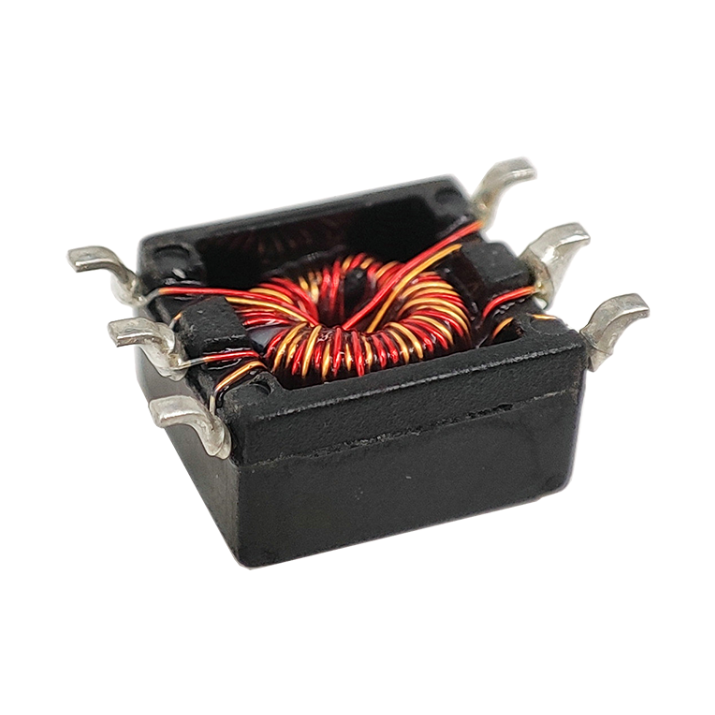
Push-pull circuits place specific demands on transformer construction. Because the two primary sections are driven alternately, their electrical characteristics should be closely matched. Differences in turns, winding resistance, coupling, or physical placement can create unequal magnetic flux and reduce converter stability.
Winding symmetry is therefore one of the most important design considerations. Consistent primary halves help the transformer operate more predictably and reduce the risk of magnetic imbalance.
Closely matched primary sections support balanced magnetic operation and consistent converter performance.
Suitable high-frequency magnetic material helps reduce core loss and maintain stable operation.
Good coupling between windings can reduce switching spikes and simplify snubber or clamp design.
Controlled copper loss helps improve efficiency and reduce temperature rise in compact enclosures.
Leakage inductance deserves particular attention because energy stored in the leakage path can create voltage spikes when switching devices turn off. Excessive leakage may require additional protection circuitry and can increase losses or EMC challenges.
Insulation design is equally important. The transformer must maintain reliable separation between primary and secondary windings while fitting inside the available PCB area. Creepage, clearance, winding insulation, bobbin structure, and material selection should all match the application's voltage and safety requirements.
For OEM engineers, the best transformer is therefore not simply the smallest one. The design must balance size, isolation, coupling, efficiency, thermal behavior, and manufacturability.
3. What OEM Procurement Teams Should Check When Sourcing Push-Pull Transformers
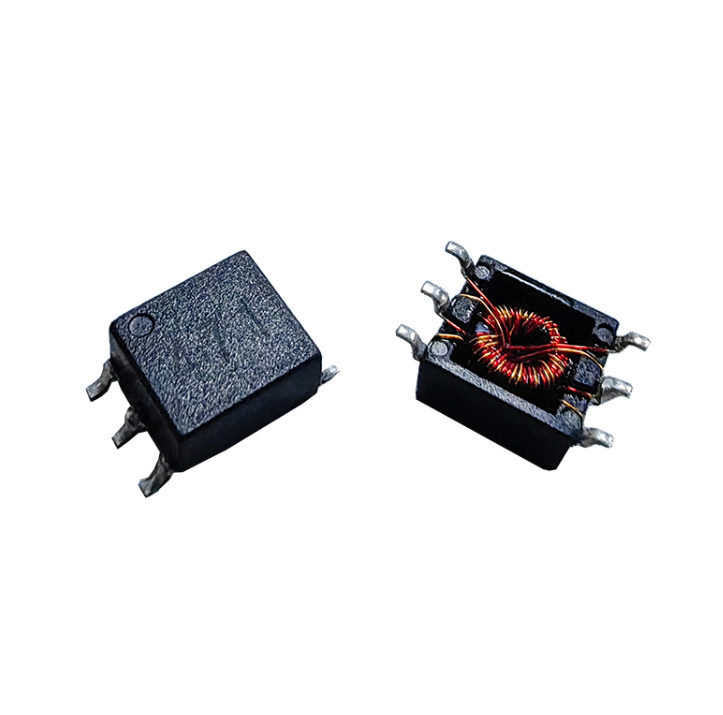
Once a push-pull transformer has been designed into a smart meter or industrial control product, replacing it later may require changes to the switching circuit, PCB footprint, snubber network, feedback design, insulation layout, and validation process. Procurement teams should therefore evaluate both the component and the supplier before mass production.
Primary winding symmetry
Turns ratio accuracy
Primary and secondary inductance
Leakage inductance
DC winding resistance
Core material consistency
Insulation performance
Temperature-rise behavior
Mechanical dimensions
Batch-to-batch repeatability
Sample validation should be performed inside the real converter whenever possible. Engineers can evaluate startup behavior, full-load efficiency, transformer temperature, switching waveform quality, output regulation, transient response, and electromagnetic noise. This provides a more realistic view than measuring inductance alone.
Supplier manufacturing consistency is also critical. Small differences in winding turns, wire tension, insulation placement, core assembly, or soldering can change coupling and leakage characteristics. In high-volume meter or industrial electronics programs, these differences can increase production variation and require additional testing.
Customization capability can provide substantial value. Different OEM designs may require unique turns ratios, input voltage ranges, secondary outputs, power levels, package dimensions, pin layouts, or insulation structures. A supplier capable of designing the transformer around the actual converter can help reduce unnecessary PCB changes and improve integration efficiency.
Procurement teams should therefore consider total lifecycle value instead of unit price alone. A well-designed push-pull transformer can reduce power loss, simplify EMC control, lower thermal stress, support compact PCB design, and reduce redesign risk throughout the product lifecycle.
Conclusion
Push-pull transformers provide an effective foundation for compact isolated power supplies in smart meters and industrial electronics. By combining high-frequency operation with galvanic isolation, they can help reduce PCB size while supplying stable low-voltage power to control, communication, sensing, and monitoring circuits. However, real performance depends on winding symmetry, core material, leakage inductance, DC resistance, insulation design, thermal behavior, and production consistency. For OEM procurement teams, selecting an experienced transformer supplier with strong customization and manufacturing control can reduce integration risk, improve efficiency, simplify EMC design, and support more reliable long-term product performance.