How Rogowski Coil Installation Position Affects Accuracy in High-Current Power Monitoring Systems
How Rogowski Coil Installation Position Affects Accuracy in High-Current Power Monitoring Systems
Rogowski coils are increasingly used in high-current power monitoring because their flexible structure makes them easy to install around large cables and busbars. They are especially attractive in industrial distribution systems, renewable energy equipment, data centers, large motors, switchgear, and retrofit monitoring projects. However, measurement accuracy depends not only on the coil specification itself. Conductor position, coil shape, installation orientation, nearby current-carrying conductors, and mechanical fixing can all influence the final signal. For OEM manufacturers and procurement teams, understanding these installation effects is essential when selecting a Rogowski coil for reliable high-current measurement.
1. Conductor Position and Coil Geometry Can Change Measurement Repeatability
A Rogowski coil measures the magnetic field produced by current flowing through a conductor. Unlike a conventional current transformer, it uses an air-core winding rather than a magnetic core. This gives the sensor excellent flexibility and avoids magnetic saturation, but it also means that installation geometry deserves careful attention.
Ideally, the measured conductor should remain in a consistent position inside the coil opening. If the conductor moves significantly toward one side of the loop, measurement sensitivity may change slightly depending on coil design and winding uniformity. In high-accuracy applications, these small differences can become important.
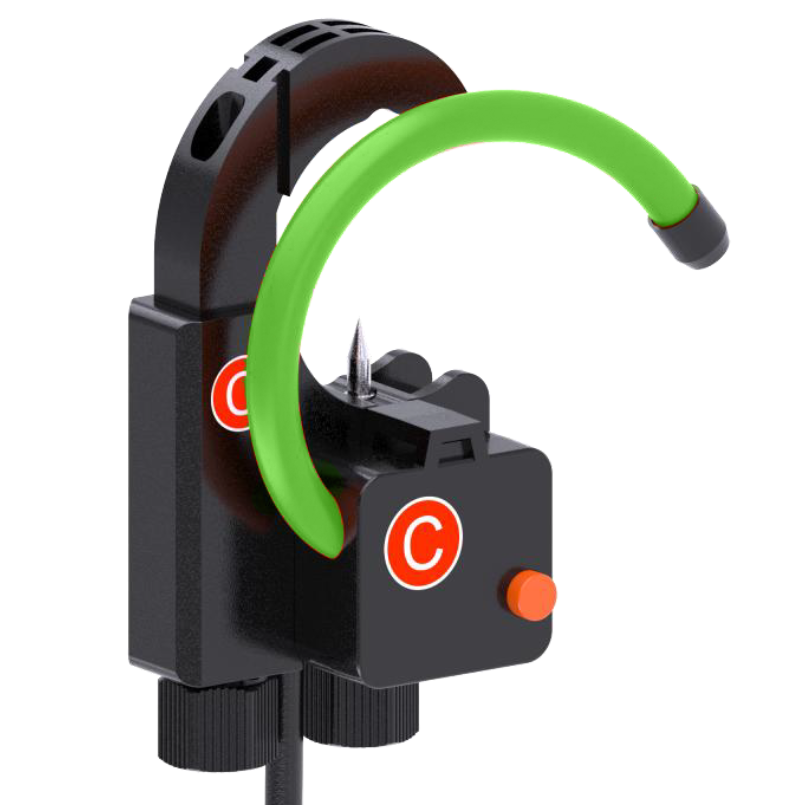
Position of the conductor inside the coil window
Shape of the Rogowski coil after installation
Distance between the coil and nearby conductors
Orientation around busbars or cable bundles
Mechanical movement during operation
Consistency of the coil closure position
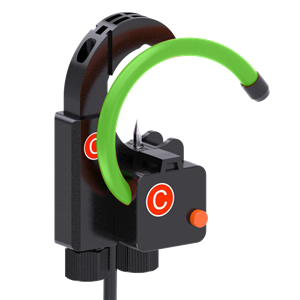
Coil deformation is another important consideration. Flexible Rogowski coils are designed to wrap around conductors, but excessive bending, twisting, or uneven mounting can change the physical relationship between the winding and the measured conductor. For portable energy audits, this may create more installation variation than in permanently mounted systems.
For procurement teams, this means the required accuracy class should be considered together with the expected installation method. A monitoring project using permanently fixed coils may achieve more repeatable positioning than an application where technicians repeatedly remove and reinstall the sensor.
2. Nearby Busbars, External Magnetic Fields and Mechanical Fixing Affect System Accuracy
High-current electrical cabinets often contain several phase conductors, neutral conductors, busbars, transformers, and switching devices installed close together. Each conductor produces its own magnetic field. A Rogowski coil intended to measure one conductor may therefore also be exposed to fields generated by nearby current paths.
Well-designed coils can reduce sensitivity to external magnetic fields, but installation remains important. If a sensor is mounted directly beside another high-current busbar, the unwanted magnetic influence may increase. This can be especially relevant in three-phase power systems where conductors are closely spaced.
Consistent conductor positioning helps improve measurement repeatability across multiple installation points.
Adequate distance from neighboring high-current conductors can reduce unwanted magnetic influence.
Stable mounting helps prevent the coil from changing position because of vibration or cable movement.
Keeping the loop close to its intended geometry supports more predictable sensor output.
Mechanical fixing becomes particularly important in permanent monitoring systems. If the coil moves after commissioning because of vibration, maintenance activity, or cable movement, measurement conditions may change. Using suitable clips, brackets, or mounting points can help maintain a repeatable installation.
Buyers should also remember that a Rogowski coil is part of a complete measurement chain. The coil output normally requires signal integration and conditioning. Therefore, coil positioning, integrator accuracy, cable routing, shielding, calibration, and monitoring electronics should all be evaluated together.
In high-current monitoring, a high-quality sensor combined with poor installation can still produce disappointing results. The most reliable approach is to define installation requirements during the equipment design stage instead of treating sensor placement as a field decision.
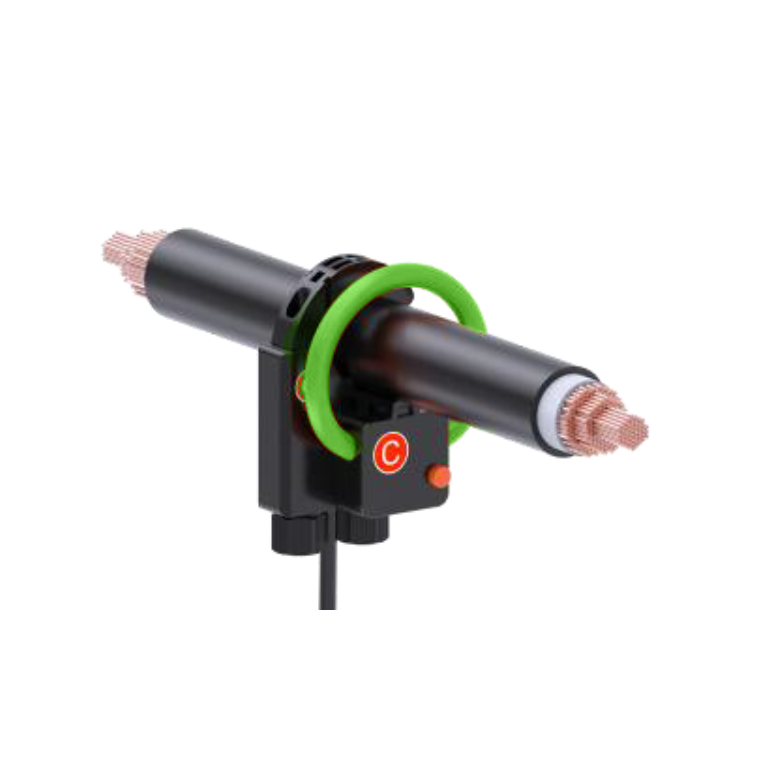
3. What Procurement Teams Should Check When Sourcing Rogowski Coils
For OEM power monitoring manufacturers and system integrators, sourcing a Rogowski coil should involve more than comparing maximum current range and coil diameter. The sensor must match the actual conductor geometry, installation method, expected accuracy, frequency range, and surrounding electrical environment.
Coil window diameter
Accuracy and linearity
Position sensitivity
External magnetic field immunity
Frequency response
Integrator compatibility
Closure repeatability
Temperature stability
Lead cable configuration
Batch-to-batch consistency
Sample validation should reproduce the real installation environment whenever possible. Engineers can compare measurements with the conductor centered, slightly offset, or positioned close to neighboring busbars. They can also evaluate the coil under different shapes and mounting conditions to determine how sensitive the complete system is to installation variation.
For large OEM projects, supplier manufacturing consistency becomes equally important. Variations in winding uniformity, coil dimensions, closure structure, shielding, cable length, or output characteristics can create differences between sensors and increase calibration workload.
Customization capability can also reduce project risk. Different switchgear, inverter cabinets, energy monitoring devices, and industrial systems may require different coil diameters, cable lengths, connector types, output characteristics, or mechanical fixing methods. A supplier able to adapt the coil around the real installation can help improve both accuracy and assembly efficiency.
Procurement teams should therefore evaluate total system performance rather than unit price alone. A Rogowski coil that installs consistently, resists external interference, and maintains stable output can reduce commissioning time, calibration variation, and field troubleshooting throughout the monitoring system lifecycle.
Conclusion
Rogowski coil installation position can directly affect the accuracy and repeatability of high-current power monitoring systems. Conductor position, coil geometry, nearby magnetic fields, closure consistency, mechanical fixing, and cable routing all influence the complete measurement result. For OEM manufacturers and procurement teams, the right Rogowski coil should therefore be selected according to both electrical specifications and the real installation environment. By validating position sensitivity, external-field immunity, integrator compatibility, mechanical stability, and production consistency before mass deployment, buyers can reduce calibration and commissioning risk while achieving more reliable high-current measurement across industrial, renewable energy, and power distribution applications.