How Rogowski Coil Signal Integration Affects Accuracy in Power Monitoring Equipment
How Rogowski Coil Signal Integration Affects Accuracy in Power Monitoring Equipment
Rogowski coils are increasingly used in power monitoring equipment because they offer flexible installation, wide current measurement capability, and electrical isolation without requiring a conventional magnetic core. They are particularly useful in high-current applications such as switchgear, industrial energy monitoring, renewable energy systems, large motors, and power distribution equipment.
However, the accuracy of a Rogowski coil system depends on more than the coil itself. Signal integration, output conditioning, calibration, PCB design, and the relationship between the coil and the measuring electronics all influence final system performance. For OEM manufacturers and procurement teams, understanding these factors is essential when selecting a Rogowski coil solution for professional power monitoring equipment.
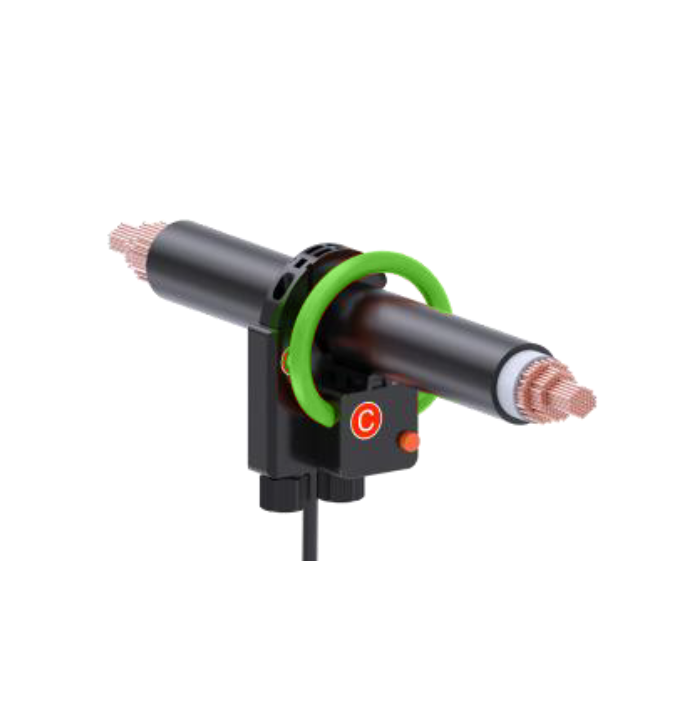
1. Why Rogowski Coils Require Proper Signal Integration for Accurate Measurement
Unlike a conventional current transformer, a Rogowski coil does not directly produce an output proportional to the measured current. Instead, its output voltage is related to the rate of change of current flowing through the conductor. To obtain an accurate representation of the actual current waveform, this signal must be integrated electronically.
This integration process is therefore a critical part of the complete measurement chain. If the integrator circuit is poorly designed or not properly matched to the coil, the final measurement can suffer from gain error, phase error, waveform distortion, or instability.
Important factors include:
Integrator gain accuracy
Frequency response
Phase shift
Noise performance
Offset stability
Power supply stability
PCB layout and grounding
For power monitoring equipment, phase accuracy is particularly important. Energy meters and power analyzers calculate parameters such as active power, reactive power, power factor, and energy consumption by combining current and voltage measurements. Even a small phase error in the current signal can influence the final calculated result.
This means procurement teams should not evaluate a Rogowski coil only by its physical size, rated current, or output sensitivity. The complete sensor and integrator combination must be considered together.
A coil with excellent magnetic and mechanical performance may still produce poor system-level accuracy if the signal conditioning circuit is not optimized. For OEM projects, early cooperation between the coil supplier and the equipment design team can reduce this integration risk.
2. How Calibration, Frequency Response and Installation Influence System Accuracy
Rogowski coils are often selected because they can measure large currents without the saturation limitations associated with conventional magnetic-core current transformers. They also provide flexible installation around large conductors and busbars. However, achieving reliable accuracy requires careful control of both electrical and mechanical conditions.
One important factor is calibration. The coil sensitivity and the integrator gain must be matched so that the complete measurement system produces the expected output across the target current range.
Calibration should also consider frequency response. In industrial power systems, the current waveform may contain harmonics, switching noise, or rapidly changing load conditions. If the Rogowski coil and integrator combination does not provide stable response across the required frequency range, measurement accuracy can vary between different operating conditions.
Installation position can also affect performance. The conductor should ideally be positioned consistently inside the coil, while the coil closure and geometry should remain stable. External magnetic fields from nearby conductors may also influence measurement results in demanding installations.
Procurement and engineering teams should evaluate:
Coil sensitivity consistency
Integrator matching accuracy
Frequency range
Phase error
Linearity
External magnetic field immunity
Temperature stability
Mechanical installation repeatability
For applications such as industrial energy monitoring, renewable energy systems, data centers, and high-current distribution equipment, these parameters can directly influence the reliability of energy calculations and load analysis.
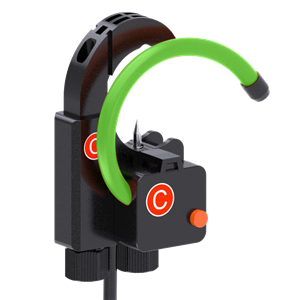
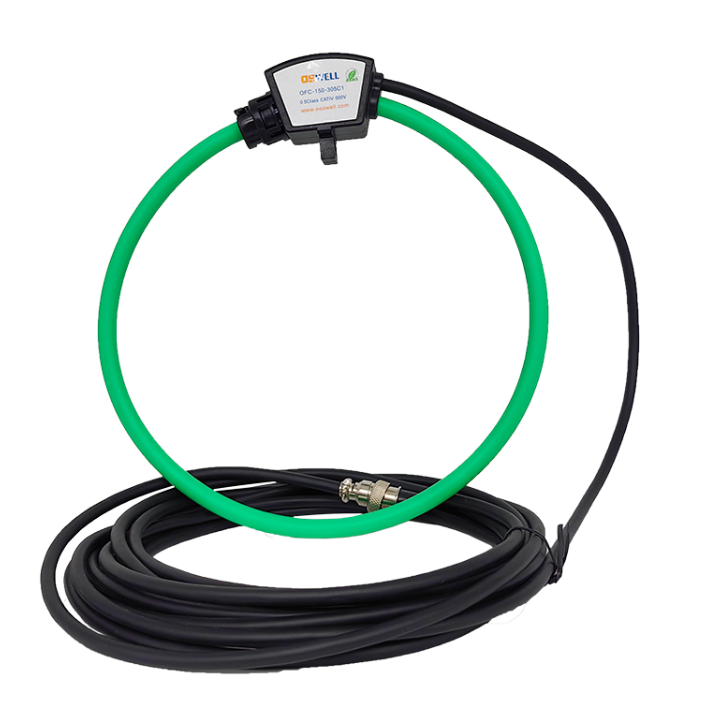
Products such as flexible Rogowski coil current sensors can be particularly valuable when large conductors, crowded electrical cabinets, or retrofit installations make conventional CT installation difficult. The greatest value is achieved when the coil, integrator, and monitoring electronics are designed and validated as one measurement system.
3. What OEM Buyers Should Evaluate When Sourcing Rogowski Coil Solutions
For OEM power monitoring manufacturers, the purchasing decision should focus on total system performance rather than only the sensor unit price. Once a Rogowski coil has been integrated into a monitoring device, changes to sensitivity, signal conditioning, PCB layout, or firmware calibration can create additional development work.
Buyers should therefore evaluate whether the supplier can support the complete application.
Important supplier qualification factors include:
Coil manufacturing consistency
Integrator and signal conditioning support
Calibration capability
Frequency and phase performance data
Mechanical customization options
Lead wire and connector customization
Temperature and environmental testing
Batch-to-batch consistency
Mass-production capacity
Long-term technical support
For high-volume OEM projects, consistency between production batches is especially important. Variations in winding geometry, coil dimensions, shielding, connection quality, or integrator components can create calibration differences that increase production test time.
Procurement teams should also consider whether the supplier can support customized outputs, coil diameters, cable lengths, connectors, and integration requirements. Different monitoring products may need very different mechanical and electrical configurations.
Another important factor is validation support. Buyers should test the Rogowski coil under actual operating conditions, including different current levels, temperatures, conductor positions, and frequency content. This provides a more realistic understanding of system performance than a single laboratory measurement.
By selecting a supplier that understands both coil design and signal integration, OEM manufacturers can reduce calibration complexity, improve measurement consistency, and shorten product development cycles.
Conclusion
Rogowski coil accuracy depends on the complete measurement chain, not only on the sensing coil itself. Integrator design, frequency response, phase accuracy, calibration, installation conditions, and manufacturing consistency all influence final power monitoring performance. For OEM manufacturers and procurement teams, selecting a Rogowski coil supplier with strong engineering support, signal integration capability, customization experience, and stable mass production can help reduce development risk and improve measurement reliability. A properly integrated Rogowski coil solution can provide flexible installation and dependable high-current measurement for next-generation power monitoring equipment.