How Single-Phase DIN Rail Energy Meters Simplify Submetering for Shops, Offices and Small Distribution Panels
How Single-Phase DIN Rail Energy Meters Simplify Submetering for Shops, Offices and Small Distribution Panels
Small shops, offices, rental spaces, workshops, apartments, and compact distribution panels increasingly need more detailed electricity data than a single main utility meter can provide. Single-phase DIN rail energy meters offer a practical way to monitor individual circuits, tenants, equipment groups, or business areas without requiring large metering cabinets. Their compact size, standardized DIN rail installation, digital measurement capability, and communication options make them attractive for submetering projects. For electrical distributors, panel builders, energy management integrators, and procurement teams, choosing the right meter can simplify installation while improving energy visibility and long-term operating efficiency.
1. Compact DIN Rail Metering Makes Circuit-Level Submetering Easier to Deploy
Many small commercial buildings receive electricity through a single main supply, but operators often need to understand how individual areas or loads consume energy. A retail shop may want to separate lighting, HVAC, refrigeration, and general socket loads. An office may need to monitor different departments, tenants, or floors. A small distribution panel may require separate energy data for specific equipment or outgoing circuits.
Single-phase DIN rail energy meters make this type of submetering easier because they can be installed directly inside standard electrical distribution cabinets. The DIN rail mounting format reduces the need for custom brackets or large dedicated meter enclosures, helping installers add measurement capability without significantly changing the panel architecture.
Retail shops and small restaurants
Office rooms and shared workplaces
Rental units and tenant billing
Small workshops and production areas
Lighting and HVAC circuits
Compact commercial distribution panels
For panel builders, standardized DIN rail installation can also shorten assembly time. Meter positioning, wiring routes, protective devices, and communication modules can be planned within the same cabinet structure, making the finished panel cleaner and easier to maintain.
Procurement teams should pay attention to meter width and installation depth, especially in existing panels where rail space is limited. A compact meter can allow more monitored circuits to fit into the same enclosure, increasing monitoring capability without requiring a larger cabinet.
2. Detailed Energy Data Helps Small Businesses Control Costs More Effectively
Submetering provides much more value than simply adding another electricity reading. When energy consumption is separated by circuit, tenant, or equipment group, businesses can understand where electricity is actually being used and identify unusual changes more quickly.
Depending on the meter design, users may monitor active energy together with parameters such as voltage, current, active power, power factor, and frequency. This additional information can help facility managers understand load behavior and improve operational decisions.
Separate energy data can support internal allocation or billing between tenants and business areas.
Circuit-level measurement helps compare HVAC, refrigeration, lighting, and other major electrical loads.
Detailed consumption information makes it easier to understand which activities create the highest operating costs.
Unexpected changes in power consumption can help identify equipment left running or developing operating problems.
Communication capability can increase this value further. When meters transmit data to a gateway or energy management platform, users can monitor several circuits from one interface instead of reading each meter manually.
For system integrators, this creates opportunities to build scalable monitoring systems. A small project may begin with several meters in one distribution panel and later expand to multiple shops, floors, or buildings while maintaining the same general metering architecture.
Procurement teams should therefore consider future data requirements when choosing a meter. A low-cost meter with limited communication capability may be suitable for local reading, while a project requiring centralized management may benefit from a device designed for integration with broader energy monitoring systems.
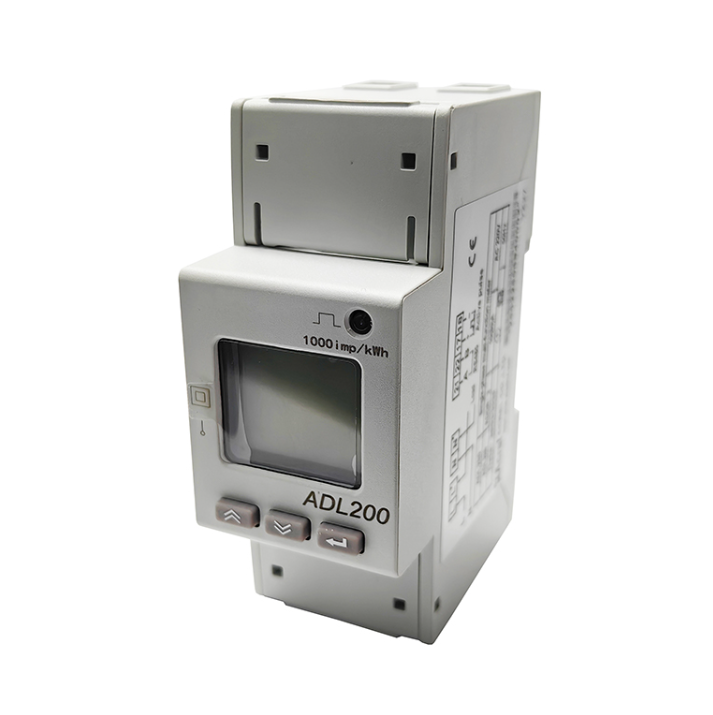
3. What Buyers Should Check When Selecting Single-Phase DIN Rail Energy Meters
For distributors, panel manufacturers, and commercial energy projects, meter sourcing should consider installation conditions, measurement requirements, communication needs, and long-term reliability rather than only the initial purchase price.
Single-phase measurement accuracy
Rated current and voltage range
DIN rail dimensions
Terminal wiring convenience
Active energy measurement
Power factor monitoring
Communication interface options
Display readability
Installation space requirements
Long-term supply stability
Installation efficiency is especially important for retrofit projects. Buyers should confirm whether the meter fits the available DIN rail space and whether terminal positions allow electricians to complete wiring without excessive conductor bending or panel modification.
Measurement and communication functions should also match the actual project. A simple shop submeter may only need reliable energy readings, while an office building management system may require continuous data transmission to a centralized platform.
For OEM and integrator projects, supplier consistency can influence deployment efficiency. Stable dimensions, terminal layouts, firmware behavior, communication settings, and product availability help installers standardize panel designs and reduce future replacement problems.
Procurement teams should also consider lifecycle value. A meter that is easy to install, provides stable measurements, supports future integration, and remains available for long-term replacement can reduce engineering, commissioning, and maintenance costs over the complete project lifecycle.
Conclusion
Single-phase DIN rail energy meters simplify submetering by combining compact installation, circuit-level electricity measurement, and flexible system integration within standard distribution panels. They are well suited to shops, offices, rental units, small workshops, and other applications where users need more detailed energy data without installing large or complex metering equipment. For procurement teams, the best meter should be selected according to measurement accuracy, current range, DIN rail size, wiring convenience, communication capability, data requirements, and supplier reliability. A well-chosen single-phase DIN rail meter can help businesses improve cost allocation, identify inefficient loads, simplify energy management, and build a scalable foundation for future monitoring projects.