How Smart Meter LCD Module Architecture Influences Assembly Efficiency and Product Lifetime
How Smart Meter LCD Module Architecture Influences Assembly Efficiency and Product Lifetime
The LCD module is one of the most visible components in a smart meter, but its influence goes far beyond displaying energy consumption data. The architecture of the LCD module can affect PCB layout, assembly processes, production yield, enclosure design, long-term reliability, and even the total manufacturing cost of the meter.
For smart meter manufacturers and procurement teams, selecting an LCD module should therefore involve more than comparing display size and unit price. Different structures such as COG, COB, FOG, and LCD modules with integrated backlight can provide very different advantages depending on the meter design, production volume, installation environment, and expected service life.
Understanding how these architectures affect assembly and reliability can help OEM buyers select a display solution that reduces production complexity while supporting stable long-term meter performance.
1. How LCD Module Architecture Affects Smart Meter Assembly Efficiency
Smart meter manufacturers typically operate under strict requirements for production efficiency and repeatability. Every additional connector, PCB, soldering step, cable, or manual assembly operation can increase production time and introduce another potential failure point.
This is why LCD module architecture has a direct influence on manufacturing efficiency.
COG LCD Modules:
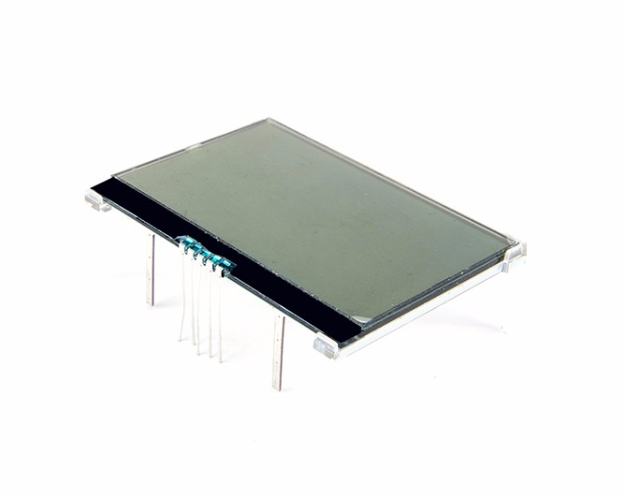
Chip-on-Glass, or COG, architecture mounts the driver IC directly onto the glass substrate. This can help reduce the overall module thickness and component count. For compact smart meter designs, COG modules are attractive because they can simplify mechanical integration and support thinner internal structures.
COB LCD Modules:
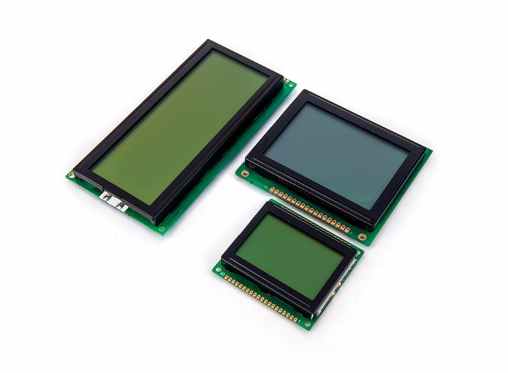
Chip-on-Board designs mount the driver IC onto a PCB and typically protect it with encapsulation. COB solutions can provide convenient integration when the meter design already uses a dedicated display PCB or requires additional components around the display.
FOG LCD Modules:
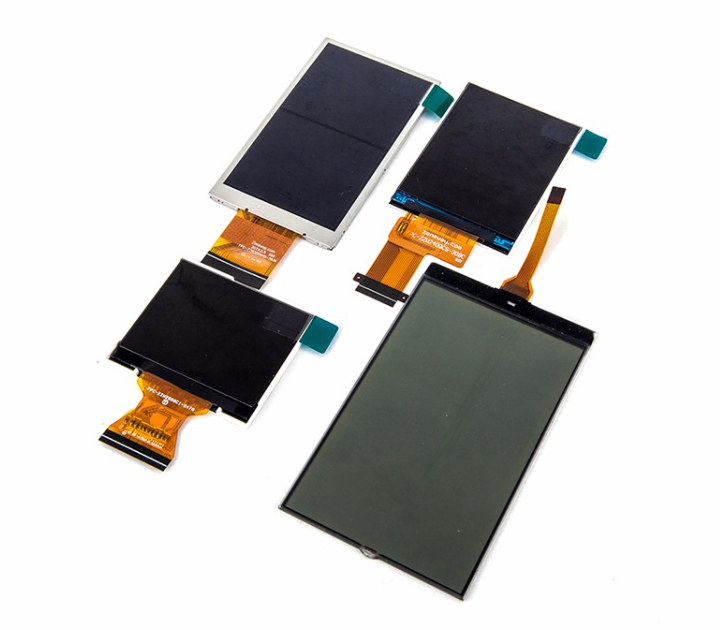
Film-on-Glass architectures use a flexible connection structure between the LCD and external electronics. FOG can be useful when space is limited or when the meter requires greater flexibility in connecting the display to the main PCB.
For procurement teams, the best architecture depends on how the display will be integrated into the final product.
Important assembly considerations include:
Module thickness and available enclosure space
PCB layout and connector position
FPC or pin connection method
Number of manual assembly steps
Compatibility with automated production
Display alignment requirements
Backlight integration
A display that is slightly more expensive at component level may still reduce the total manufacturing cost if it simplifies assembly, shortens production time, or lowers the risk of installation errors. For high-volume smart meter projects, these efficiency gains can become significant.
2. Why LCD Structure and Material Quality Influence Long-Term Meter Reliability
Smart meters may remain installed for many years in residential, commercial, or industrial environments. During that time, the LCD module can be exposed to temperature changes, humidity, vibration, electrical stress, and continuous display operation.
The reliability of the display therefore depends on the complete module design rather than only the LCD glass.
Connection quality is one important factor. Flexible circuits, conductive connections, bonding areas, and PCB interfaces must remain stable throughout the meter's operating life. Weak connections can eventually lead to missing segments, unstable display output, or complete display failure.
Temperature performance is another major consideration. Smart meters may be installed in outdoor meter boxes, unconditioned electrical rooms, or regions with wide seasonal temperature variation. The LCD material and module architecture should therefore be selected according to the expected operating environment.
Procurement teams should evaluate:
Operating and storage temperature range
Display contrast stability
Connection reliability
FPC bonding quality
Backlight lifetime where applicable
Mechanical resistance to vibration and handling
Moisture protection requirements
Long-term component consistency
Backlight design also affects reliability and power consumption. Some smart meters require illuminated displays for easier reading in low-light environments, while others prioritize lower energy consumption and may use the backlight only when necessary.
For high-volume projects, manufacturers should also consider consistency between production batches. Variations in glass quality, bonding pressure, flexible circuit dimensions, backlight brightness, or driver integration can create visible differences and increase inspection or rework requirements.
This is why supplier process control is just as important as the basic LCD specification.
3. What Procurement Teams Should Check Before Selecting a Smart Meter LCD Supplier
Once an LCD module has been designed into a smart meter, replacing it later can be difficult. The enclosure window, PCB position, FPC length, pin layout, firmware interface, and production fixtures may all depend on the original display design.
For this reason, smart meter manufacturers should evaluate LCD suppliers as long-term development partners rather than simple component vendors.
Important supplier evaluation criteria include:
Experience with smart meter LCD applications
COG, COB, and FOG design capability
Custom segment and graphic layout support
FPC and connector customization
Backlight integration capability
Prototype development support
Display consistency across production batches
Quality inspection procedures
Mass-production capacity
Long-term supply stability
Customization capability can be particularly important for smart meter OEMs. Different markets may require different icons, units, communication indicators, tariff information, warning symbols, or display layouts. A supplier that can support customized LCD glass, FPC structures, connection methods, and module dimensions can reduce the amount of redesign required on the meter side.
Buyers should also evaluate the display together with the complete meter assembly. Sample testing should consider enclosure fit, viewing angle, connection reliability, temperature performance, backlight behavior, and production assembly efficiency.
For high-volume programs, total cost should include more than the purchase price of the LCD module. Assembly time, production yield, rework, long-term field reliability, customization support, and supply continuity can all influence the true lifecycle cost of the display.
By choosing the right LCD architecture and a supplier with stable engineering and manufacturing capability, smart meter manufacturers can improve both production efficiency and product reliability.
Conclusion
Smart meter LCD module architecture has a direct impact on assembly efficiency, product design, and long-term reliability. COG, COB, and FOG structures each offer different advantages in terms of size, connection method, integration flexibility, and production requirements. For procurement teams, selecting the right LCD solution means evaluating not only display specifications but also temperature performance, bonding reliability, customization capability, batch consistency, and supplier manufacturing support. A well-matched LCD module can help smart meter manufacturers simplify assembly, reduce rework, improve production consistency, and extend the service life of the complete meter.