How Split-Core CT Aperture Size and Core Closing Accuracy Affect Retrofit Energy Monitoring
How Split-Core CT Aperture Size and Core Closing Accuracy Affect Retrofit Energy Monitoring
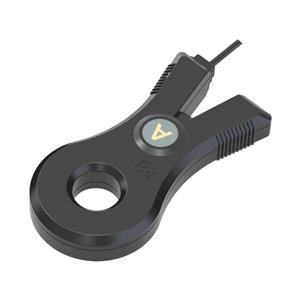
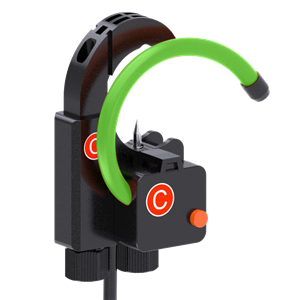
Split-core current transformers are widely used in retrofit energy monitoring because they can be installed around existing conductors without disconnecting cables or rebuilding the electrical system. This makes them attractive for factories, commercial buildings, data centers, distribution cabinets, renewable energy systems, and other applications where shutdown time must be minimized. However, the convenience of a split-core design does not automatically guarantee accurate measurement. Aperture size, conductor position, core closing accuracy, mechanical repeatability, and installation quality all influence final performance. For OEM equipment manufacturers, system integrators, and procurement teams, these details should be evaluated carefully before selecting a split-core CT for large-scale monitoring projects.
1. Aperture Size Directly Influences Installation Flexibility and Measurement Repeatability
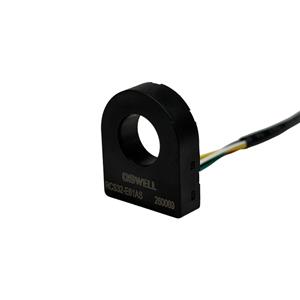
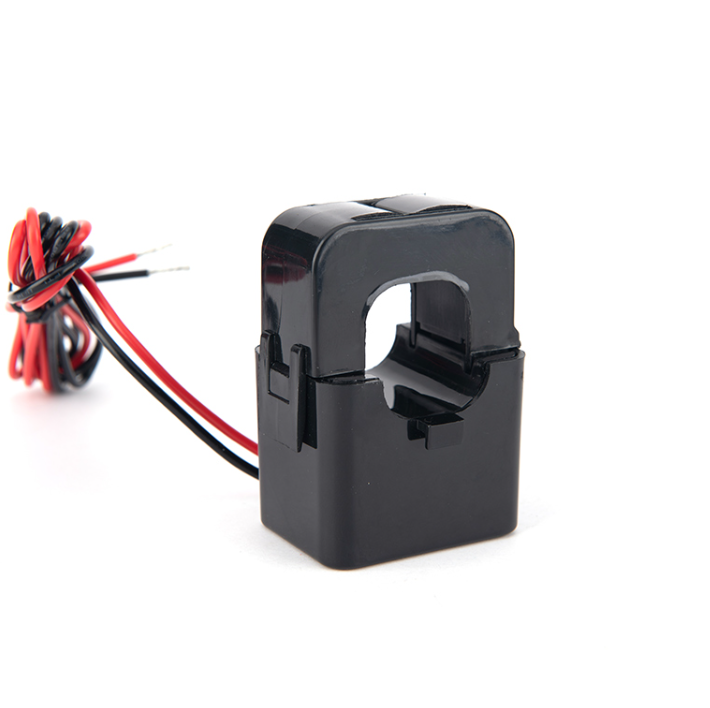
One of the first parameters buyers notice when selecting a split-core CT is the internal window or aperture size. The opening must be large enough to fit around the existing conductor, cable bundle, or busbar while leaving enough clearance for practical installation. In retrofit projects, this is especially important because the original electrical system was usually not designed around the new sensor.
A larger aperture provides more installation flexibility, but selecting an unnecessarily large opening is not always the best solution. The relative position of the conductor inside the magnetic core can influence measurement repeatability, particularly in applications requiring higher accuracy.
Diameter of the measured conductor
Busbar width and thickness
Available space inside the electrical cabinet
Required installation clearance
Conductor position inside the CT window
Future maintenance and removal requirements
If the conductor is very small compared with the CT window, installation position may vary significantly from one location to another. This can introduce additional measurement variation, especially if the conductor sits close to one side of the magnetic core rather than near the intended measurement position.
For energy monitoring projects covering many circuits, installation repeatability becomes an important procurement consideration. A CT that is easy to position consistently can help reduce differences between installation teams and improve the comparability of data across multiple monitoring points.
OEM buyers should therefore select the aperture based on the actual conductor geometry rather than simply choosing the largest available model. The objective is to achieve enough installation space without creating unnecessary mechanical size or measurement uncertainty.
2. Core Closing Accuracy Is Critical to Split-Core CT Measurement Stability
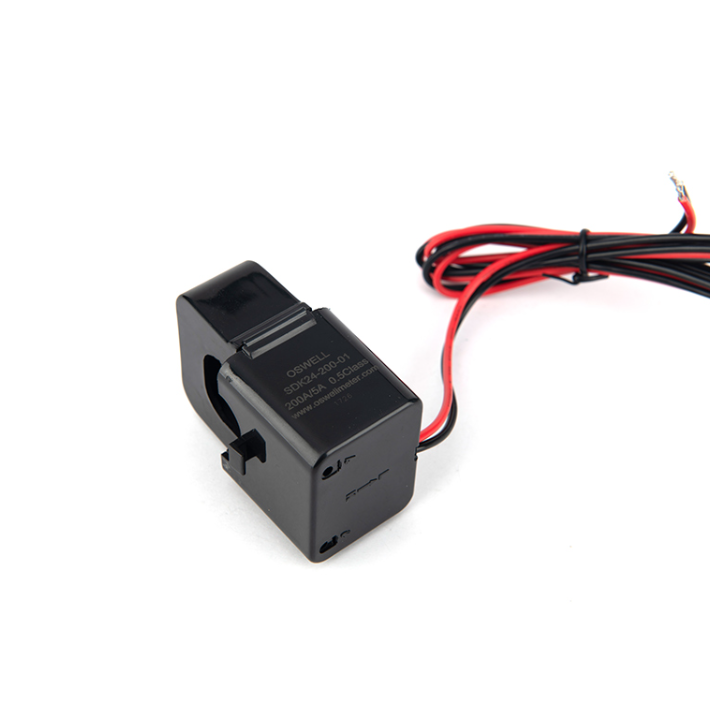
The defining feature of a split-core CT is that the magnetic core can open and close around an existing conductor. This makes installation much easier, but it also introduces a mechanical interface that does not exist in a solid-core current transformer.
When the CT is closed, the two magnetic core surfaces must return to a precise and repeatable position. If the surfaces are misaligned, contaminated, damaged, or separated by an excessive air gap, the magnetic circuit changes. This can influence ratio accuracy, phase performance, sensitivity, and repeatability.
Precise alignment helps maintain a stable magnetic path after the CT is opened and reclosed.
A reliable locking mechanism helps keep the magnetic surfaces firmly positioned during long-term operation.
Dust or foreign material at the core interface can increase the effective air gap and affect performance.
Hinges, clips, and housings should maintain alignment even after repeated opening and closing.
This is particularly important in portable monitoring equipment and energy auditing applications where the CT may be opened and installed repeatedly. If the closing mechanism becomes loose over time, measurement consistency can gradually deteriorate.
Core material and cutting quality also matter. The magnetic surfaces need controlled dimensions and good finishing so the two halves can form a repeatable magnetic path. Even a well-designed housing cannot fully compensate for inconsistent core processing.
For procurement teams, this means split-core CT evaluation should include repeated open-close testing, not only initial electrical testing. A product that performs accurately when new should continue providing similar results after repeated installation cycles.
3. What Buyers Should Check When Selecting Split-Core CTs for Retrofit Monitoring Projects
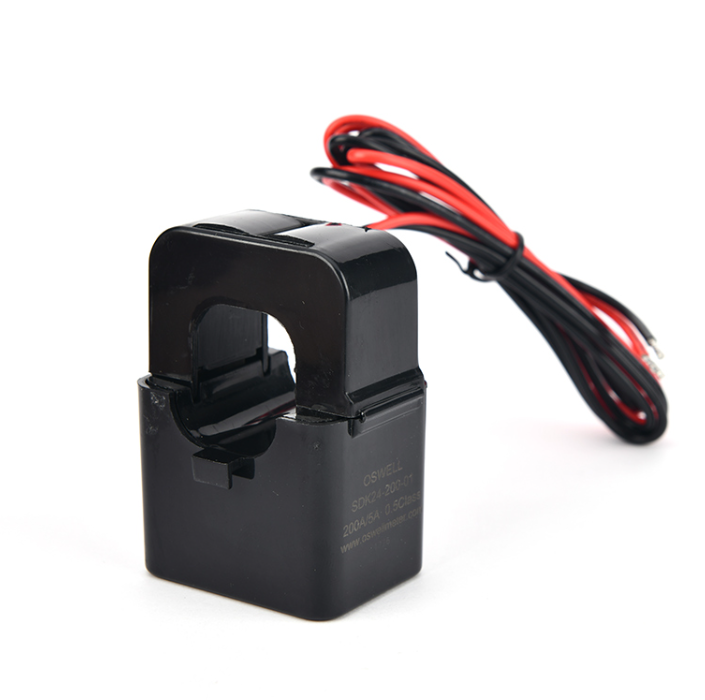
For retrofit energy monitoring, a split-core CT is often selected because installation must be completed quickly and without interrupting the existing electrical system. However, procurement teams should not evaluate products based only on current rating and aperture size.
The complete application should be considered, including conductor type, expected current range, installation environment, required accuracy, output signal, cable routing, and frequency characteristics.
Aperture dimensions
Rated current range
Ratio accuracy
Phase error
Core closing repeatability
Locking mechanism durability
Temperature stability
Lead wire and connector options
Installation convenience
Batch-to-batch consistency
Sample testing should reproduce the real retrofit environment whenever possible. Engineers can compare measurements with the conductor centered and slightly offset, repeat the opening and closing process several times, and evaluate performance at different current levels and temperatures.
Supplier manufacturing consistency is also important. Small differences in core alignment, winding turns, housing dimensions, locking pressure, or magnetic materials can create variation between production units. For large energy monitoring programs, these differences can affect data consistency across hundreds or thousands of measurement points.
Customization may provide additional value. Different monitoring systems may require different aperture sizes, current ratios, output types, cable lengths, connectors, or mounting methods. Working with a supplier that can match the CT to the actual monitoring device and installation environment can reduce integration problems.
Procurement teams should therefore consider total lifecycle value rather than only the initial sensor price. Faster installation, stable closing accuracy, fewer measurement errors, reduced rework, and long-term repeatability can all lower the real cost of a retrofit energy monitoring project.
Conclusion
Split-core CT aperture size and core closing accuracy have a direct impact on the quality of retrofit energy monitoring. The aperture must provide enough clearance for existing conductors without creating unnecessary installation or positioning variation, while the magnetic core must return to a precise and stable position every time it is closed. For OEM manufacturers, system integrators, and procurement teams, the best split-core CT should be evaluated according to aperture size, conductor compatibility, ratio accuracy, phase performance, core alignment, locking durability, temperature stability, and production consistency. By selecting a well-designed split-core current transformer and a reliable supplier, retrofit monitoring projects can achieve faster installation, more repeatable measurements, and better long-term energy data quality.