How Three-Phase Magnetic Latching Relays Improve Load Switching Consistency in Commercial Smart Meters
How Three-Phase Magnetic Latching Relays Improve Load Switching Consistency in Commercial Smart Meters
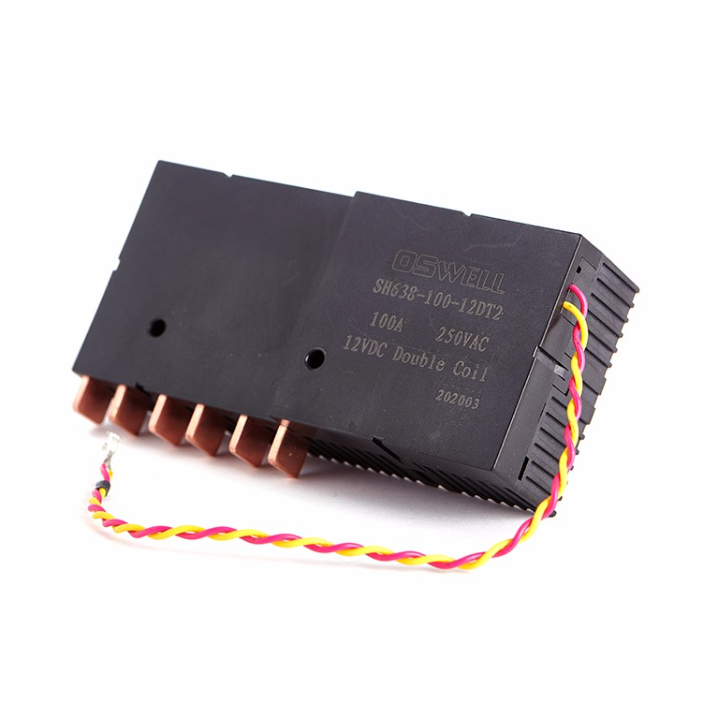
Commercial smart meters often need to measure electricity while also controlling high-current three-phase loads. In office buildings, retail facilities, factories, charging infrastructure, and commercial distribution systems, reliable load switching is essential for remote connection, disconnection, prepaid metering, demand management, and energy control. Three-phase magnetic latching relays provide an efficient switching solution because they can maintain their operating state without continuous coil power. For OEM smart meter manufacturers and procurement teams, relay contact consistency, temperature rise, phase-to-phase performance, switching life, and mass-production stability can directly influence the reliability of the complete meter.
1. Why Three-Phase Smart Meters Need Consistent High-Current Switching
In a three-phase smart meter, the relay is responsible for connecting or disconnecting the electrical load according to commands from the metering and control system. Unlike a single-phase application, three-phase switching requires all three current paths to operate predictably and maintain stable electrical characteristics.
If one phase has significantly different contact resistance, mechanical behavior, or temperature rise from the others, the complete meter may experience uneven thermal stress. In high-current commercial applications, even relatively small differences in contact resistance can create noticeable differences in heat generation.
Remote load connection and disconnection
Prepaid electricity management
Commercial load control
Demand-response functions
Three-phase smart meter protection strategies
Long-term high-current operation
Magnetic latching relays are particularly attractive because the coil is normally energized only during switching. After the contacts move into the required position, the magnetic structure maintains the state without continuous coil power. This can reduce standby energy consumption and internal heat compared with switching devices that require continuous coil energization.
For smart meter manufacturers, this helps keep the internal power architecture efficient while still providing high-current load control. Procurement teams should therefore evaluate the relay not simply as an ON/OFF component, but as a critical part of the meter's high-current electrical path.
2. Contact Resistance, Temperature Rise and Phase Consistency Determine Long-Term Reliability
The most important performance factors in a high-current latching relay are closely related. Contact resistance influences power loss, power loss creates heat, and repeated thermal stress can affect contact surfaces, terminals, plastics, and surrounding meter components.
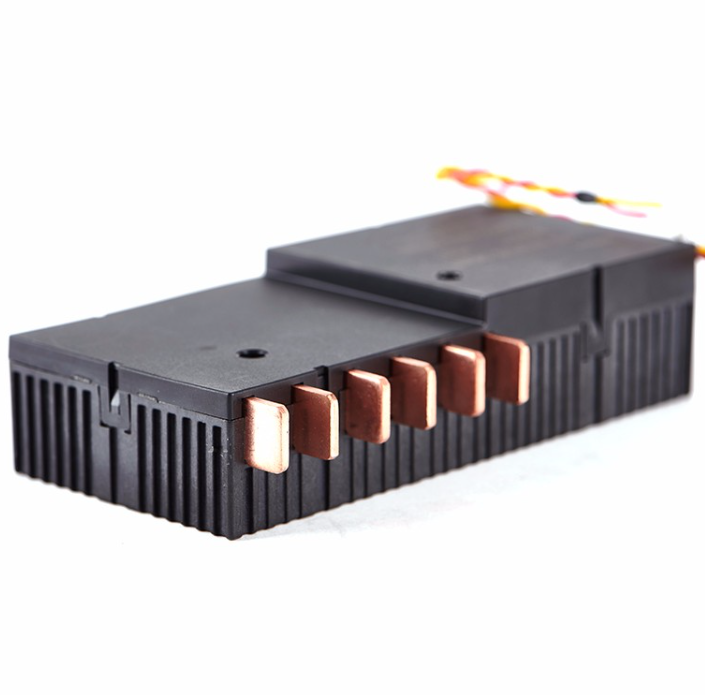
In a three-phase relay, consistency between the three poles becomes especially important. OEM manufacturers need each current path to maintain similar electrical and mechanical behavior throughout the expected service life of the smart meter.
Helps reduce electrical losses and temperature rise during continuous high-current operation.
Similar contact behavior across all three poles supports more uniform thermal and electrical performance.
Predictable pickup and release behavior helps the meter controller perform reliable remote switching.
Lower internal heat helps protect terminals, PCB assemblies, metering circuits, and enclosure materials.
Contact materials and contact pressure also influence long-term switching performance. The contact system must withstand repeated electrical switching while maintaining sufficiently low resistance. Mechanical wear, electrical arcing, contamination, and material aging can change contact characteristics over time.
For procurement teams, this means a new sample with low initial contact resistance is not enough. Buyers should also understand how the relay performs after repeated switching cycles and under sustained rated-current conditions.
Commercial meter applications may use different current levels, including relatively high-current configurations. The relay must therefore be selected according to the actual meter architecture, conductor size, terminal structure, enclosure temperature, and expected load profile rather than relying only on the nominal current shown in a catalog.
3. What OEM Buyers Should Evaluate Before Selecting a Three-Phase Latching Relay Supplier
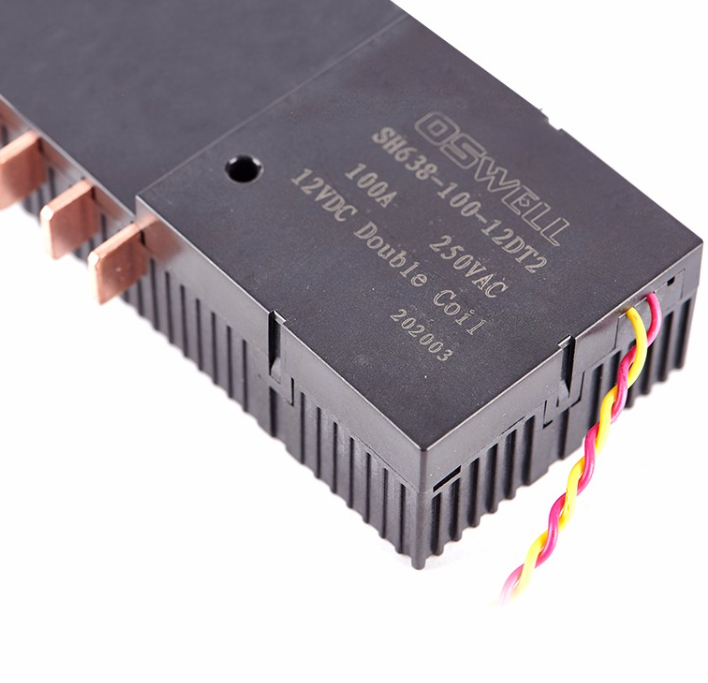
Once a three-phase magnetic latching relay has been designed into a commercial smart meter, replacing it later may require changes to terminal layout, busbar design, enclosure dimensions, PCB connections, firmware timing, and validation procedures. Procurement teams should therefore qualify the relay and supplier carefully before mass production.
Rated switching current
Initial contact resistance
Contact resistance after cycling
Temperature-rise performance
Three-pole switching consistency
Electrical and mechanical endurance
Coil and latching characteristics
Terminal and mounting dimensions
Production testing capability
Batch-to-batch repeatability
Sample testing should reproduce realistic meter conditions whenever possible. Engineers can evaluate the relay under continuous load, repeated switching, different ambient temperatures, and actual conductor or busbar arrangements. This helps identify thermal or mechanical issues before the meter enters full production.
Supplier manufacturing control is equally important. Small differences in contact materials, contact pressure, welding, terminal dimensions, or internal assembly can create variation between phases or between production batches. For large smart meter programs, these differences may affect both production yield and field reliability.
Customization capability can also provide value. Different commercial meter designs may require specific current ratings, terminal positions, mounting structures, coil specifications, auxiliary connections, or enclosure dimensions. A supplier able to adapt the relay to the final meter architecture can help OEM manufacturers simplify integration and reduce redesign work.
Procurement teams should therefore consider total lifecycle cost rather than component price alone. A relay with better consistency and lower temperature rise may reduce rework, warranty risk, field failures, and maintenance costs over the lifetime of the meter.
Conclusion
Three-phase magnetic latching relays can improve load switching consistency in commercial smart meters by combining low holding-power requirements with reliable high-current control across three electrical phases. Stable contact resistance, controlled temperature rise, consistent pole operation, durable contact materials, and predictable switching behavior are all important to long-term meter reliability. For OEM procurement teams, the best relay should be evaluated according to electrical performance, thermal behavior, switching endurance, phase-to-phase consistency, mechanical integration, production repeatability, and supplier engineering capability. By selecting a reliable three-phase latching relay supplier, smart meter manufacturers can reduce production risk, improve field reliability, and build more dependable commercial energy management products.