What Buyers Should Check When Selecting 5A to 600A Split-Core Current Clamps for Multi-Range Power Monitoring
What Buyers Should Check When Selecting 5A to 600A Split-Core Current Clamps for Multi-Range Power Monitoring
Power monitoring projects rarely involve only one current level. A building may contain low-current lighting circuits, medium-current HVAC equipment, and larger feeders carrying several hundred amperes. Split-core current clamps covering ranges from 5A to 600A allow monitoring equipment manufacturers and system integrators to build a more flexible sensing platform without disconnecting existing conductors. However, selecting the correct range is essential. Measurement accuracy, low-current sensitivity, window size, secondary output, mechanical repeatability, and application matching can all influence the quality of the final monitoring data.
1. Match the Current Range to the Real Load Instead of Choosing the Highest Rating
One of the most common purchasing mistakes is selecting a current clamp with a much higher rating than the actual circuit requires. A 600A clamp may physically work on a 20A circuit, but it may not provide the same measurement resolution or low-current performance as a clamp designed for a lower range.
For multi-range power monitoring, buyers should first understand the expected normal current, minimum measurable current, peak current, and overload conditions of each circuit. The sensor range should provide enough headroom for occasional peaks without sacrificing useful resolution during typical operation.
5A–20A for small branch circuits and low-power equipment
30A–100A for HVAC, commercial equipment, and subpanels
150A–300A for larger feeders and industrial machinery
400A–600A for main distribution circuits and high-power loads
Temporary monitoring where different clamp ranges may be used with one instrument
OEM monitoring systems that need several sensor options within one product family
For procurement teams, a product family covering several ranges can simplify sourcing because the same general mechanical and electrical architecture may be used across different applications. This can reduce the number of unrelated suppliers and make system standardization easier.
Buyers should still confirm whether the output characteristics remain compatible with the monitoring instrument across the selected range. Sensor ratio, voltage or current output, burden requirements, and calibration settings should all match the meter, logger, gateway, or power analyzer used in the project.
2. Window Size, Core Closing Repeatability and Low-Current Sensitivity Affect Real-World Accuracy
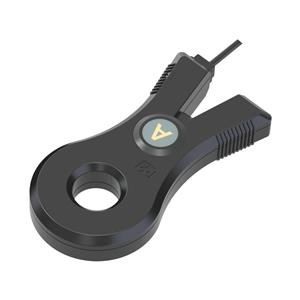
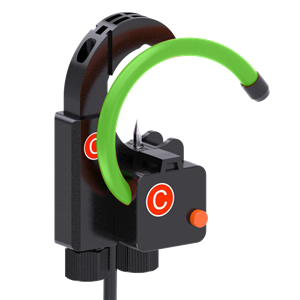
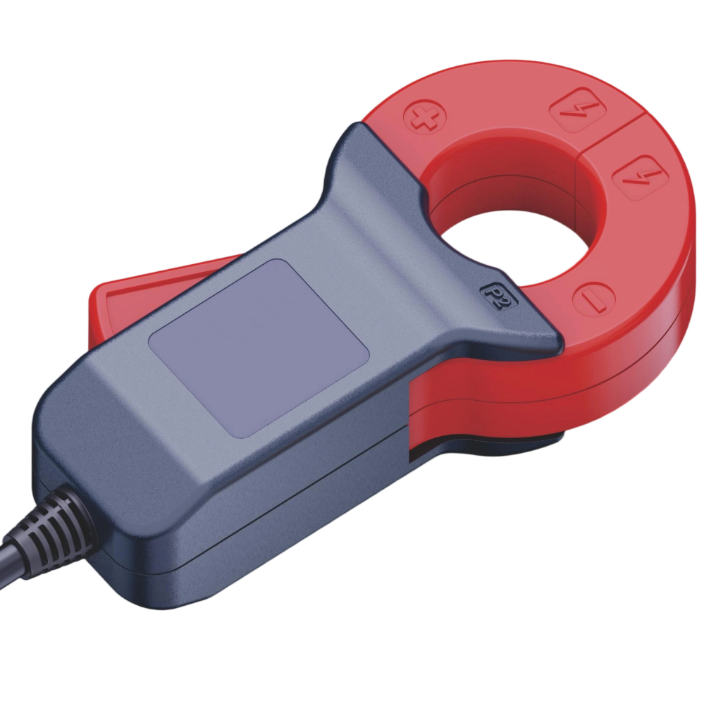
Split-core current clamps are designed for convenient installation around existing conductors. Their mechanical design therefore has a direct influence on measurement performance. The magnetic core must open easily for installation and then close in a precise and repeatable position.
If the core faces are misaligned or the locking mechanism does not provide consistent pressure, the effective air gap can change. This may influence ratio accuracy, phase displacement, and sensitivity, particularly at lower current levels.
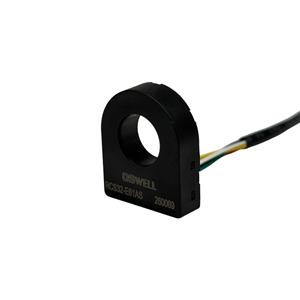
The aperture should provide enough conductor clearance without being unnecessarily large for the application.
Stable magnetic-core alignment helps maintain repeatable measurements after installation or relocation.
Lower-range clamps should provide stable output when monitoring lightly loaded equipment and small branch circuits.
Hinges, clips, and locking structures should remain reliable after repeated opening and closing cycles.
Conductor position also matters. A very small conductor placed at the edge of an oversized sensor window may produce more installation variation than a conductor positioned consistently in a well-matched aperture.
For portable energy auditing equipment, repeated opening and closing is especially important because the clamp may be moved between many circuits every day. For permanently installed monitoring, long-term locking stability and resistance to vibration may be more important.
Procurement teams should therefore evaluate electrical and mechanical performance together rather than assuming that all split-core clamps with the same current rating will behave similarly.
3. What Procurement Teams Should Check Before Approving a Multi-Range Current Clamp Supplier
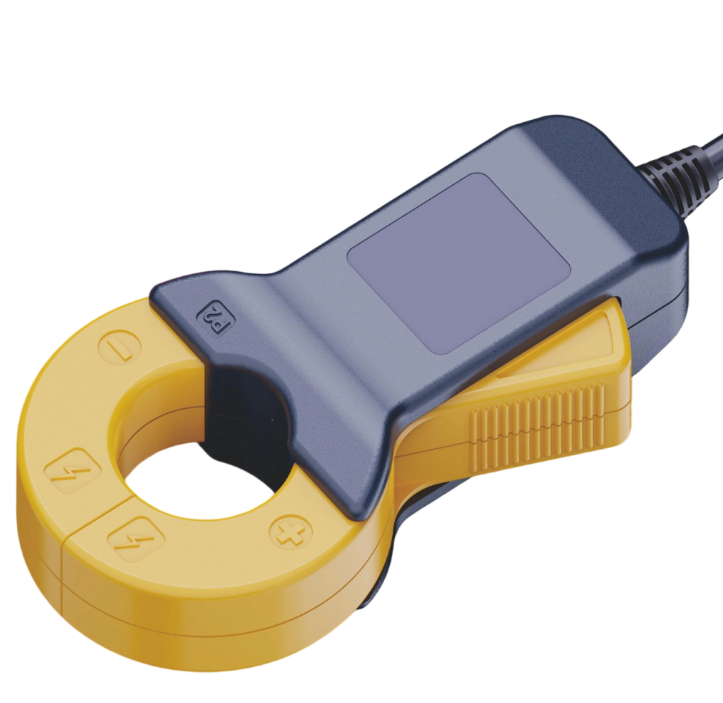
For OEM power monitoring equipment and large energy management projects, sourcing a family of current clamps can provide better standardization than purchasing unrelated sensors for every current range. However, the supplier must maintain stable performance across the complete product family.
Available current ranges from 5A to 600A
Accuracy across each rated range
Low-current measurement performance
Phase displacement
Window and conductor compatibility
Core closing repeatability
Secondary output type
Temperature stability
Lead wire and connector options
Batch-to-batch consistency
Buyers should test several clamp sizes with the actual monitoring hardware. The evaluation should include low-, medium-, and high-current points, repeated opening and closing, different conductor positions, and several production samples. This helps determine whether the full sensor family provides predictable performance.
Supplier customization capability can also be valuable. Different OEM systems may require specific output ratios, cable lengths, connectors, window dimensions, housing styles, or labeling. A supplier that can maintain one general platform while adapting these details can simplify product development and inventory management.
Long-term availability is another important purchasing consideration. Energy monitoring systems may remain in service for many years, and replacement sensors should remain electrically and mechanically compatible with installed equipment. Stable product specifications and controlled manufacturing can reduce maintenance problems later.
Procurement teams should therefore consider total lifecycle value rather than only unit price. A well-matched multi-range clamp family can reduce installation time, improve data quality, simplify inventory, support equipment standardization, and lower field-service costs across a wide range of power monitoring applications.
Conclusion
Selecting split-core current clamps from 5A to 600A requires buyers to match the sensor range to the real operating current instead of automatically choosing the highest available rating. Current range, low-current sensitivity, phase performance, aperture size, core closing repeatability, output compatibility, mechanical durability, and production consistency all influence the final monitoring result. For OEM manufacturers and system integrators, a well-designed multi-range clamp family can simplify product standardization while supporting different branch circuits, equipment loads, and main feeders. By choosing a supplier with stable mechanical design, reliable magnetic performance, and flexible customization, buyers can achieve more accurate and scalable power monitoring across a wide range of applications.