What Commercial Energy Projects Should Evaluate in UL Type Three-Phase Smart Meters with Modbus Communication
What Commercial Energy Projects Should Evaluate in UL Type Three-Phase Smart Meters with Modbus Communication
Commercial buildings, factories, data centers, shopping centers, renewable energy systems, and industrial facilities increasingly depend on detailed three-phase electricity data for energy management and cost control. UL type three-phase smart meters with Modbus communication provide a practical way to combine electrical measurement with centralized data collection. However, successful project deployment depends on more than choosing a meter with the correct current and voltage range. Measurement accuracy, communication reliability, installation format, data availability, system integration, environmental suitability, and long-term supplier support all influence the real value of the meter. For system integrators and procurement teams, these factors should be evaluated before large-scale project approval.
1. Measurement Capability Should Match the Real Commercial Energy Management Requirement
A commercial energy project often requires more than total kilowatt-hour measurement. Facility managers may need to understand current, voltage, active power, reactive power, power factor, frequency, energy import, and other operating parameters across a three-phase electrical system.
The first purchasing step should therefore be defining exactly what information the project needs. A meter selected only according to price may provide basic energy data but lack the measurement detail required for load analysis, tenant submetering, equipment comparison, or energy-saving projects.
Three-phase voltage and current measurement
Active and reactive power monitoring
Power factor analysis
Accumulated energy measurement
Phase-by-phase load comparison
Historical energy management and reporting
Measurement accuracy is especially important when the data will be used for cost allocation, operational benchmarking, or efficiency analysis. Even small errors can become significant when hundreds of circuits or large amounts of energy are monitored over long periods.
Procurement teams should also determine whether the meter is intended for direct connection or CT-based measurement. The selected architecture should match the actual current range, conductor size, panel design, and installation environment.
For large commercial projects, consistency between meters is equally important. A successful prototype installation does not guarantee that every meter in a large deployment will provide identical performance. Batch-to-batch measurement consistency should therefore be included in supplier qualification.
2. Modbus Communication Determines How Easily Meter Data Integrates with Energy Platforms
One of the main advantages of a smart meter with Modbus communication is the ability to transmit measurement data to building management systems, energy management platforms, gateways, PLCs, and industrial monitoring software.
RS485 with Modbus RTU is widely used in commercial and industrial environments because multiple meters can be connected on the same communication network. This can reduce cabling complexity and make centralized energy monitoring more practical.
Multiple meters can send energy and electrical data to one supervisory platform.
Modbus communication simplifies connection with gateways, PLCs, BMS platforms, and energy management software.
Commercial projects can expand from a few monitored circuits to dozens or hundreds of metering points.
Automated reading reduces the need for manual meter inspection and supports continuous analysis.
Buyers should not assume that all Modbus meters integrate equally easily. Communication address settings, baud rate, register mapping, supported electrical parameters, data format, and gateway compatibility should all be confirmed before project deployment.
System integrators should request clear communication documentation and test sample meters with the actual software platform. Early verification can prevent expensive commissioning problems when dozens of meters are already installed in electrical panels.
Communication stability should also be evaluated under real project conditions, especially when long RS485 networks, multiple meters, electrical noise, and industrial equipment are present.
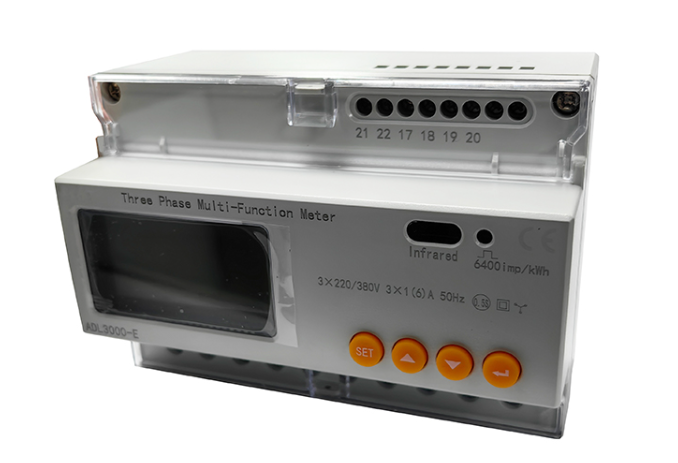
3. Installation, Compliance and Supplier Capability Matter in Large Commercial Projects
For commercial projects, the purchasing decision extends beyond meter specifications. Installation efficiency, enclosure size, terminal access, communication wiring, replacement availability, and supplier support can all influence project cost.
UL type meter platforms can be particularly relevant for projects where buyers require products designed for North American electrical applications or project-specific compliance expectations. Procurement teams should always confirm the exact certifications, ratings, and documentation required for the target project rather than assuming that one certification profile is suitable for every market.
Three-phase measurement accuracy
Current and voltage compatibility
RS485 Modbus RTU communication
Register and data availability
DIN rail or panel installation format
Terminal wiring convenience
Project-specific compliance documentation
Environmental operating range
Production and firmware consistency
Long-term technical and supply support
Procurement teams should also evaluate the supplier's ability to maintain the same firmware behavior and communication mapping over the product lifecycle. Unexpected changes can create compatibility problems with existing gateways or software after a project has already been deployed.
Sample testing should include actual communication networks, real electrical loads, and the intended monitoring platform. Engineers can verify register values, address configuration, communication recovery, measurement consistency, and installation convenience before large-volume purchasing begins.
Long-term availability is especially important for commercial energy management projects because meters may need to be replaced or added years after the original installation. Maintaining compatible products and technical documentation can greatly simplify system expansion and maintenance.
For buyers, total lifecycle value should therefore include installation time, integration effort, data reliability, technical support, expansion capability, and product availability—not only the initial meter price.
Conclusion
UL type three-phase smart meters with Modbus communication can provide a practical foundation for commercial energy monitoring by combining detailed electrical measurement with centralized data collection. For procurement teams and system integrators, successful selection requires evaluating measurement accuracy, current range, Modbus compatibility, installation format, communication documentation, project-specific compliance requirements, production consistency, and long-term supplier support. By validating the meter with the actual gateway and energy management platform before large-scale deployment, commercial projects can reduce integration risk and build a more scalable, reliable, and useful energy monitoring system.