What International Charging Equipment Buyers Should Check When Sourcing GB/T DC Charging Cables
What International Charging Equipment Buyers Should Check When Sourcing GB/T DC Charging Cables
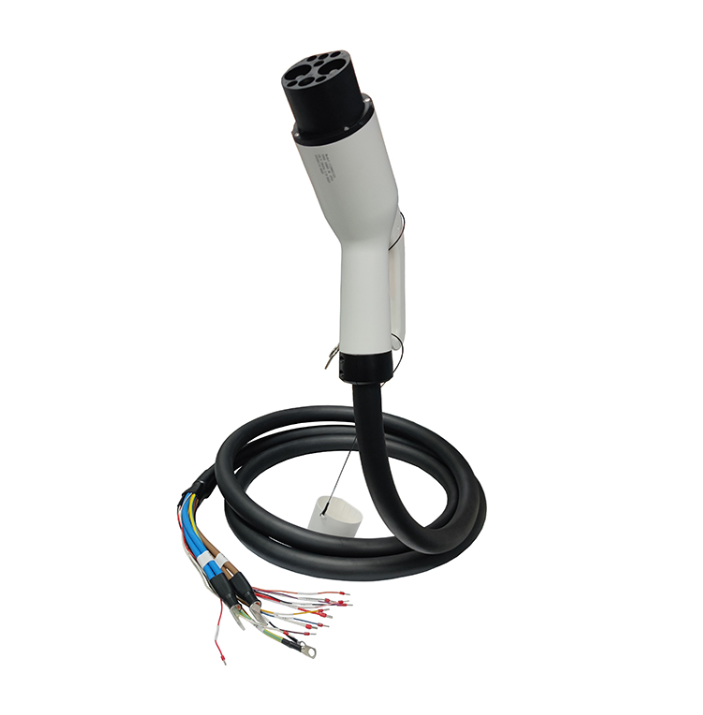
As electric vehicle charging infrastructure continues to expand, GB/T DC charging cables remain an important sourcing category for manufacturers, charging station integrators, distributors, and infrastructure projects serving the Chinese market and other applications based on GB/T charging interfaces. Because the charging cable carries high DC current and is repeatedly handled in real operating environments, its quality directly affects charging reliability, user safety, equipment uptime, and maintenance cost.
For international buyers, comparing quotations is only the first step. Current capability, conductor design, connector durability, insulation materials, terminal quality, environmental resistance, temperature performance, production consistency, and supplier engineering support all need to be considered before a cable is approved for a charging equipment project.
1. Check Electrical Performance and Thermal Stability Before Comparing Prices
The first purchasing question should be whether the GB/T DC charging cable can reliably support the electrical requirements of the target charger. DC fast charging places continuous electrical and thermal stress on the cable, terminals, and connector contacts. A cable that appears acceptable during short laboratory testing may perform differently after long periods of high-current charging.
Buyers should therefore review the complete electrical design rather than focusing only on a nominal current rating. Important factors include conductor cross-sectional area, conductor material, contact resistance, terminal connection quality, insulation performance, and temperature rise under load.
Contact resistance deserves particular attention. Even a small increase in resistance at the connector or terminal can produce additional heat during high-current operation. Localized heating may accelerate the aging of connector housings, seals, insulation, and contact surfaces.
Procurement teams should ask suppliers about:
Rated electrical operating conditions
Conductor material and construction
Contact resistance control
Temperature-rise test procedures
Terminal crimping consistency
Insulation and dielectric performance
Cable flexibility under normal operation
A reliable supplier should be able to explain how electrical and thermal performance is controlled during production. This is especially important for charging equipment manufacturers purchasing large volumes, because minor variations between batches can create inconsistent field performance.
Buyers should also evaluate cables under realistic charging conditions. Long charging cycles, high ambient temperature, repeated bending, and connector insertion can all influence actual performance. Selecting the cheapest cable without understanding these factors can increase warranty and service costs later.
2. Evaluate Connector Durability, Cable Materials and Real-World Operating Conditions
GB/T DC charging cables are not stationary electrical components. They are frequently moved, bent, pulled, inserted, removed, and exposed to outdoor conditions. Mechanical durability is therefore just as important as electrical performance.
The connector should maintain stable mechanical engagement and electrical contact throughout repeated charging cycles. Poor dimensional consistency, weak internal structures, or unstable terminal assembly may eventually increase contact resistance or create unreliable connections.
Cable jacket and insulation materials also influence long-term performance. Depending on the installation environment, charging cables may be exposed to sunlight, temperature changes, moisture, dust, oils, abrasion, and repeated dragging across the ground.
International buyers should evaluate:
Connector insertion and withdrawal durability
Cable bending resistance
Jacket abrasion resistance
Low-temperature flexibility
High-temperature stability
Moisture and environmental protection
Strain relief design
Connector housing strength
Cable length is another practical consideration. Longer cables may provide more installation flexibility, but they can also increase resistance, weight, cost, and handling difficulty. OEM manufacturers should determine cable length according to the charging station structure and intended installation environment rather than automatically choosing the longest option.
For projects involving customized charging equipment, buyers should also confirm whether the supplier can support different cable lengths, conductor configurations, auxiliary wiring arrangements, connector structures, or mechanical requirements.
A supplier capable of discussing the complete charging application can usually provide more value than one that only offers standard catalog products. Early engineering communication can help avoid compatibility problems during prototype validation and equipment assembly.
3. Assess Supplier Quality Control and Long-Term OEM Supply Capability
For international charging equipment buyers, supplier qualification is as important as cable qualification. Once a GB/T DC charging cable has been integrated into a charger design, changing suppliers may require additional testing, documentation, validation, and production adjustments.
Procurement teams should therefore evaluate whether the supplier can maintain stable quality across long-term mass production. One good sample does not guarantee that future production batches will deliver the same performance.
Important supplier evaluation areas include:
Incoming material inspection
Terminal processing and crimping control
Electrical testing during production
Finished cable inspection
Production traceability
Batch-to-batch consistency
Engineering and customization support
Mass-production capacity
Delivery stability
After-sales technical support
Buyers should request relevant drawings, product specifications, test information, and samples before final approval. Prototype testing should be performed using the actual charging equipment whenever possible. This allows engineering teams to evaluate cable routing, connector fit, thermal behavior, communication wiring, mechanical handling, and installation space under realistic conditions.
For distributors and charging infrastructure companies, replacement availability should also be considered. Charging cables are exposed components and may require replacement during the operating life of the charging station. Long-term availability can therefore influence maintenance efficiency and lifecycle cost.
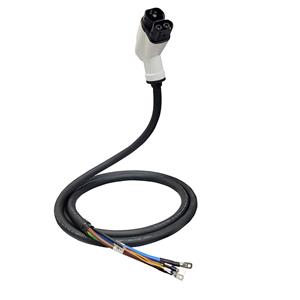
Products such as OSWELL's GB/T DC charging cable solutions can be considered for charging equipment projects requiring integrated cable and connector assemblies. For OEM sourcing, the final selection should always be based on the charger's electrical architecture, current requirements, installation environment, and long-term reliability expectations.
International buyers who evaluate quality, engineering support, and production consistency together with price are more likely to build a stable charging equipment supply chain and reduce unexpected costs after mass production begins.
Conclusion
When sourcing GB/T DC charging cables, international buyers should look beyond basic specifications and unit price. Electrical performance, temperature rise, connector durability, cable materials, environmental resistance, manufacturing consistency, and supplier engineering capability all influence the long-term reliability of the charging system. For OEM charger manufacturers, distributors, and infrastructure projects, selecting a supplier with stable production quality and long-term technical support can reduce development risks, maintenance costs, and field failures. A carefully selected GB/T DC charging cable is therefore not only a connection component, but an important part of the complete charging equipment reliability strategy.