What OEM Buyers Should Evaluate in ±200A Fluxgate Current Transducers for Precision Battery Testing
What OEM Buyers Should Evaluate in ±200A Fluxgate Current Transducers for Precision Battery Testing
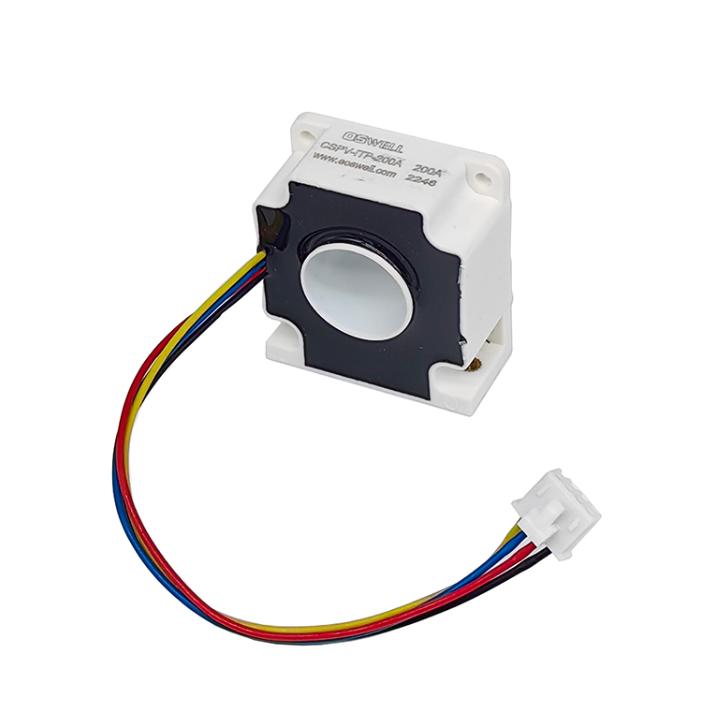
Precision battery testing requires current measurement that remains accurate during charging, discharging, idle periods, and rapid current transitions. For battery cyclers, laboratory test systems, EV battery validation equipment, and energy storage R&D platforms, a ±200A fluxgate current transducer can provide high-accuracy bidirectional current measurement with strong electrical isolation and low offset. However, OEM buyers should look beyond the nominal current range. Zero-current stability, linearity, temperature drift, bandwidth, isolation, mechanical integration, and production consistency all influence the real performance of the complete battery test system.
1. Zero Offset and Linearity Matter More Than Rated Current Alone
Battery testing is different from simple current monitoring because the measurement system may need to capture both large charge or discharge currents and very small current changes near zero. A sensor can perform well at 150A or 200A and still create meaningful error if its zero-current offset is unstable.
Fluxgate current transducers are particularly attractive for precision testing because the sensing principle can achieve very low offset and strong linearity across a wide current range. This is valuable when the same test system must measure charging current in one direction and discharge current in the opposite direction.
Zero-current offset
Offset repeatability after power cycling
Linearity across positive and negative current
Gain accuracy across the full ±200A range
Hysteresis and return-to-zero behavior
Calibration consistency between production units
For battery cyclers, a small zero offset can accumulate into a larger energy or capacity error when current is integrated over long test periods. This directly affects coulomb counting, charge efficiency analysis, battery capacity verification, and state-of-charge evaluation.
Procurement teams should therefore request accuracy information across multiple current points rather than relying on one headline figure. A sensor that remains stable near zero, at medium current, and near the upper end of the range can reduce software compensation and repeated calibration.
2. Temperature Drift, Bandwidth and Isolation Determine Real Test-System Performance
Battery testing systems often operate for long periods, and both the current sensor and surrounding electronics can experience temperature changes. If sensor offset or gain changes significantly with temperature, test accuracy may drift during a long charge-discharge cycle.
Temperature stability is therefore one of the most important parameters for precision battery validation. OEM designers should evaluate sensor behavior not only at room temperature but across the intended operating range of the test equipment.
Helps maintain stable zero offset and gain during long-duration battery testing.
Allows the sensor to capture rapid current transitions, pulse loads, and dynamic battery behavior.
Separates the high-current battery circuit from precision measurement and control electronics.
Stable response during charge-discharge transitions improves transient measurement quality.
Bandwidth is especially important in battery pulse testing, power capability testing, and systems that simulate real vehicle load profiles. A sensor with excellent DC accuracy but insufficient dynamic response may fail to reproduce short current peaks accurately.
Isolation capability should also be matched to the complete battery system voltage. The current transducer may sit between a high-energy battery circuit and low-voltage data-acquisition electronics, so insulation structure and isolation performance are important to both system safety and measurement stability.
Buyers should therefore evaluate the sensor together with the amplifier, ADC, controller, cable layout, and grounding architecture. Precision current sensing is a system-level function, not just a component specification.
3. What OEM Procurement Teams Should Check Before Approving a ±200A Fluxgate Sensor
Once a current transducer has been integrated into a battery tester or power electronics platform, changing it later may require hardware redesign, calibration updates, software changes, and new validation. Procurement teams should therefore evaluate both technical performance and supplier capability before moving into mass production.
±200A bidirectional current range
Zero-current offset
Linearity
Temperature drift
Bandwidth and response time
Electrical isolation
Output signal compatibility
Mechanical aperture and mounting
Calibration and testing capability
Batch-to-batch consistency
Sample validation should include several units and multiple operating conditions. Engineers can test positive and negative current, zero-current recovery, thermal drift, pulse response, repeated power cycling, and long-duration operation. This provides a much clearer picture of production suitability than a single room-temperature test point.
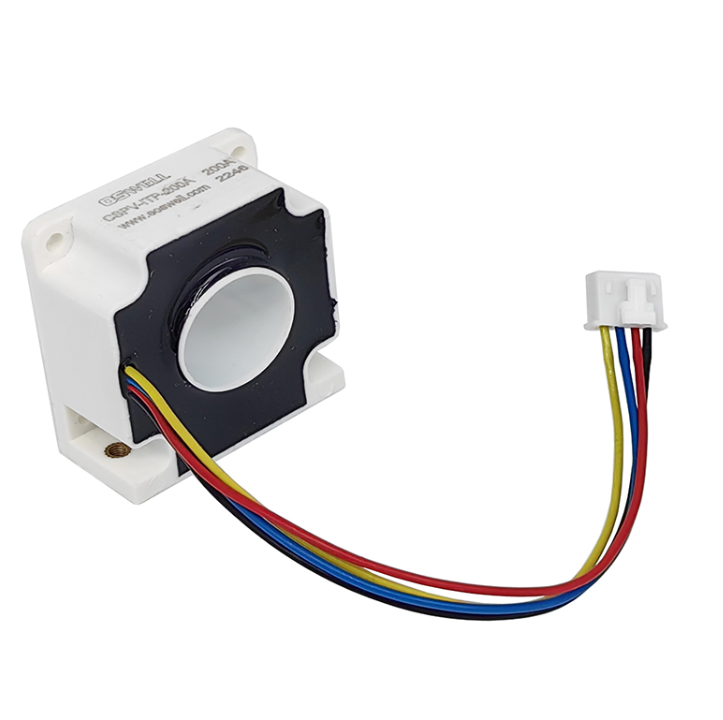
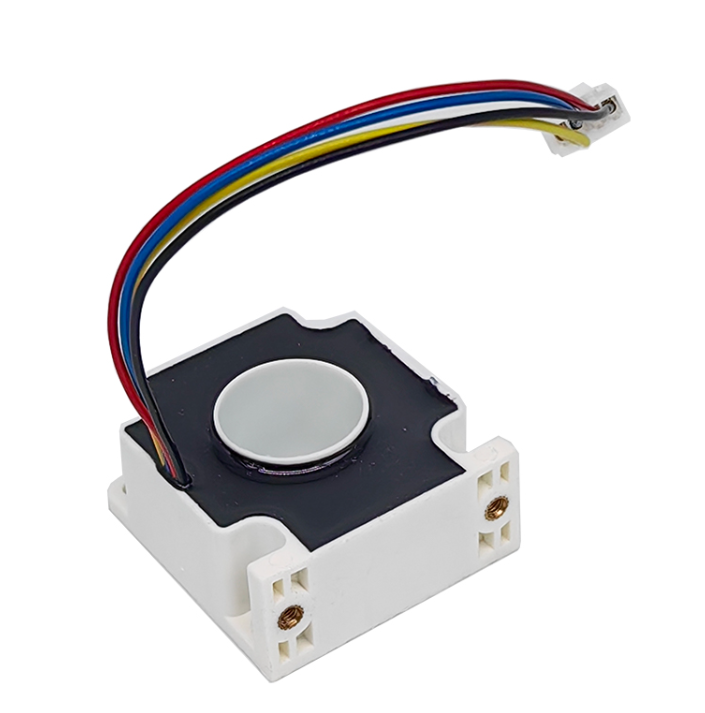
Mechanical integration also matters. Aperture size, busbar geometry, mounting method, sensor orientation, connector position, and cable routing can all affect ease of assembly and repeatability. A sensor that is electrically excellent but difficult to install consistently may create additional production variation.
Supplier manufacturing control is equally important. Fluxgate sensors contain magnetic structures, electronics, compensation circuits, and calibration processes that must all remain stable across production. Procurement teams should understand how the supplier manages end-of-line testing, traceability, calibration, and long-term component sourcing.
Finally, buyers should evaluate total lifecycle value rather than unit price alone. A higher-quality current transducer can reduce calibration time, test uncertainty, false data, system redesign, and field troubleshooting. For precision battery testing equipment, measurement reliability is often far more valuable than a small saving in sensor cost.
Conclusion
For precision battery testing, a ±200A fluxgate current transducer should be evaluated on much more than its nominal current range. Zero-current offset, bidirectional linearity, temperature drift, bandwidth, dynamic response, electrical isolation, mechanical integration, and production consistency all influence the reliability of the final test data. For OEM procurement teams, the best sensor is one that maintains stable performance from near-zero current to full-scale charge and discharge while remaining consistent across temperature and production batches. By selecting a reliable fluxgate current transducer and an experienced supplier, battery test equipment manufacturers can reduce calibration uncertainty, improve long-duration measurement accuracy, and build more dependable validation systems.