Why 0.1 Class 60A Miniature Current Transformers Matter in Space-Constrained Metering Designs
Why 0.1 Class 60A Miniature Current Transformers Matter in Space-Constrained Metering Designs
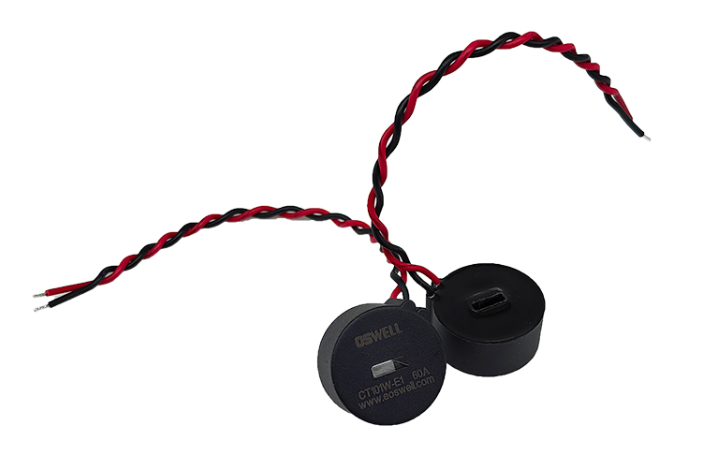
Smart meters, compact power monitors, industrial controllers, and embedded energy measurement equipment are expected to deliver increasingly accurate current data while occupying less PCB and enclosure space. This creates a difficult engineering balance: the current transformer must become smaller without sacrificing measurement accuracy, phase performance, thermal stability, or production consistency. A 0.1 class 60A miniature current transformer offers an attractive solution for applications that require relatively high current measurement in a compact mechanical format. For OEM designers and procurement teams, however, successful selection depends on much more than nominal current and physical dimensions.
1. Miniature CTs Help OEMs Reduce Meter Size Without Giving Up Measurement Capability
Internal space is becoming one of the most valuable resources in modern metering equipment. A compact smart meter may need to contain the current measurement system, metering IC, communication module, display, magnetic latching relay, power supply, protection components, and terminal structure inside one enclosure. Every millimeter saved by the current transformer can provide additional flexibility for the rest of the design.
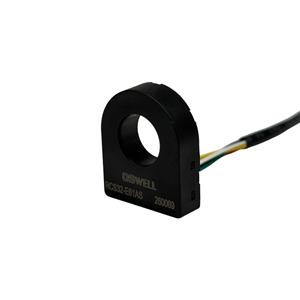
A miniature 60A CT allows the sensing element to occupy less space around the primary conductor while still supporting the current range required by many residential, commercial, and compact industrial metering applications.
Smaller smart meter enclosures
Higher PCB component density
More room for communication and control modules
Shorter internal signal paths
Simplified multi-function meter platforms
Greater flexibility in terminal and busbar arrangement
Miniaturization, however, cannot be evaluated independently from magnetic design. A smaller magnetic core has less physical volume available for flux handling, so core material, winding turns, conductor position, and burden conditions become increasingly important.
Procurement teams should therefore avoid selecting a miniature CT simply because it fits the enclosure. The component must provide enough magnetic and thermal margin to maintain stable performance across the complete current range of the finished meter.
2. 0.1 Class Accuracy Requires Careful Control of Ratio Error, Phase Error and Temperature
Achieving a compact size is valuable, but high-accuracy energy metering also requires the current transformer to reproduce primary current consistently. In 0.1 class applications, even relatively small changes in magnetic characteristics or winding geometry can influence the complete measurement result.
Ratio accuracy determines how closely the secondary output represents the actual primary current. Phase displacement is equally important because smart meters calculate active power and energy by combining voltage and current information.
Stable current transformation helps reduce calibration variation across different meter units.
Controlled phase displacement supports accurate power factor and energy calculations.
Stable magnetic and winding characteristics help maintain measurement accuracy as the meter temperature changes.
Correct secondary loading helps the CT operate close to the conditions for which it was designed.
Temperature becomes especially important in compact meters because components are installed closer together. Relays, terminals, shunts, power supplies, and communication electronics may all contribute to internal heat. The CT must continue providing stable output even when operating conditions differ from the room-temperature environment used during initial testing.
OEM engineers should therefore validate the complete current measurement chain, including the CT, burden resistor, metering IC, PCB layout, conductor position, and enclosure. A 0.1 class component can only deliver its full value when the surrounding circuit is designed appropriately.
3. What Procurement Teams Should Check Before Approving a 60A Miniature CT Supplier
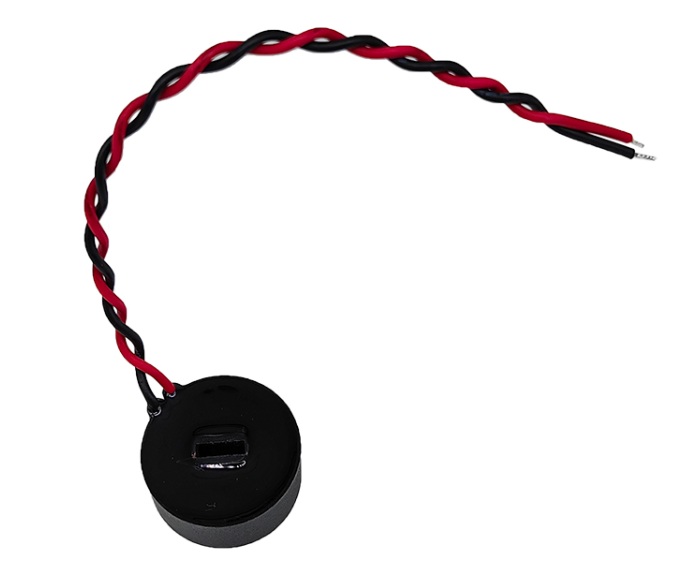
High-volume metering programs require more than excellent prototype performance. Procurement teams need confidence that the CT supplier can maintain the same electrical and mechanical characteristics across long production runs. Miniature components can be particularly sensitive to dimensional and magnetic variation because the design has less room for unnecessary tolerance.
0.1 class measurement performance
60A rated current capability
Ratio accuracy across the current range
Phase displacement
Secondary burden requirements
Temperature stability
Core material consistency
Compact mechanical dimensions
Production testing capability
Batch-to-batch repeatability
Buyers should request multiple samples and test them at low, medium, and rated current levels. This helps reveal whether the design provides balanced performance across the complete measurement range rather than only at one optimized test point.
Dimensional consistency should also be checked carefully. In compact meter platforms, small differences in CT housing size, pin location, conductor aperture, or winding position may create assembly issues or change conductor alignment.
Supplier process control is therefore important. Core material sourcing, winding turns, winding tension, assembly position, solderable terminals, and final electrical testing all influence production consistency. Procurement teams should understand how these characteristics are controlled before approving a long-term source.
Total lifecycle cost should also be considered. A miniature CT that combines high accuracy with stable mass production can help reduce enclosure size, calibration variation, PCB redesign, assembly problems, and field-performance risk. These benefits may provide considerably more value than choosing the lowest-priced component.
Conclusion
A 0.1 class 60A miniature current transformer can help OEM manufacturers achieve high-accuracy current measurement without consuming excessive PCB or enclosure space. However, successful miniaturization requires careful control of magnetic core performance, ratio accuracy, phase displacement, secondary burden, temperature stability, and mechanical tolerances. For procurement teams, the best CT should be evaluated across the complete current range and across multiple production samples rather than selected by size or headline accuracy alone. By choosing a miniature CT supplier with strong magnetic design, stable production control, and reliable testing capability, meter manufacturers can build smaller products while maintaining precise and repeatable long-term measurement performance.