Why Contact Resistance Matters in High-Current Magnetic Latching Relays for Smart Meters
Why Contact Resistance Matters in High-Current Magnetic Latching Relays for Smart Meters
High-current magnetic latching relays are critical switching components in modern smart meters. They allow utilities and energy management systems to connect or disconnect electrical loads while consuming very little holding power after switching. As smart meters move toward higher current ratings and longer service life, relay performance becomes increasingly important to meter manufacturers and procurement teams.
Among the many relay parameters, contact resistance deserves special attention. Even a very small increase in resistance at the relay contacts can generate additional heat when large currents pass through the device. Over thousands of switching cycles and years of continuous operation, this can affect temperature rise, electrical efficiency, contact stability, and ultimately the reliability of the complete smart meter.
For buyers sourcing high-current magnetic latching relays, contact resistance should therefore be evaluated together with current capacity, switching endurance, coil characteristics, mechanical structure, manufacturing consistency, and long-term supplier reliability.
1. How Contact Resistance Influences Heat Generation and Meter Reliability
When a magnetic latching relay is closed, electrical current flows through the relay contacts. Ideally, the contact interface should provide a very low resistance path. In reality, every contact has some resistance caused by material properties, surface condition, contact pressure, and mechanical structure.
At low current levels, a small resistance difference may have limited practical impact. In high-current smart meter applications, however, the effect becomes much more important because power loss increases with current.
Higher contact resistance can contribute to:
Additional heat generation inside the relay
Higher internal smart meter temperature
Greater electrical power loss
Accelerated contact surface aging
Reduced long-term switching reliability
Increased thermal stress on nearby components
Smart meters are typically installed in compact enclosures with limited space for heat dissipation. A relay that generates unnecessary heat can influence not only its own operating life but also the PCB, terminals, plastics, metering electronics, and other components located nearby.
Contact resistance can also change over time. Repeated switching, electrical arcing, oxidation, contamination, contact wear, and mechanical changes may all influence the contact interface. This means that procurement teams should not evaluate only the initial resistance value measured on a new sample.
For high-current applications, buyers should also understand whether the relay maintains stable resistance after repeated electrical and mechanical operation. Long-term stability is often more important than achieving an excellent value on a single prototype.
This is especially relevant for smart meter manufacturers purchasing 90A, 100A, 120A, or similar high-current switching relays, where relatively small changes in contact performance can create noticeable thermal differences during continuous operation.
2. Contact Materials, Contact Pressure and Manufacturing Consistency Matter
Contact resistance is not determined by one specification alone. It is the result of several design and manufacturing factors working together. For this reason, buyers should evaluate the complete relay structure instead of comparing products only by nominal current rating.
Contact Material:
The selected contact material affects conductivity, resistance to electrical arcing, wear behavior, and long-term stability. A suitable contact system must balance electrical performance with durability under repeated load switching.
Contact Pressure:
Sufficient and stable mechanical pressure helps maintain a reliable conductive path. If contact pressure varies between units or decreases over time, resistance can increase and create additional heat.
Surface Quality:
Contamination, oxidation, or inconsistent contact surfaces can influence actual resistance. Controlled production and clean assembly processes therefore play an important role in relay quality.
Terminal and Internal Connection Design:
The electrical path includes more than the contact surfaces. Terminals, conductive parts, welding points, and internal connections all contribute to total resistance and temperature rise.
Production Repeatability:
For OEM manufacturers, one excellent sample is not enough. The real purchasing challenge is ensuring that thousands or millions of relays maintain similar electrical characteristics.
This is where supplier process control becomes important. Stable raw materials, controlled assembly pressure, consistent welding, dimensional inspection, and electrical end-of-line testing can help reduce unit-to-unit variation.
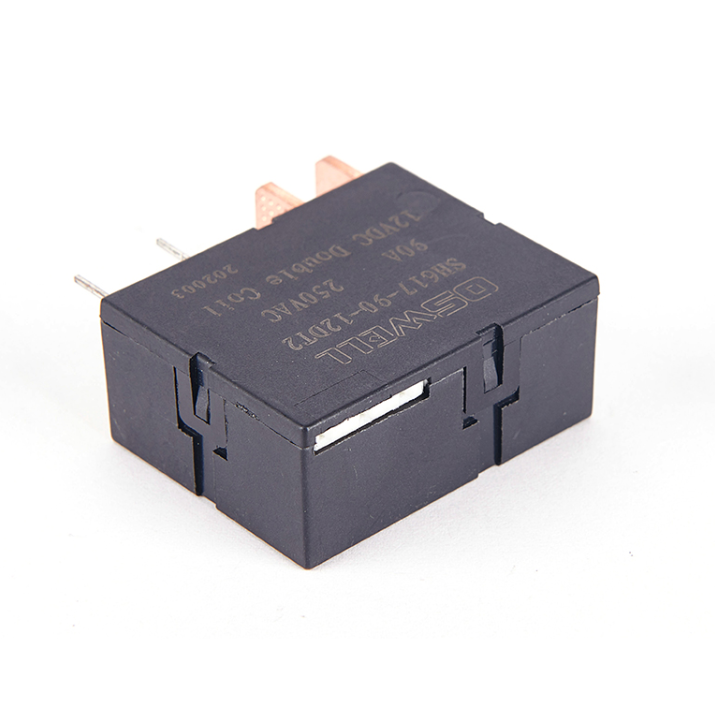
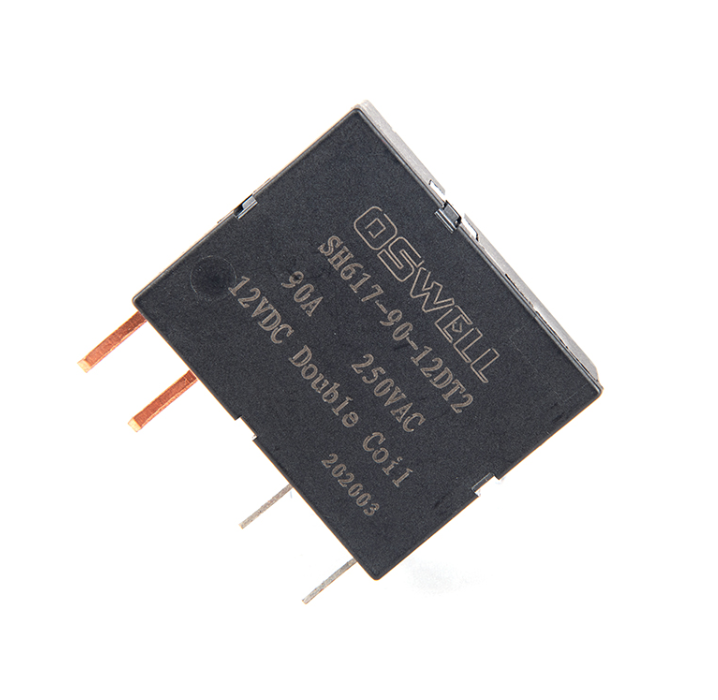
High-current magnetic latching relay families such as those used in smart meters are often selected for applications where low holding power and reliable load switching are required. When evaluating products such as 90A or 120A relay solutions, procurement teams should therefore request information related to contact resistance, temperature rise, switching endurance, and production consistency rather than evaluating only the headline current capacity.
3. What Smart Meter Buyers Should Check Before Approving a Relay Supplier
Once a magnetic latching relay has been integrated into a smart meter design, replacing it later can be expensive. Mechanical dimensions, terminal positions, PCB layout, switching control, enclosure structure, and validation procedures may all need to be reconsidered.
Procurement teams should therefore qualify both the relay and the supplier carefully before moving into mass production.
Important evaluation points include:
Initial contact resistance
Resistance stability after switching cycles
Temperature rise under continuous rated current
Electrical switching endurance
Mechanical life
Contact material and terminal construction
Coil power and switching characteristics
Batch-to-batch consistency
Production testing and traceability
Long-term supply capability
Temperature-rise testing should be performed under conditions that reflect the actual meter design. PCB layout, terminal connection, enclosure temperature, conductor size, and airflow can all affect real operating temperature.
Buyers should also compare relay suppliers based on total lifecycle cost instead of unit price alone. A lower-cost relay may become expensive if unstable contact resistance causes excessive heat, production failures, field replacements, warranty claims, or meter redesign.
For large smart meter programs, engineering support is another valuable supplier capability. Different customers may require different terminal structures, dimensions, current capabilities, coil configurations, or mounting methods. A supplier that can support customization and prototype validation may help shorten development time and reduce integration risks.
Most importantly, procurement teams should confirm that the supplier can reproduce the same quality during long-term mass production. Consistent contact resistance and thermal performance across production batches can contribute directly to stable smart meter quality and lower field failure risk.
Conclusion
Contact resistance is one of the most important factors affecting the thermal performance and long-term reliability of high-current magnetic latching relays used in smart meters. Stable low resistance helps reduce heat generation, limit electrical losses, protect surrounding components, and maintain reliable switching throughout the meter's service life. For procurement teams, the best relay selection should therefore consider not only current rating and price, but also contact materials, temperature rise, switching endurance, production consistency, testing capability, and supplier support. Choosing a reliable magnetic latching relay supplier can help smart meter manufacturers reduce production risk, improve product lifetime, and achieve more consistent performance in high-volume applications.