Why CT-Connected DIN Rail Energy Meters Are Practical for Solar and Energy Storage AC Monitoring
Why CT-Connected DIN Rail Energy Meters Are Practical for Solar and Energy Storage AC Monitoring
Solar PV systems and battery energy storage systems increasingly require detailed AC-side monitoring to understand energy generation, charging and discharging behavior, grid import and export, and overall system efficiency. CT-connected DIN rail energy meters provide a practical way to measure higher-current circuits without routing the full load current directly through the meter. Their compact installation, flexible current transformer options, and compatibility with three-phase electrical systems make them attractive for solar inverters, battery storage systems, commercial microgrids, and energy management platforms. For OEM manufacturers, system integrators, and procurement teams, choosing the right meter can improve installation flexibility, measurement reliability, and long-term system visibility.
1. CT-Connected Metering Makes High-Current Solar and Storage Monitoring Easier to Integrate
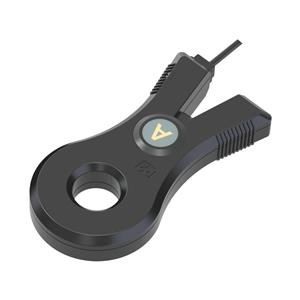
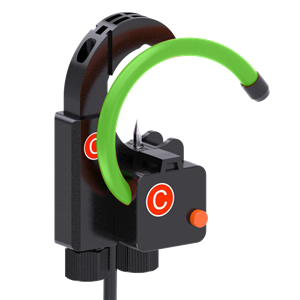
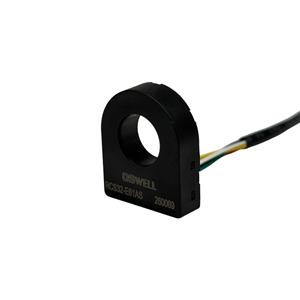
One of the main advantages of a CT-connected DIN rail energy meter is that the load current does not need to pass directly through the meter terminals. Instead, external current transformers measure the primary current and provide a lower secondary signal to the meter. This makes the architecture suitable for higher-current circuits where direct-connected meters may be less practical.
In solar and energy storage applications, this flexibility is useful because system current can vary significantly depending on inverter capacity, grid connection, battery charge and discharge power, and the size of the commercial or industrial installation.
Solar inverter AC output
Battery PCS or storage inverter output
Grid connection point
Commercial building main feeder
Microgrid distribution circuits
AC-coupled solar and storage systems
CT-connected meters also simplify installation in distribution panels because the meter itself can remain compact while the current transformer is selected according to the required current range and conductor size. This can help system integrators standardize the meter platform across several project sizes while changing only the external CT specification.
For procurement teams, this means meter and CT selection should be considered together. The CT ratio, accuracy, burden, conductor size, and wiring distance all influence final system performance. A meter with strong specifications cannot provide accurate data if it is paired with an unsuitable current transformer.
2. Detailed AC Measurement Helps Improve Solar, BESS and Grid Energy Management
Solar and battery storage systems need more than a simple total energy reading. Operators often want to know how much solar energy is being generated, how much power is being exported to the grid, how much energy is being charged into or discharged from the battery, and how the complete system performs over time.
A suitable three-phase energy meter can provide current, voltage, active power, reactive power, power factor, frequency, and accumulated energy information that can be used by an energy management platform.
Tracks AC energy delivered by the inverter and supports performance comparison over time.
Helps monitor charge and discharge power on the AC side of the storage system.
Supports analysis of how much electricity is purchased from or delivered back to the grid.
Detailed energy data helps operators compare generation, storage, consumption, and conversion losses.
This data becomes especially valuable when the meter is connected to an EMS, gateway, or building management platform. Instead of manually checking energy readings, operators can collect information continuously and use it for trend analysis, reporting, alarms, and optimization.
For commercial solar and storage systems, accurate monitoring can also support load shifting and self-consumption strategies. Operators can determine whether stored energy is being used during higher-cost periods and whether solar generation is being consumed locally or exported.
Procurement teams should therefore consider communication capability and system integration requirements as part of the meter selection process, not only measurement accuracy.
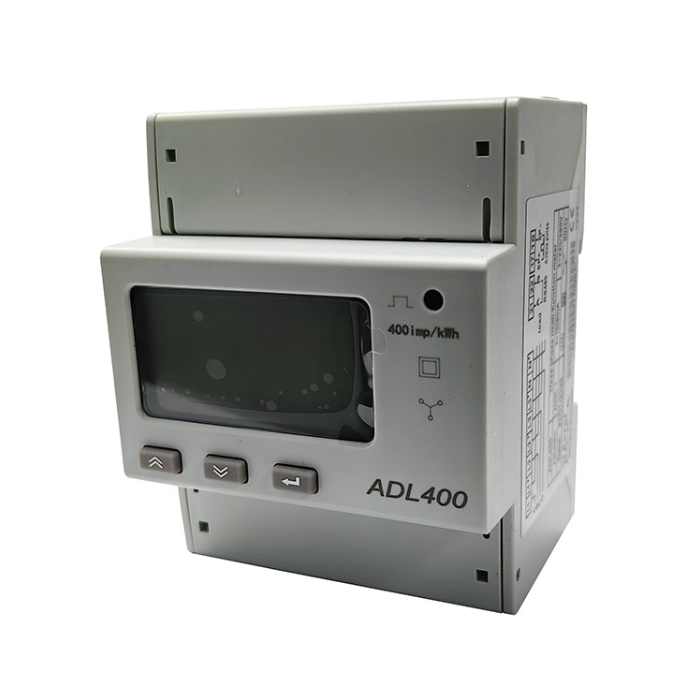
3. What Buyers Should Check When Selecting CT-Connected DIN Rail Energy Meters
For solar inverter manufacturers, BESS integrators, panel builders, and energy management providers, meter selection should be based on the complete system architecture. A compact DIN rail format is useful, but long-term value depends on measurement accuracy, current-transformer compatibility, communication, installation efficiency, and supplier consistency.
Three-phase measurement accuracy
Supported CT ratios
Current and voltage measurement range
Import and export energy measurement
Power factor and frequency measurement
DIN rail mounting dimensions
Communication interface options
EMS or gateway compatibility
Installation and wiring simplicity
Long-term supply reliability
Buyers should also validate the complete meter-and-CT combination rather than testing the meter alone. Ratio errors, phase errors, secondary wiring resistance, and incorrect CT installation can influence the final energy data. Engineering teams should confirm CT orientation, phase matching, conductor routing, and configuration before commissioning the system.
Communication capability is another important consideration. Solar and storage projects increasingly require meters to exchange data with inverters, energy management controllers, gateways, and cloud platforms. Choosing a meter that fits the existing communication architecture can reduce integration work and shorten project commissioning time.
For OEM projects, supplier technical support can also reduce risk. Different markets and system sizes may require different CT ratios, communication settings, mounting arrangements, or data requirements. A supplier that understands both metering hardware and application integration can provide greater value than one focused only on unit price.
Total lifecycle cost should therefore include installation time, measurement reliability, commissioning effort, communication integration, technical support, and future system expansion. A properly selected CT-connected DIN rail meter can become a practical and scalable measurement point for modern solar and battery storage projects.
Conclusion
CT-connected DIN rail energy meters provide a practical solution for solar and energy storage AC monitoring because they combine compact installation with flexible high-current measurement. By using external current transformers, system integrators can adapt the same meter platform to different inverter capacities, storage systems, and commercial distribution networks. Detailed three-phase energy data can support solar generation analysis, battery charge and discharge monitoring, grid import and export measurement, and broader energy management strategies. For procurement teams, the best solution should be selected according to measurement accuracy, CT compatibility, communication capability, installation efficiency, system integration, and supplier support. A well-matched meter and CT combination can provide reliable data and create a scalable foundation for modern renewable energy monitoring.