Why Fluxgate Current Transducers Are Ideal for High-Accuracy DC Measurement in Battery and Power Conversion Systems
Why Fluxgate Current Transducers Are Ideal for High-Accuracy DC Measurement in Battery and Power Conversion Systems
As battery systems, energy storage equipment, renewable energy converters, and advanced power electronics move toward higher efficiency and more precise control, current measurement accuracy is becoming increasingly important. In many of these applications, engineers must measure large DC currents while maintaining excellent linearity, low offset, stable performance over temperature, and reliable electrical isolation. Fluxgate current transducers are increasingly selected for these demanding tasks because they combine high-accuracy DC measurement with excellent long-term stability.
1. Why High-Accuracy DC Measurement Is Critical in Battery and Power Conversion Systems
Battery management systems and power conversion equipment depend on accurate current data for far more than basic monitoring. In battery applications, current measurement is used to calculate charge and discharge energy, estimate state of charge, detect abnormal operating conditions, and manage system protection. In power conversion systems, current feedback is used to control inverters, converters, chargers, and energy storage interfaces.
Small measurement errors can accumulate over time. In a battery energy storage system, even a slight offset in the current signal may influence long-term energy calculations and SOC estimation. In high-power converters, poor current accuracy can affect control precision, system efficiency, and protection thresholds.
Battery energy storage systems
Electric vehicle battery packs
DC fast charging equipment
Solar and renewable energy converters
Industrial power supplies
High-power inverter systems
Conventional current sensing technologies may provide acceptable performance in many applications, but high-end battery and power electronics platforms often require lower offset, improved linearity, and better thermal stability. This is where fluxgate current transducers provide a major advantage.
Fluxgate sensing technology detects magnetic field changes around the conductor and uses a closed-loop or compensated measurement principle to achieve highly accurate current measurement. Because the primary conductor remains electrically isolated from the sensing electronics, the technology is also well suited to high-voltage systems where measurement accuracy and safety must be achieved at the same time.
For procurement teams, this means the current transducer should not be selected only by rated current. Accuracy, offset stability, linearity, isolation capability, response characteristics, and operating temperature all need to be considered as part of the complete system design.
2. How Fluxgate Technology Improves Accuracy, Linearity and Long-Term Stability
One of the main advantages of fluxgate current transducers is their ability to measure DC current with very low offset and excellent linearity. These characteristics are particularly valuable in systems where the current may change from very small values to several hundred amperes during normal operation.
A high-quality fluxgate transducer can maintain a stable output across a wide current range, helping control systems distinguish between real current changes and sensor drift.
Helps reduce measurement error around zero current and improves long-term energy calculation.
Maintains a more predictable relationship between actual current and sensor output.
Supports reliable measurement under changing environmental and operating temperatures.
Allows high-current circuits to be monitored while protecting low-voltage electronics.
In battery applications, these advantages can improve coulomb counting and help the BMS maintain more reliable SOC calculations over extended operating periods. In inverter and converter applications, accurate current feedback can improve control loop performance and help optimize power conversion efficiency.
Temperature performance is especially important. Current transducers may operate near high-power semiconductors, busbars, batteries, or cooling systems where temperature changes can be significant. If sensor offset or gain shifts excessively with temperature, the complete system may require additional compensation.
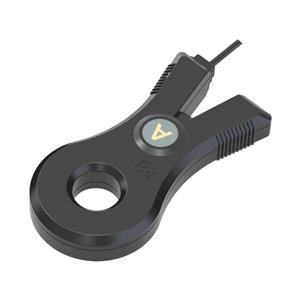
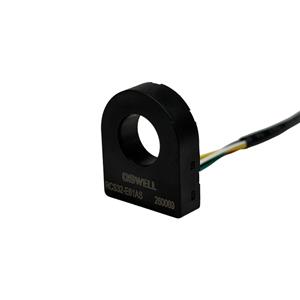
Products such as high-accuracy fluxgate current transducers can therefore provide value in applications where measurement precision must remain stable across both current and temperature ranges. For OEM engineers, the benefit is not only improved accuracy but also reduced calibration complexity and a more predictable system response.
3. What OEM Buyers Should Evaluate When Selecting a Fluxgate Current Transducer Supplier
For OEM battery and power electronics manufacturers, choosing a fluxgate current transducer is a long-term engineering and supply-chain decision. Once the sensor has been integrated into the busbar layout, PCB, control algorithm, mechanical structure, and calibration process, replacing it later can require significant redesign and validation.
Procurement teams should therefore evaluate both the sensor specifications and the supplier's production capability.
DC measurement accuracy
Offset and zero-current stability
Linearity across the current range
Temperature drift
Electrical isolation performance
Response time and bandwidth
Rated current capability
Mechanical integration
Calibration consistency
Mass-production repeatability
Buyers should also consider the complete operating environment. The required sensor for a 200A battery monitoring system may be very different from the solution needed in a high-power industrial converter. Busbar dimensions, installation space, cooling conditions, signal output, power supply requirements, and interface design can all influence product selection.
Sample validation should include measurements at different current levels and temperatures rather than only checking room-temperature performance. Zero-current offset, repeated current cycling, thermal drift, linearity, and response during dynamic load changes can all provide useful information about real-world performance.
Supplier manufacturing consistency is equally important. A prototype with excellent accuracy is valuable only if similar performance can be maintained across long-term production. Procurement teams should evaluate production testing, calibration procedures, traceability, quality control, and batch-to-batch consistency.
Engineering support and customization capability can also reduce development risk. Different OEM systems may require customized aperture sizes, current ranges, mechanical housings, mounting structures, output interfaces, or electrical characteristics. Working with a supplier that understands battery and power conversion applications can help shorten the design cycle and improve final system integration.
Conclusion
Fluxgate current transducers are well suited to high-accuracy DC measurement in battery and power conversion systems because they combine low offset, excellent linearity, thermal stability, and electrical isolation. These characteristics can improve SOC calculation, converter control, energy monitoring, and overall system reliability. For OEM procurement teams, the best sourcing decision should consider not only rated current and initial accuracy, but also zero-current stability, temperature drift, dynamic response, mechanical integration, calibration consistency, and supplier mass-production capability. By selecting a reliable fluxgate current transducer and an experienced supplier, battery and power electronics manufacturers can reduce measurement uncertainty, simplify system calibration, and build more precise and dependable next-generation energy systems.