Why Low-Current Accuracy Matters in 20A Current Transformers for Compact Smart Meter Designs
Why Low-Current Accuracy Matters in 20A Current Transformers for Compact Smart Meter Designs
Compact smart meters are often expected to measure a very wide range of electrical loads, from low standby consumption to much higher operating current. For a 20A current transformer, good performance at rated current is important, but low-current accuracy can be equally critical. Modern homes, offices, IoT devices, LED lighting, chargers, and electronic appliances may consume only small amounts of current for long periods. If the CT cannot measure these low-load conditions accurately, energy calculation and billing consistency may be affected. For smart meter manufacturers and procurement teams, low-current ratio accuracy, phase performance, core design, burden matching, and production consistency should therefore be evaluated carefully.
1. Small Loads Can Represent Significant Long-Term Energy Consumption
Smart meters rarely measure only large appliances operating near full load. In real installations, many electrical devices remain connected continuously while consuming relatively small amounts of current. Routers, smart home controllers, standby electronics, security systems, LED drivers, chargers, displays, and communication equipment can operate for thousands of hours each year.
Individually, these loads may seem insignificant. Over long periods, however, their accumulated energy consumption can become meaningful. A meter that loses accuracy at the lower end of the measurement range may therefore under-register or over-register energy during a large portion of actual operating time.
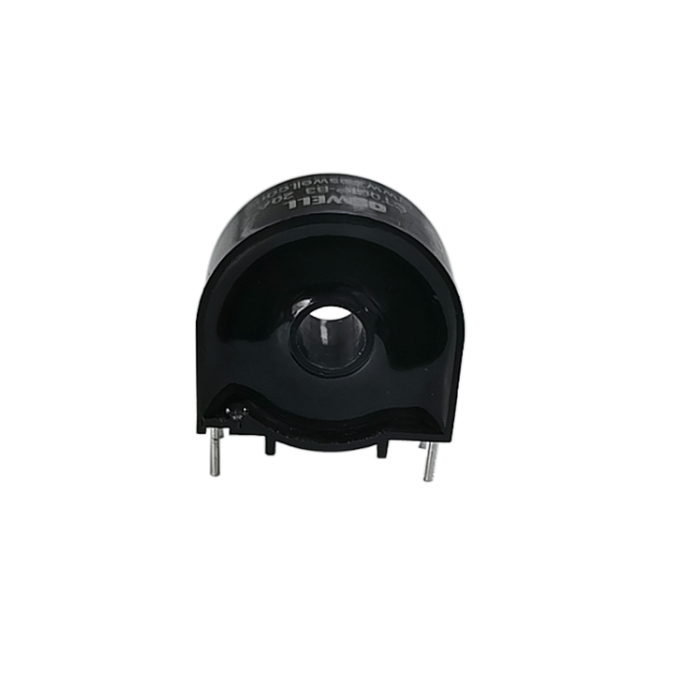
Standby consumer electronics
LED lighting and small power supplies
Smart home and IoT devices
Communication equipment
Small office electronics
Low-load operating periods in residential meters
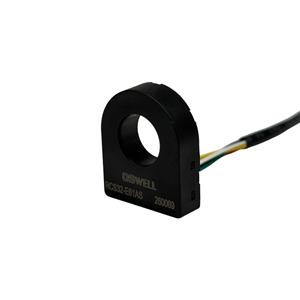
For compact smart meter designs, a 20A CT may be selected because it provides sufficient current range while allowing a relatively small sensor structure. However, the transformer must still maintain acceptable output at currents far below its rated value.
Procurement teams should therefore ask for performance across the complete operating range rather than focusing only on full-load accuracy. A CT that performs extremely well at 20A but becomes inconsistent at very low current may create more calibration difficulty than a sensor with more balanced performance across the entire range.
2. Core Material, Phase Error and Burden Matching Determine Low-Current Performance
Low-current accuracy is influenced by several parts of the CT design. At low primary current, the magnetic flux produced in the core is also small. This means core permeability, excitation characteristics, winding design, and secondary burden have a stronger influence on the useful output signal.
A core material that performs well at higher current may not necessarily deliver the same linearity and phase performance at the lower end of the range. For smart metering, phase error is particularly important because active power and energy calculations depend on the relationship between voltage and current signals.
Suitable magnetic material helps the CT produce a stable secondary signal even when primary current is small.
Controlled phase displacement helps improve low-load power and energy calculations.
The connected measurement circuit should match the CT design to avoid unnecessary ratio and phase error.
Stable turns and assembly help reduce unit-to-unit variation in high-volume smart meter production.
Secondary burden is often overlooked. The CT output is connected to a burden resistor, metering IC, PCB traces, and other circuitry. If the actual burden is different from the condition used during CT characterization, low-current performance may change.
Noise also becomes more important when the desired signal is small. PCB layout, grounding, nearby switching circuits, relays, and power supplies can all influence the measurement channel. OEM designers should therefore treat the CT and metering electronics as one complete system.
For compact meter platforms, careful sensor placement can provide another advantage. Shorter signal paths and controlled PCB routing can help preserve the low-level secondary signal before it reaches the metering circuit.
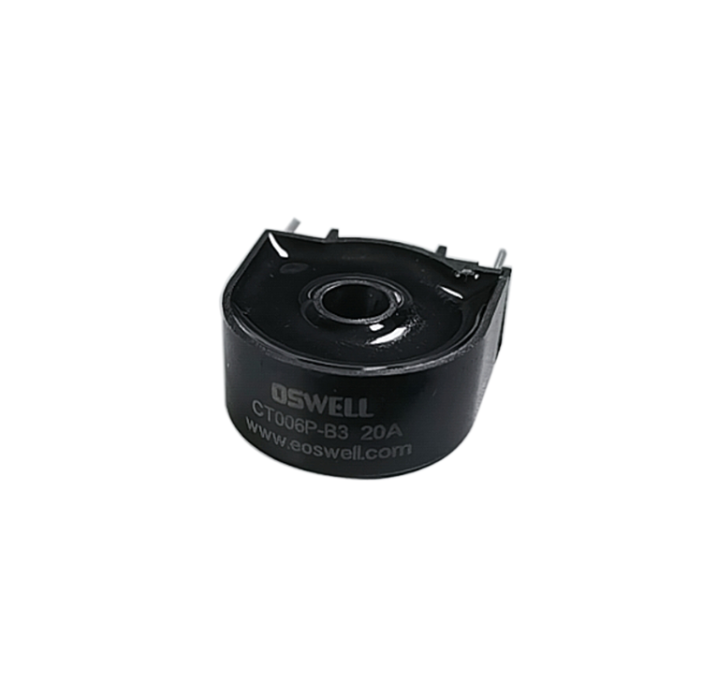
3. What OEM Buyers Should Check When Selecting a 20A Smart Meter CT
For procurement teams, a 20A CT should be evaluated according to the complete measurement range and mass-production requirements. One sample with excellent low-current performance does not guarantee that thousands of production units will behave the same way.
Accuracy at low current
Accuracy at rated current
Phase displacement
Linearity across the full range
Core material consistency
Secondary burden requirements
Temperature stability
Mechanical dimensions
Production calibration consistency
Batch-to-batch repeatability
Sample validation should include several current points instead of only one nominal test condition. Engineers can compare performance near the lower end of the range, at medium current, and close to 20A. Testing at different temperatures can also reveal whether magnetic or winding characteristics shift under real operating conditions.
Procurement teams should also understand how the supplier controls magnetic materials, winding turns, assembly position, housing dimensions, and final electrical testing. Small differences can become more visible at low current because the measurement signal itself is smaller.
Mechanical integration is another factor in compact meter design. The CT must fit within limited enclosure and PCB space while maintaining suitable clearance, conductor positioning, and signal routing. A smaller component that creates difficult assembly or unstable positioning may not provide the best total value.
Buyers should therefore consider lifecycle cost rather than unit price alone. A CT with stronger low-current consistency can reduce calibration time, production screening, billing uncertainty, and field performance variation across the complete smart meter program.
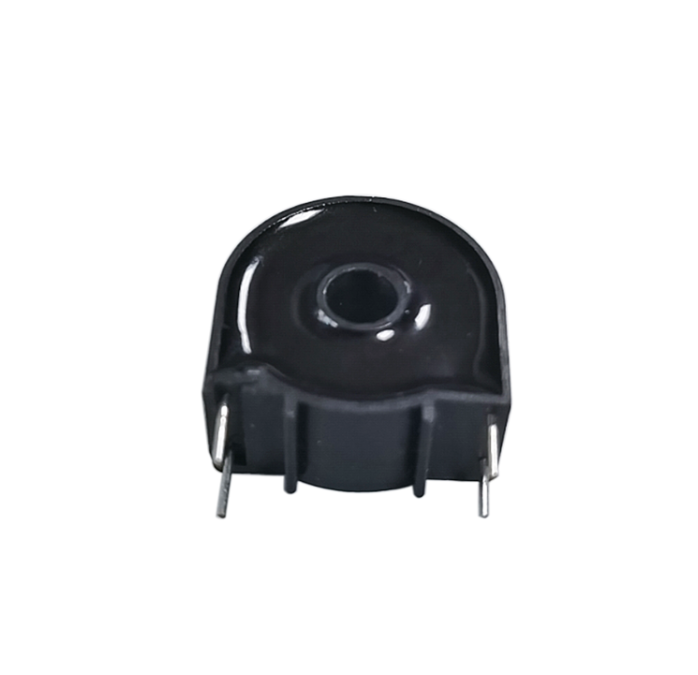
Conclusion
Low-current accuracy is an important performance factor in 20A current transformers because compact smart meters must measure not only full-load current but also long periods of standby and low-power consumption. Core sensitivity, phase displacement, burden matching, winding consistency, temperature stability, and PCB integration all influence measurement performance at the lower end of the range. For OEM manufacturers and procurement teams, the best CT should be evaluated across the full current range and across multiple production samples rather than only at rated current. By selecting a 20A current transformer with stable low-load performance and consistent manufacturing quality, smart meter manufacturers can improve calibration reliability and achieve more accurate long-term energy measurement.