Why Low Thermal EMF Matters in Precision Shunt Resistors for High-Accuracy Current Measurement
Why Low Thermal EMF Matters in Precision Shunt Resistors for High-Accuracy Current Measurement
Precision shunt resistors are widely used in high-accuracy current measurement systems because they convert current into a small voltage signal that can be measured by an ADC, amplifier, meter, or battery management system. However, when the shunt resistance is extremely low, the useful measurement signal may also be very small. In this situation, thermal electromotive force, or thermal EMF, can become an important source of measurement error. For OEM engineers and procurement teams, understanding thermal EMF is essential when selecting shunts for precision meters, battery systems, industrial equipment, calibration instruments, and other applications where microvolt-level errors can influence final accuracy.
1. Why Thermal EMF Can Become a Significant Error in Low-Resistance Shunt Measurement
Thermal EMF is a small voltage generated when dissimilar conductive materials are joined together and the connection points are at different temperatures. This effect is related to the Seebeck phenomenon. In many electrical systems, the resulting voltage is extremely small and has little practical influence. In precision shunt measurement, however, the useful signal itself may only be a few millivolts or even lower, making small unwanted voltages much more important.
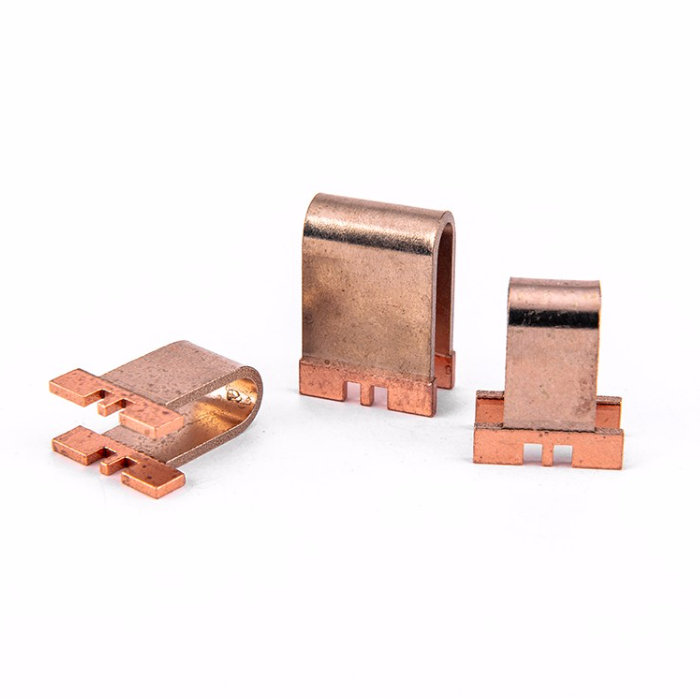
Consider a low-resistance shunt used to measure current accurately. The voltage across the shunt is proportional to the current, so the measurement circuit assumes that the voltage comes only from the resistance element. If temperature differences exist between copper terminals, resistance alloy sections, welded joints, or sense connections, additional thermal voltages may appear and become part of the measured signal.
The shunt resistance is very low
The measured voltage signal is only a few millivolts
High current creates significant self-heating
One terminal is hotter than the other
Dissimilar metals are used at electrical junctions
The application requires very high calibration accuracy
In precision measurement systems, thermal EMF can appear as an offset error. This means the system may indicate current even when actual current is lower than expected or may slightly overestimate or underestimate the true current.
For procurement teams, this is why evaluating only nominal resistance tolerance is not enough. Two shunts with the same resistance and tolerance may produce different real-world measurement performance if their materials, joints, and thermal behavior are different.
2. Material Selection, Joint Design and Thermal Symmetry Help Reduce Measurement Error
Reducing thermal EMF requires careful control of both material combinations and temperature gradients. Precision shunt design is therefore not only about producing the correct resistance value. The geometry of the resistive element, terminal material, welding process, sense connection position, and thermal path all influence final measurement stability.
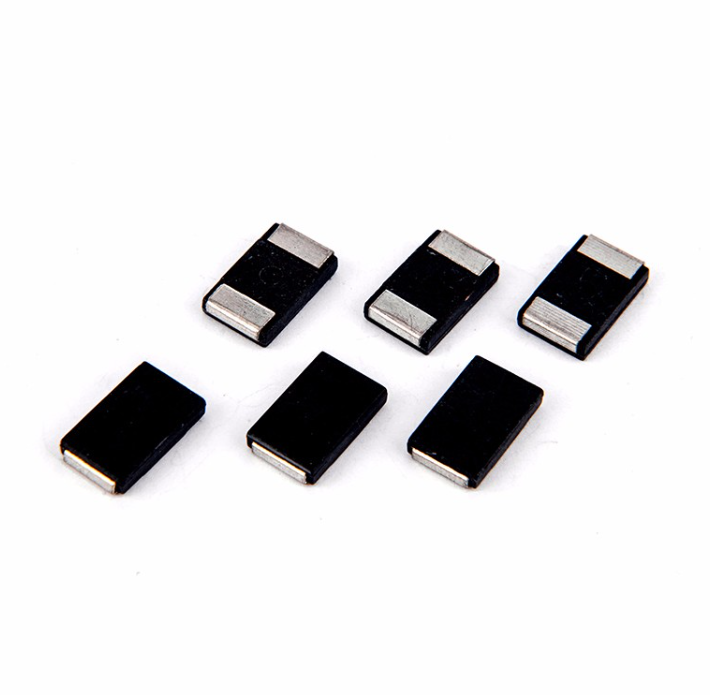
Resistance alloys used in precision shunts are selected for stable electrical characteristics, but the interfaces between the resistance element and conductive terminals must also be controlled carefully. Poorly designed or inconsistent joints can introduce additional thermal and electrical variation.
Suitable material combinations can reduce unwanted thermoelectric voltage at metal junctions.
Balanced heat flow helps reduce temperature differences between measurement points.
Consistent joints support repeatable resistance, heat distribution, and long-term electrical behavior.
Dedicated sense points help separate precision voltage measurement from high-current connection resistance.
Thermal symmetry is particularly important in high-current applications. If one side of the shunt is connected to a larger copper busbar or exposed to stronger cooling than the other side, the temperature distribution may become asymmetric. The resulting thermal gradient can contribute to offset error.
Kelvin sensing can further improve accuracy by using dedicated low-current sense connections close to the resistance element. This reduces the influence of terminal resistance and high-current connection drops, although thermal EMF at the sensing interfaces must still be considered.
For precision measurement applications, OEM engineers should evaluate not only room-temperature resistance but also zero-current offset, thermal drift, and measurement behavior after the shunt reaches operating temperature.
3. What Procurement Teams Should Check When Sourcing Low-Thermal-EMF Precision Shunts
For OEM manufacturers, a precision shunt becomes part of the complete measurement chain. Once the resistance value, mechanical dimensions, terminals, sense points, PCB interface, and calibration method are established, replacing the component later can require additional engineering and validation.
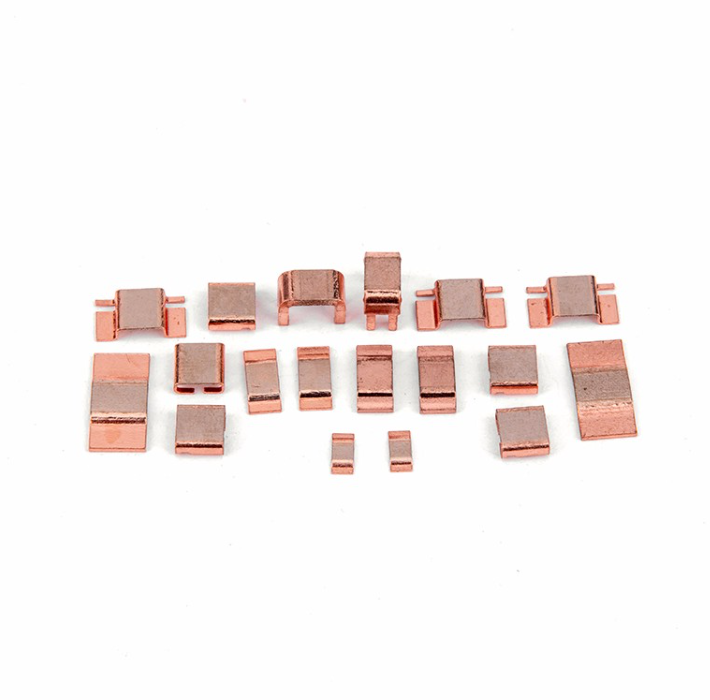
Procurement teams should therefore evaluate both electrical specifications and the supplier's manufacturing control before approving a shunt for high-accuracy applications.
Nominal resistance value
Resistance tolerance
Temperature coefficient of resistance
Thermal EMF performance
Rated current capability
Power dissipation
Kelvin sense configuration
Joint and welding consistency
Temperature-rise performance
Batch-to-batch repeatability
Sample validation should include realistic thermal conditions. Engineers can compare measurements at different current levels, observe the zero-current output after heating, evaluate both terminals at different temperatures, and repeat testing across multiple samples. These tests can reveal offset behavior that a basic resistance measurement may not show.
Supplier process control is equally important. Variations in resistance alloy dimensions, terminal materials, welding position, surface condition, or sense-point placement can influence both resistance and thermal EMF. For high-volume production, these variations may increase calibration time and reduce measurement consistency.
Customization capability can also provide value. Different applications may require specific resistance values, current ratings, mounting holes, terminal geometries, sense-pin locations, or busbar structures. A supplier that can optimize the shunt around the final measurement architecture can help OEM manufacturers reduce thermal gradients and simplify system calibration.
Procurement decisions should therefore consider total measurement performance rather than unit price alone. A precision shunt with low thermal EMF, stable temperature behavior, and consistent manufacturing can reduce offset errors, calibration complexity, production variation, and long-term measurement drift.
Conclusion
Low thermal EMF is an important performance characteristic in precision shunt resistors because unwanted thermoelectric voltage can become significant when the useful current measurement signal is only a few millivolts. Material selection, joint design, thermal symmetry, Kelvin sensing, temperature coefficient, and manufacturing consistency all influence final accuracy. For OEM engineers and procurement teams, the best precision shunt should therefore be evaluated under realistic current and temperature conditions rather than only by nominal resistance tolerance. By selecting a low-thermal-EMF shunt from a supplier with stable materials, controlled welding, reliable testing, and customization capability, manufacturers can reduce offset error, improve calibration consistency, and achieve more accurate long-term current measurement.