Why M3 Tapped-Hole BMS Shunts Simplify Busbar Assembly in EV and Energy Storage Battery Packs
Why M3 Tapped-Hole BMS Shunts Simplify Busbar Assembly in EV and Energy Storage Battery Packs
Precision shunt resistors are widely used in EV and energy storage battery packs to provide accurate current information for battery management systems. While resistance accuracy and temperature stability are essential, mechanical integration can be just as important in high-volume battery production. M3 tapped-hole BMS shunts provide defined threaded mounting points that can simplify connection with busbars, sensing terminals, and mechanical fixtures. For battery pack manufacturers and procurement teams, this type of structure can reduce assembly complexity, improve positioning repeatability, and support more consistent high-current connections across mass-production battery systems.
1. Threaded Mounting Points Help Simplify Busbar and Battery Pack Assembly
In a high-current battery system, the shunt resistor is normally installed directly in the main current path. It must connect securely to busbars or conductive terminals while also providing stable voltage-sensing points for the BMS. If the mounting structure is difficult to position or requires additional nuts, brackets, or hardware, assembly time and production variation can increase.
An M3 tapped-hole design provides a predefined threaded connection directly in the shunt structure. This can reduce the number of loose fasteners required during assembly and make it easier to position the shunt consistently relative to the battery busbar and surrounding mechanical parts.
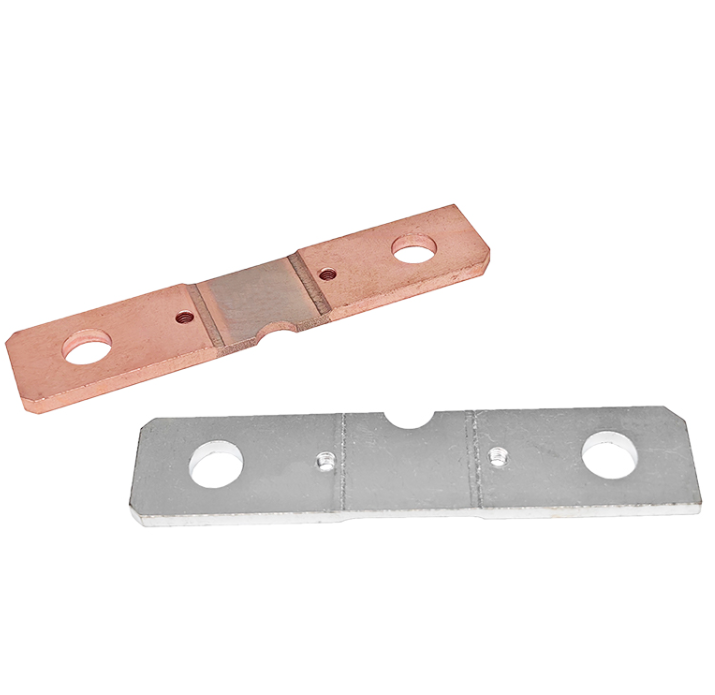
Fewer loose nuts and additional fixing parts
More repeatable shunt positioning
Simplified busbar connection
Reduced manual assembly steps
Easier fixture and tooling design
Better suitability for high-volume battery pack production
In automated or semi-automated assembly lines, consistent mounting points can also help improve fixture design. Robots or torque-controlled tools can work with a predictable hole location instead of compensating for additional fastener movement or alignment variation.
For procurement teams, the mechanical drawing should therefore be evaluated together with the battery pack structure. Hole position, thread depth, terminal width, shunt thickness, and busbar geometry all affect how easily the component can be integrated into the final pack.
2. Reliable Fastening Supports Lower Connection Variation and More Stable Current Measurement
Mechanical assembly and electrical measurement are closely connected in a high-current shunt. The BMS calculates current from the very small voltage drop across the precision resistance element, while hundreds of amperes may pass through the conductive terminals. Any additional resistance at the busbar connection can create heat and influence the stability of the current path.
A controlled threaded connection can help manufacturers apply more repeatable fastening conditions. When screw size, engagement depth, torque procedure, and contact surfaces are standardized, unit-to-unit connection variation can be reduced.
Repeatable fastening helps maintain a more consistent electrical interface between the shunt and busbar.
Consistent geometry can reduce differences caused by manually positioned nuts or additional mounting hardware.
More predictable contact resistance helps reduce unexpected localized heating under heavy current.
Defined threaded mounting can simplify replacement or inspection during battery pack maintenance.
However, threaded mounting alone does not guarantee reliable performance. Torque must be controlled carefully. Insufficient torque can produce unstable contact resistance, while excessive torque can damage threads, distort terminals, or create mechanical stress in the shunt structure.
Battery pack manufacturers should therefore define a complete fastening process, including screw type, torque range, washer or interface design where required, busbar flatness, and contact-surface preparation. The shunt should be evaluated as part of the complete mechanical and electrical joint.
For BMS accuracy, dedicated voltage-sensing connections should also remain separate from the high-current mounting path wherever the design requires precision Kelvin measurement. Mechanical convenience should support, not compromise, measurement integrity.
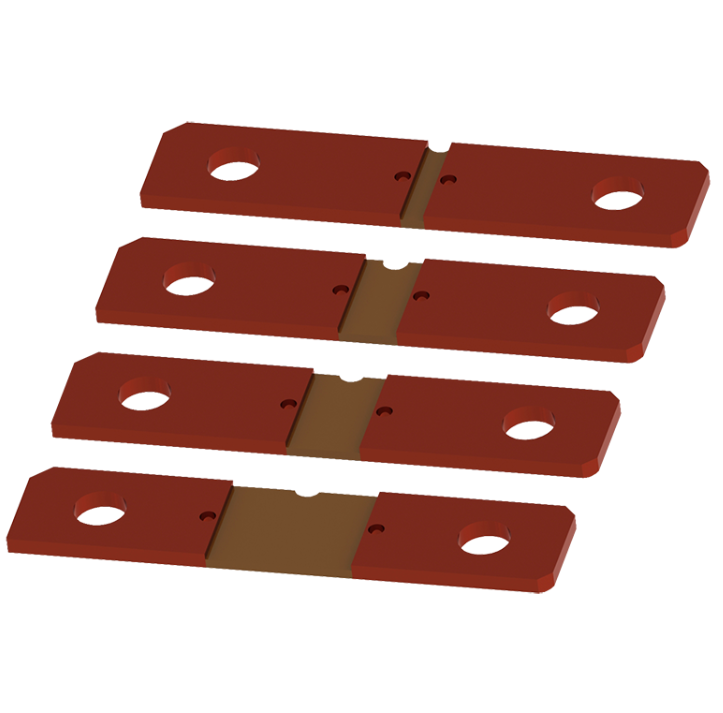
3. What OEM Buyers Should Check When Sourcing M3 Tapped-Hole BMS Shunts
Once a shunt resistor has been integrated into an EV or energy storage battery pack, replacing it later may require busbar redesign, fixture changes, BMS recalibration, and additional mechanical testing. Procurement teams should therefore evaluate both the electrical and mechanical characteristics before approving the component for mass production.
Nominal resistance value
Resistance tolerance
Temperature coefficient
Rated current capability
M3 thread quality and position
Thread depth and mechanical strength
Terminal and busbar compatibility
Sense-point configuration
Temperature-rise performance
Batch-to-batch dimensional consistency
Sample validation should include real fastening and high-current testing. Engineers can assemble the shunt with the actual busbar, apply the intended torque, cycle the joint thermally, and measure both connection resistance and shunt output before and after testing. This helps identify problems that cannot be detected by checking nominal resistance alone.
Thread durability should also be considered for service or rework situations. If a battery pack requires disassembly during production or maintenance, repeated screw removal and installation should not easily damage the threaded structure.
Supplier manufacturing consistency is equally important. Variations in hole position, thread machining, resistance alloy dimensions, welding, terminal thickness, or sense-pin placement can affect both assembly and electrical performance. High-volume battery programs require these features to remain stable across production batches.
For procurement teams, total lifecycle value should therefore include assembly time, tooling simplicity, thermal reliability, calibration consistency, serviceability, customization support, and long-term supply stability. A well-designed M3 tapped-hole shunt can provide value far beyond the resistor's basic electrical specification.
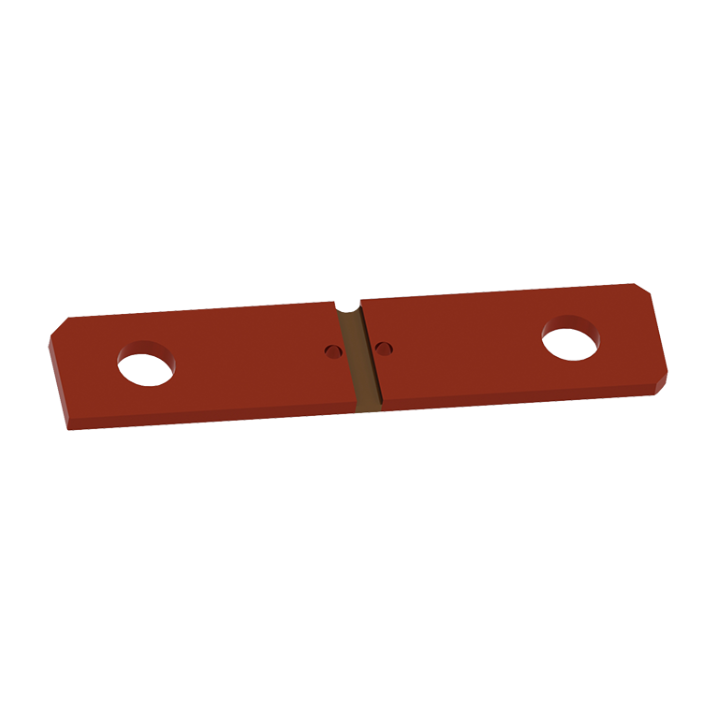
Conclusion
M3 tapped-hole BMS shunts can simplify busbar assembly in EV and energy storage battery packs by providing defined, repeatable threaded mounting points directly in the shunt structure. This can reduce loose hardware, simplify fixture design, improve positioning consistency, and support more standardized fastening during mass production. For OEM procurement teams, the best shunt should be evaluated according to resistance accuracy, temperature coefficient, thread quality, mechanical strength, busbar compatibility, sense-point design, thermal performance, and production consistency. By selecting a mechanically optimized shunt from a reliable supplier, battery manufacturers can improve assembly efficiency while maintaining stable high-current measurement and long-term connection reliability.