Why Trip-Current Consistency Matters in Type A+6mA DC Residual Current Sensors for EV Chargers
Why Trip-Current Consistency Matters in Type A+6mA DC Residual Current Sensors for EV Chargers
Residual current sensing is a critical protection function in modern EV charging equipment. Type A+6mA DC residual current sensors are designed to help charging systems detect abnormal leakage conditions, including AC residual current and small smooth DC components that may appear during charging. However, simply detecting leakage is not enough. The trip-current threshold must also remain consistent from one sensor to another and across temperature, waveform, and production conditions. For EV charger manufacturers and procurement teams, stable trip-current performance can directly influence safety behavior, nuisance-trip rates, validation efficiency, and the reliability of large-volume EVSE production.
1. Why Trip-Current Variation Can Create Both Safety and User-Experience Problems
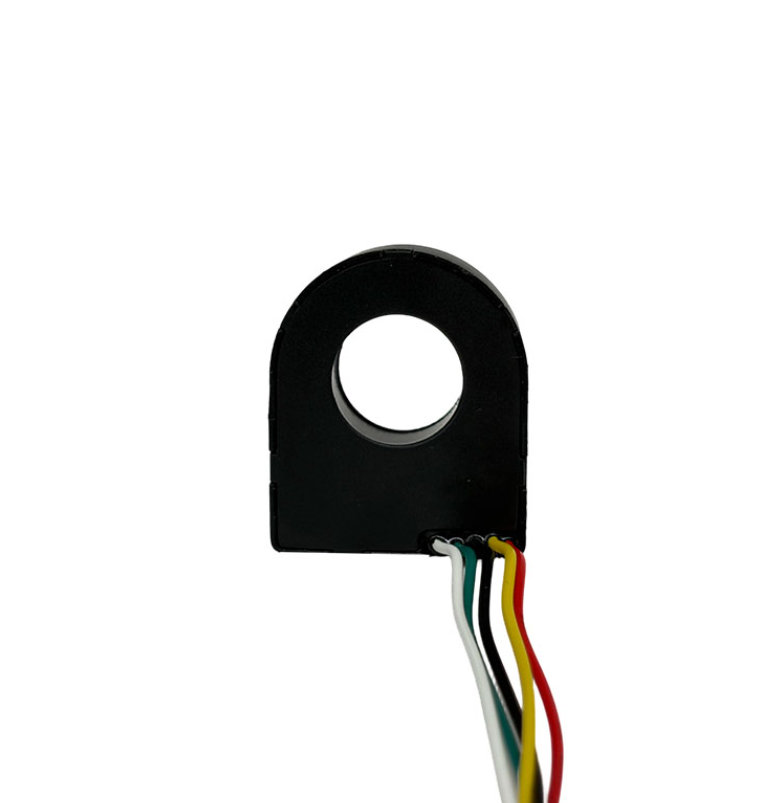
A residual current sensor monitors the difference between current flowing through the active conductors of the charging circuit. Under normal operating conditions, these currents should remain balanced. If current leaks to ground or follows an unintended path, the sensor detects the imbalance and sends information to the EVSE controller so that protective action can be taken.
The trip-current threshold is therefore one of the most important characteristics of the sensor. If the threshold is too high, the charging system may respond later than intended to an abnormal leakage condition. If the threshold is too low, normal electrical noise, transient behavior, or small harmless variations may cause unnecessary charging interruptions.
Nuisance tripping during normal charging
Unstable EVSE behavior between production units
Longer engineering validation cycles
More calibration or screening during production
Higher field-service and warranty costs
Difficulty maintaining a consistent protection strategy
For a single engineering prototype, a small threshold variation may appear manageable. In a high-volume EV charger program, however, the same variation can affect thousands of units. Procurement teams therefore need to understand not only the typical trip-current value but also how tightly the supplier controls minimum, typical, and maximum behavior across production.
This is why trip-current consistency should be considered a mass-production quality parameter rather than only a laboratory specification.
2. Temperature, Waveform and Manufacturing Variation All Affect Detection Stability
EV chargers do not operate under one fixed electrical condition. Residual current waveforms can differ depending on the vehicle, power electronics, charger architecture, switching behavior, and fault condition. A Type A+6mA DC sensing solution may therefore need to respond consistently to multiple residual-current characteristics rather than one ideal sinusoidal waveform.
Temperature adds another layer of complexity. Charging equipment may be installed outdoors, inside parking structures, in residential garages, or in commercial environments where internal temperatures vary significantly. Sensor electronics, magnetic materials, amplifiers, and threshold circuits can all shift with temperature if the design is not sufficiently stable.
Consistent trip levels help EVSE designers create predictable protection logic across large production volumes.
Stable detection across changing temperatures reduces the risk of seasonal or installation-related variation.
Reliable response to different residual-current shapes improves protection performance in real EV charging systems.
Tight manufacturing control helps reduce unit-to-unit variation and simplifies OEM qualification.
Manufacturing consistency is equally important. Variations in magnetic core characteristics, PCB components, calibration procedures, assembly dimensions, or signal-processing circuits can change the actual trip-current threshold.
For EV charger manufacturers, the goal should be a sensor that provides repeatable behavior not only in one sample but across many production batches. This can reduce the amount of additional screening or software compensation required at the charger level.
Procurement teams should also ask whether the supplier tests trip-current performance under multiple waveform and temperature conditions. A sensor that passes only a single room-temperature test may not provide enough information for a demanding EVSE program.
3. What EVSE Procurement Teams Should Check Before Approving a Residual Current Sensor
Once a residual current sensor has been integrated into the charger PCB, protection logic, contactor control, enclosure, and validation process, changing the device later can require substantial redesign. Procurement teams should therefore evaluate both technical performance and supplier manufacturing capability before mass production.
6mA DC trip-current consistency
AC residual-current response
Minimum and maximum trip thresholds
Temperature drift
Waveform response
Response time
Electrical isolation
PCB and mechanical compatibility
End-of-line testing capability
Batch-to-batch repeatability
Sample testing should use several sensors rather than one unit. Engineering teams can compare trip thresholds at different temperatures, repeat leakage-current ramp tests, evaluate multiple waveform conditions, and confirm how consistently the sensor output is interpreted by the EVSE controller.
Buyers should also review how the supplier controls calibration and final inspection. If the sensor depends on internal calibration, production equipment and test procedures should be stable enough to maintain consistent thresholds over long manufacturing runs.
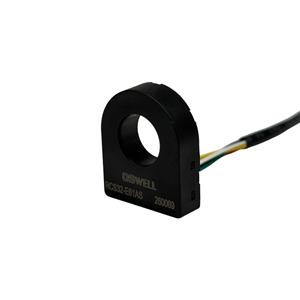
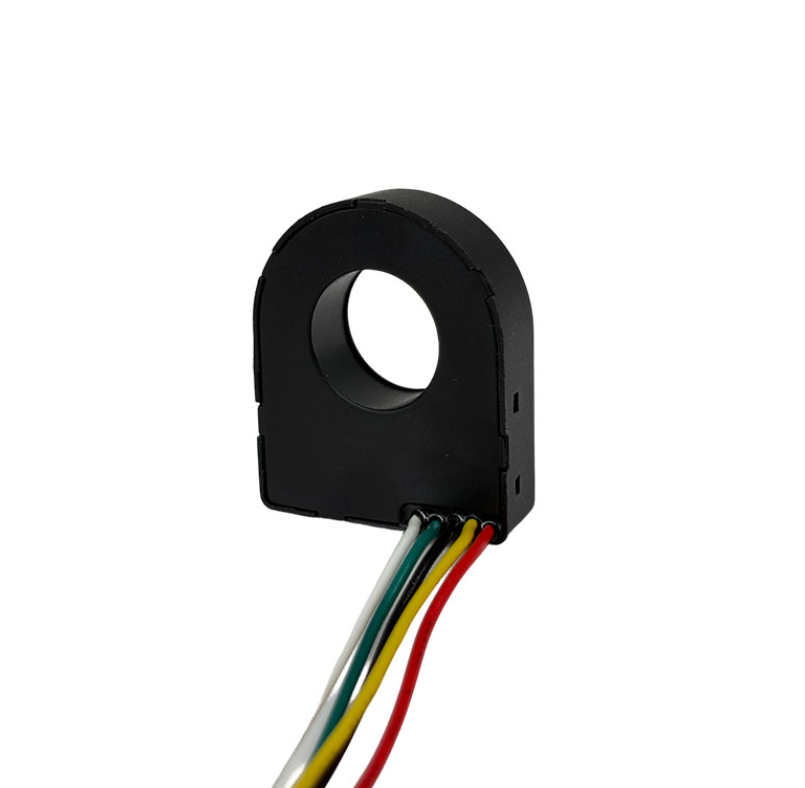
Mechanical integration matters as well. Aperture size, PCB mounting, conductor routing, power supply requirements, and output interface should all match the charger architecture. Poor integration can introduce noise or installation variation that makes a good sensor appear inconsistent at system level.
For procurement teams, total lifecycle cost should include more than sensor price. Stable trip-current performance can reduce nuisance-trip complaints, validation time, production screening, field troubleshooting, and redesign risk. In high-volume EVSE programs, those benefits can be significantly more valuable than a small difference in component cost.
Conclusion
Trip-current consistency is a critical performance factor in Type A+6mA DC residual current sensors because EV chargers need predictable protection behavior across different units, temperatures, and residual-current conditions. A threshold that varies too widely can increase the risk of nuisance trips, inconsistent system behavior, additional production screening, or delayed protection response. For EVSE manufacturers and procurement teams, the best sensor should be evaluated according to trip-current distribution, temperature stability, waveform response, response time, mechanical integration, production testing, and batch consistency. By selecting a supplier with strong calibration control and reliable mass-production processes, charger manufacturers can improve protection repeatability and build safer, more dependable EV charging equipment.