How Magnetic Shielding Improves Rogowski Coil Accuracy Around Crowded Busbars and Power Cables
How Magnetic Shielding Improves Rogowski Coil Accuracy Around Crowded Busbars and Power Cables
Rogowski coils are widely used for measuring large AC currents in switchgear, power distribution cabinets, industrial equipment, renewable energy systems, data centers, and other high-current applications. Their flexible air-core construction makes them particularly useful around large cables and busbars where conventional current transformers may be difficult to install. However, crowded electrical environments often contain several nearby current-carrying conductors, each producing its own magnetic field. Without sufficient immunity to these external fields, the measurement signal may be influenced by conductors other than the one being monitored. Magnetic shielding and careful sensor design can help reduce this problem and improve measurement repeatability for OEM power monitoring equipment.
1. Why External Magnetic Fields Become a Problem in Crowded Power Cabinets
A Rogowski coil measures current by detecting the changing magnetic field generated by the conductor passing through its loop. In an ideal installation, the sensor responds primarily to the magnetic field created by that target conductor. Real electrical cabinets, however, are rarely ideal.
Three-phase busbars may be installed close together, large power cables may run in parallel, and neighboring circuits can carry hundreds or thousands of amperes. Each conductor creates its own magnetic field. If the Rogowski coil is exposed to these fields, part of the unwanted magnetic signal may appear in the measurement output.
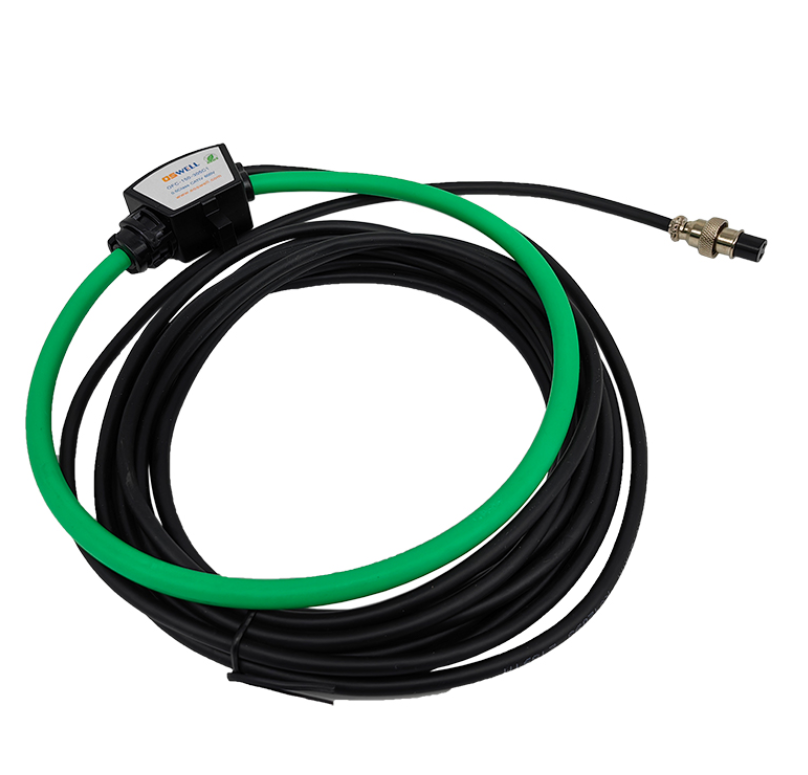
Three-phase busbars are installed very close together
Adjacent conductors carry much higher current than the measured conductor
The Rogowski coil is positioned near one side of a neighboring cable
Large transformers or inductive components are located nearby
Available cabinet space limits sensor positioning
High measurement accuracy is required across multiple channels
This issue can be particularly important in multi-channel power monitoring systems. If several Rogowski coils are installed in the same cabinet, each sensor needs to measure its own phase or circuit consistently without significant influence from neighboring conductors.
For procurement teams, this means accuracy should not be evaluated only under laboratory conditions with one isolated conductor. Buyers should understand how the sensor performs in realistic high-current environments where external magnetic fields are present.
2. How Magnetic Shielding and Coil Design Improve Measurement Stability
Magnetic shielding is designed to reduce the influence of external magnetic fields on the sensing structure. In a Rogowski coil application, shielding can help the sensor respond more strongly to the field created by the conductor inside the loop while reducing sensitivity to magnetic fields coming from outside the intended measurement area.
Shielding alone is not enough. Winding uniformity, coil geometry, closure design, conductor position, signal cable routing, and integrator performance all contribute to the final accuracy of the measurement system.
Magnetic shielding helps reduce unwanted influence from nearby busbars and parallel power cables.
Consistent winding distribution helps the coil respond more evenly around the complete sensing loop.
Controlled coil shape and closure position improve repeatability between installations.
Improved immunity helps reduce cross-influence when several high-current phases are monitored closely together.
Shielding can be especially valuable when the measured current is relatively low compared with nearby conductors. For example, one cable may carry several hundred amperes while a neighboring busbar carries several thousand amperes. Even a small amount of magnetic coupling from the neighboring conductor may become significant relative to the desired signal.
OEM engineers should also pay attention to cable routing. The output lead from the Rogowski coil carries a low-level signal and should be routed carefully to reduce unnecessary electrical noise pickup before the signal reaches the integrator or monitoring electronics.
The most reliable solution therefore combines magnetic shielding with good mechanical design, uniform coil construction, suitable signal conditioning, and controlled installation.
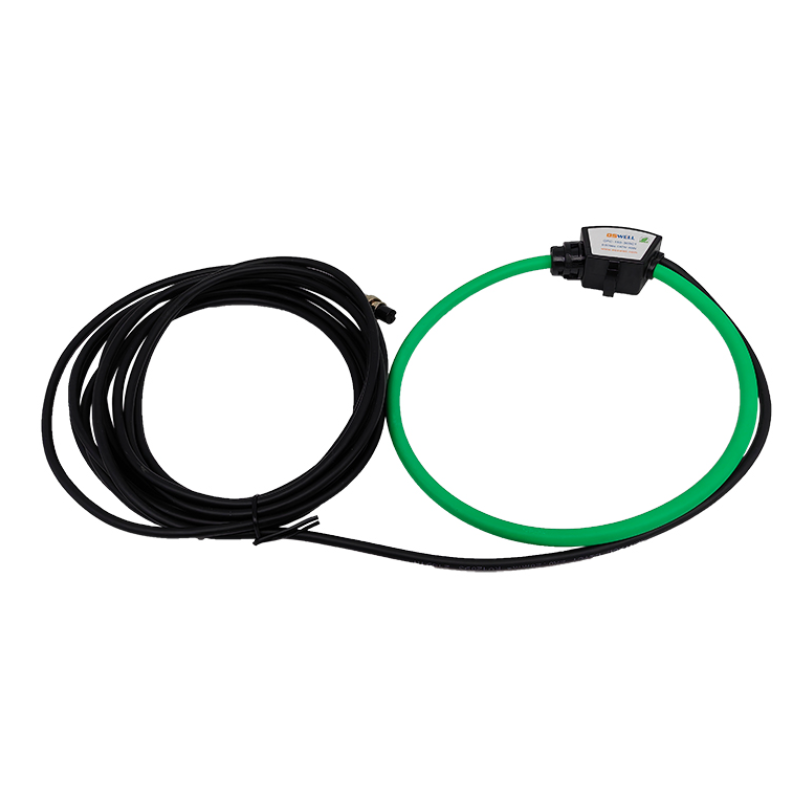
3. What OEM Buyers Should Check When Sourcing Shielded Rogowski Coil Sensors
For power monitoring manufacturers and system integrators, external-field immunity should be included in the supplier qualification process whenever the sensor will operate near crowded busbars or high-current cables. A sensor that performs well around one isolated conductor may not provide the same results inside a dense switchgear cabinet.
Rated current range
Accuracy and linearity
External magnetic field immunity
Shielding structure
Position sensitivity
Frequency response
Coil closure repeatability
Integrator compatibility
Temperature stability
Batch-to-batch consistency
Sample validation should reproduce the actual cabinet environment whenever possible. Engineers can place neighboring conductors at realistic distances, apply different current levels to each phase, and compare the sensor output as external magnetic conditions change.
Buyers should also test different conductor positions inside the coil. A high-quality shielded Rogowski sensor should provide predictable performance even when field installation is not perfectly symmetrical, although proper conductor placement should still be encouraged.
Manufacturing consistency is equally important. Small differences in winding geometry, shielding placement, closure structure, lead cable construction, or calibration can change external-field immunity. For high-volume monitoring equipment, these differences may create channel-to-channel variation and increase calibration workload.
Customization capability can also provide value. Different switchgear, inverter systems, industrial cabinets, and energy monitoring products may require different loop diameters, cable lengths, connector types, shielding levels, or output characteristics. A supplier that can adapt the sensor to the real installation environment can help reduce integration risk and improve measurement reliability.
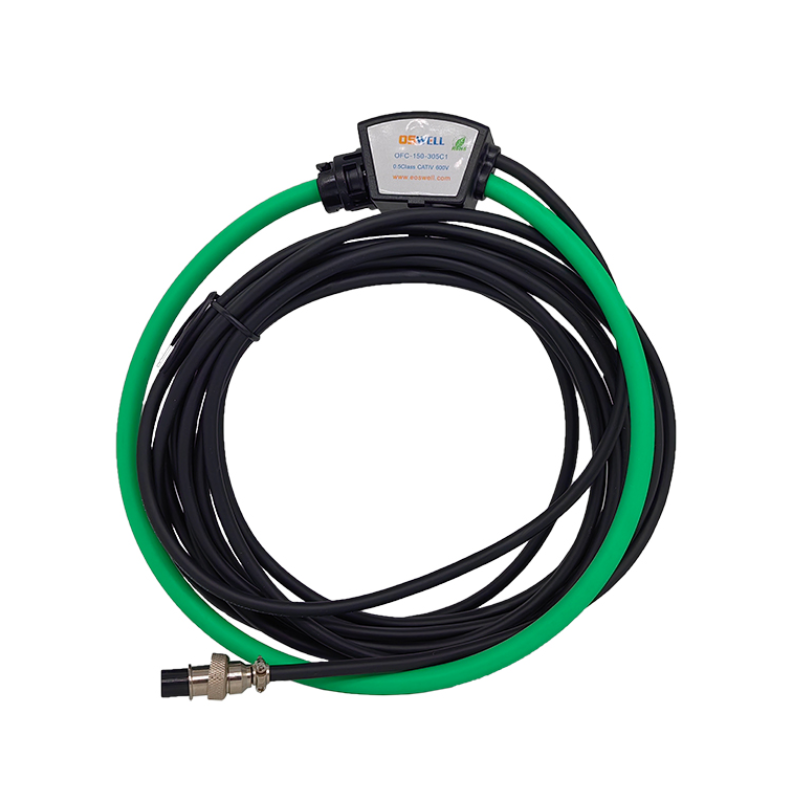
Conclusion
Magnetic shielding can improve Rogowski coil accuracy in crowded electrical environments by reducing unwanted influence from nearby busbars, parallel power cables, and other high-current conductors. However, reliable measurement depends on the complete sensor design, including winding uniformity, coil geometry, conductor position, signal routing, integrator compatibility, and production consistency. For OEM manufacturers and procurement teams, the best Rogowski coil should be evaluated under realistic multi-conductor conditions rather than only around a single isolated cable. By selecting a sensor with strong external-field immunity and stable manufacturing quality, power monitoring equipment can achieve more dependable high-current measurement in compact switchgear and industrial power systems.