How Residual Current Waveform Recognition Improves Protection Reliability in Modern EVSE
How Residual Current Waveform Recognition Improves Protection Reliability in Modern EVSE
Modern EV charging equipment combines AC power, power electronics, vehicle-side rectification, switching devices, communication circuits, and increasingly complex protection functions. As a result, abnormal residual current may not always appear as a simple sinusoidal AC waveform. EVSE can encounter pulsating DC, mixed-frequency leakage, smooth DC components, and other residual-current patterns. For charger manufacturers and procurement teams, selecting a residual current sensor that can reliably distinguish different waveform conditions is important for reducing nuisance trips while maintaining dependable fault detection.
1. Why EV Chargers Need to Recognize More Than Simple AC Leakage
Traditional residual current protection was often designed around relatively simple AC electrical systems. EV charging is different because the charger and vehicle contain semiconductor switching devices, rectifiers, filters, DC links, and other power electronic circuits. When an insulation fault or unintended leakage path develops, the resulting residual current waveform can be more complicated.
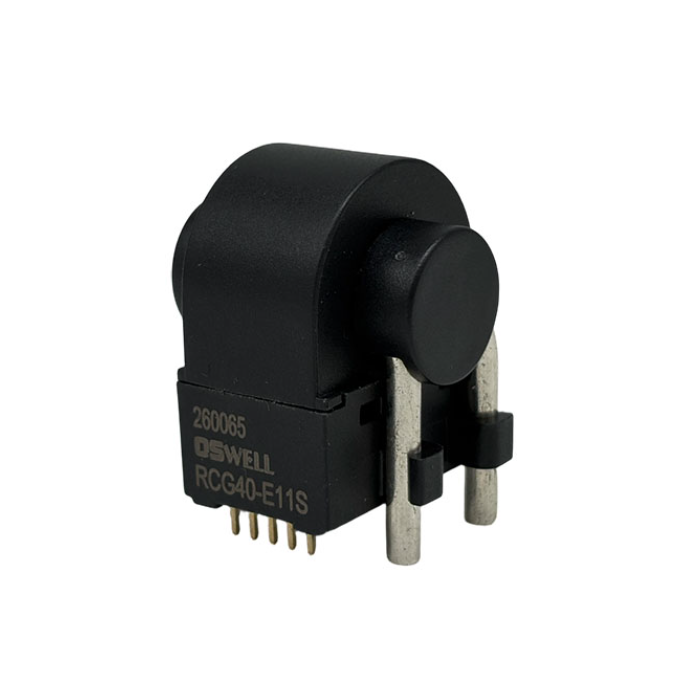
Depending on the electrical condition, the protection system may encounter sinusoidal AC residual current, pulsating DC, phase-controlled waveforms, multi-pulse rectified current, or smooth DC leakage. A sensing solution designed to respond reliably to only one waveform may not provide the same performance under another condition.
Sinusoidal AC residual current
Pulsating DC leakage current
Smooth DC residual current
Phase-controlled or distorted waveforms
Multi-pulse DC components
Mixed AC and DC leakage conditions
Waveform recognition improves protection reliability because it allows the sensing system to respond according to the actual electrical characteristics of the fault rather than treating every abnormal signal as identical.
From a procurement perspective, this means buyers should not evaluate a residual current sensor only by one headline threshold such as “6mA DC.” The actual value of the sensor also depends on how consistently it detects different waveform types across the required current and temperature range.
2. Accurate Waveform Recognition Helps Balance Fault Detection and Nuisance-Trip Control
EVSE protection systems must achieve two goals at the same time. They need to respond reliably when a genuine leakage fault occurs, but they should also avoid unnecessary interruption during normal charging. Poor waveform recognition can make this balance more difficult.
If the sensor is overly sensitive to switching noise or harmless transient signals, the charger may stop unexpectedly. Frequent nuisance trips create poor user experience, increase service calls, and may lead operators to question the reliability of the charging equipment. On the other hand, insufficient response to a relevant residual-current waveform can reduce protection effectiveness.
Recognizing different residual-current waveforms helps the EVSE respond more predictably to real fault conditions.
Better signal discrimination reduces unnecessary charging interruption caused by normal switching behavior or transient noise.
Consistent detection across waveform types supports more predictable charger protection logic.
A clearly defined sensor output simplifies coordination with the EVSE controller, contactor, and shutdown strategy.
Temperature stability is also important. Charging stations may operate in hot outdoor cabinets, cold parking environments, or locations with large seasonal temperature variation. If waveform detection thresholds shift significantly with temperature, otherwise identical chargers may behave differently in different markets.
For OEM manufacturers, repeatable waveform recognition can simplify validation and reduce the amount of software compensation or production screening required. A stable sensor allows the charger control system to use more predictable thresholds and response logic.
3. What Procurement Teams Should Check When Selecting Residual Current Sensors for EVSE
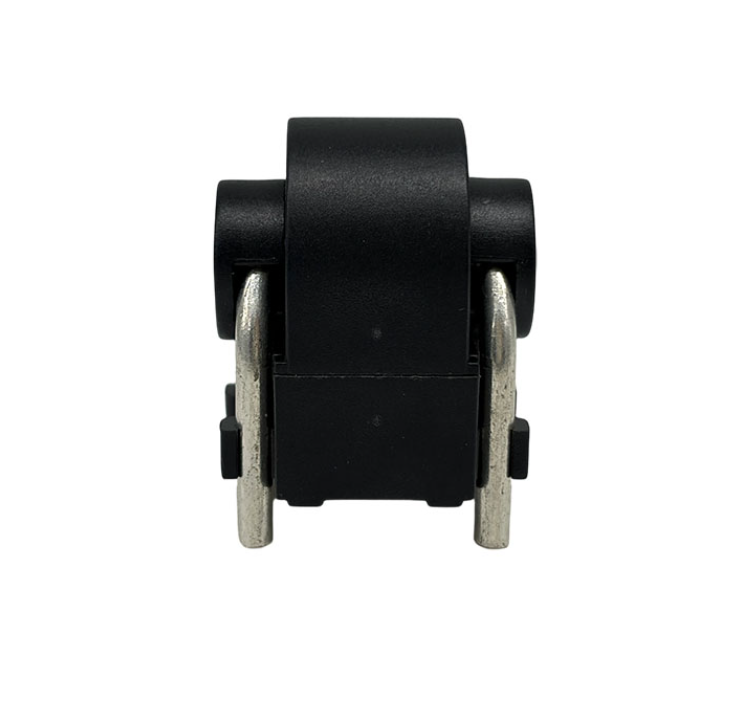
For EV charger manufacturers, approving a residual current sensor is a long-term design decision. Once the sensor has been integrated into the PCB, conductor layout, protection algorithm, contactor control, enclosure, and validation process, changing the component later can require significant engineering work.
Procurement teams should therefore evaluate the complete residual-current detection capability rather than purchasing only according to unit price or one nominal trip-current value.
Supported residual-current waveforms
Trip-current consistency
6mA DC detection stability
Response time
Temperature drift
Immunity to switching interference
Electrical isolation
Aperture and mechanical dimensions
Production calibration capability
Batch-to-batch repeatability
Buyers should request test information for multiple waveform conditions rather than relying on a single AC or DC test point. Sample validation can include residual-current ramp tests, waveform changes, temperature variation, repeated switching, and operation with the actual charger power electronics.
Production consistency is equally important. Small variations in magnetic components, PCB electronics, signal processing, or calibration may affect waveform recognition and trip thresholds. In high-volume EVSE manufacturing, this can result in inconsistent protection behavior between chargers.
Supplier engineering support can also reduce project risk. Different charger architectures may use different conductor layouts, control voltages, output interfaces, contactor logic, and protection strategies. A supplier that understands these application requirements can help OEM customers select or customize a sensor that integrates more effectively into the complete EVSE platform.
The purchasing decision should therefore consider total lifecycle value. A residual current sensor with reliable waveform recognition can help reduce validation time, nuisance-trip complaints, field troubleshooting, production variation, and redesign risk throughout the charger lifecycle.
Conclusion
Residual current waveform recognition improves EVSE protection reliability by helping the charging system respond appropriately to the different leakage patterns created by modern power electronics. Reliable recognition of AC, pulsating DC, smooth DC, and distorted residual-current conditions can reduce nuisance trips while supporting more dependable fault detection. For EV charger manufacturers and procurement teams, the best sensor should be evaluated according to waveform capability, trip-current consistency, temperature stability, response time, interference immunity, calibration quality, and mass-production repeatability. By selecting a residual current sensor supplier with strong waveform testing and stable manufacturing control, EVSE manufacturers can build charging equipment with more predictable protection behavior and lower lifecycle risk.