Why Four-Pole Onboard AC Contactors with Feedback Improve 11kW and 22kW EV Charger Reliability
Why Four-Pole Onboard AC Contactors with Feedback Improve 11kW and 22kW EV Charger Reliability
Three-phase 11kW and 22kW AC EV chargers require reliable switching of multiple power conductors while maintaining compact size, controlled temperature rise, and predictable system behavior. Four-pole onboard AC contactors provide an integrated switching solution that can simplify charger architecture while feedback contacts allow the controller to confirm whether the main contacts have actually reached the commanded state. For EVSE manufacturers and procurement teams, this combination can improve fault diagnostics, assembly efficiency, and long-term charger reliability while reducing the risks associated with undetected switching failures.
1. Why Four-Pole Switching Is Valuable in 11kW and 22kW Three-Phase EV Chargers
Three-phase AC chargers typically manage several live conductors simultaneously, which makes switching consistency more demanding than in lower-power single-phase charging equipment. The contactor must open and close reliably during charging startup, normal shutdown, user interruption, and protection events.
A four-pole onboard contactor allows several power paths to be controlled within one compact electromechanical component. For charger manufacturers, this can reduce the need for multiple independent switching devices and simplify the internal electrical architecture.
More compact EVSE internal layout
Reduced high-current wiring complexity
Fewer independent switching components
More consistent multi-pole switching behavior
Simplified PCB and busbar integration
Improved suitability for high-volume charger assembly
This integration becomes especially valuable in wallbox and commercial charger designs where enclosure space is limited. Reducing wiring and component count can improve assembly efficiency and lower the risk of installation mistakes during mass production.
Procurement teams should still evaluate the complete current path carefully. Contact resistance, terminal structure, conductor size, internal heat dissipation, and continuous load conditions all influence the real performance of the switching system.
2. Feedback Contacts Help the EVSE Controller Confirm Real Switching Status
Sending a switching command does not automatically prove that the main contacts have physically moved into the expected position. Mechanical wear, contact welding, coil problems, contamination, or internal damage can create a difference between the command issued by the controller and the actual state of the power circuit.
A contactor with an auxiliary feedback function gives the EVSE controller additional information about switching status. The charger can use this feedback as part of its diagnostic and protection logic instead of assuming that every command has been executed correctly.
Feedback allows the controller to compare the commanded contactor state with the actual mechanical state.
Abnormal feedback can help identify failed switching, welded contacts, or unexpected contactor behavior.
The EVSE can verify contactor status before continuing with the next stage of the charging sequence.
Feedback information can make troubleshooting easier when chargers report switching-related faults.
For OEM developers, this additional status information can improve system-level fault handling. Instead of relying only on current or voltage measurement after switching, the controller has another signal that can be incorporated into diagnostic logic.
However, feedback reliability must also be verified. The auxiliary contact or microswitch should maintain repeatable operation throughout the contactor's expected switching life. Procurement teams should therefore evaluate feedback endurance together with the main contact system rather than treating it as a secondary feature.
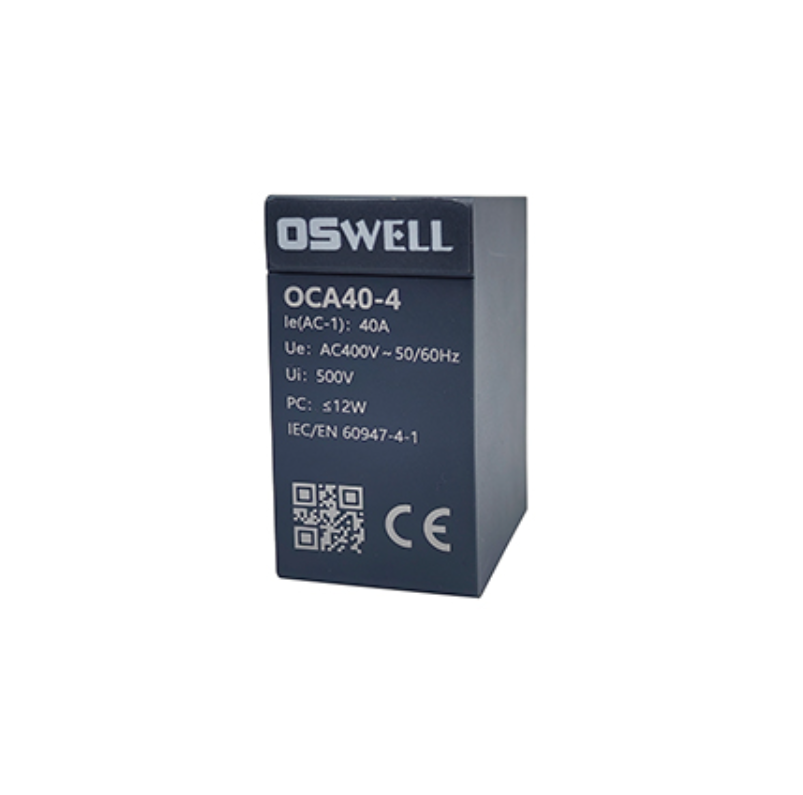
3. What Procurement Teams Should Check Before Selecting a Four-Pole EV Charger Contactor
Once an onboard contactor has been integrated into the PCB, busbar, enclosure, firmware, and protection logic of an EV charger, replacing it later can require significant redesign. Procurement teams should therefore evaluate both the component and the supplier before committing to mass production.
Rated current and voltage capability
Four-pole switching consistency
Initial contact resistance
Temperature rise under continuous load
Electrical switching endurance
Mechanical life
Feedback contact reliability
Coil operating characteristics
PCB and terminal compatibility
Batch-to-batch consistency
Thermal testing is particularly important in 11kW and 22kW chargers. Even small differences in contact resistance can create additional heat during long charging sessions. Buyers should evaluate the contactor inside the actual charger enclosure, because PCB copper area, busbar dimensions, ventilation, nearby components, and ambient temperature can all affect the final temperature.
Switching-cycle testing should include the feedback circuit as well as the main contacts. A reliable supplier should demonstrate stable switching behavior and repeatable feedback after repeated operation, not only on new engineering samples.
Production consistency is another major purchasing factor. Differences in contact material, spring pressure, welding, internal alignment, coil construction, or feedback mechanism can create unit-to-unit variation. For large EVSE programs, stable manufacturing and end-of-line testing can reduce production screening and field-failure risk.
Procurement teams should therefore compare total lifecycle value rather than unit price alone. A well-designed onboard contactor that simplifies assembly, provides dependable status feedback, maintains low temperature rise, and delivers consistent high-volume production can reduce both engineering risk and after-sales cost.
Conclusion
Four-pole onboard AC contactors with feedback can improve the reliability of 11kW and 22kW EV chargers by combining compact multi-pole switching with real contact-state confirmation. This architecture can simplify charger assembly, support three-phase load control, improve fault diagnostics, and help the EVSE controller detect abnormal switching behavior. For procurement teams, the best contactor should be evaluated according to contact resistance, temperature rise, switching endurance, feedback reliability, mechanical integration, production consistency, and supplier testing capability. By selecting a stable onboard contactor platform with dependable feedback, EV charger manufacturers can reduce development risk and build more reliable three-phase charging equipment.