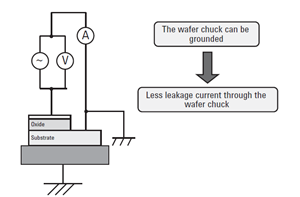
Current transducers are electronic devices that convert electrical current into a measurable signal, often a voltage or frequency, for further processing and analysis. They are fundamental components in modern industrial and automation systems, enabling efficient monitoring and control of electrical flows.
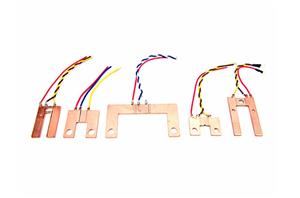
In today's increasingly digital world, the need for accurate and reliable current measurement has become paramount. Current sensors play a vital role in various electronic applications, providing insights into power consumption, energy efficiency, and system performance. In this blog post, we will delve into the significance of current sensors, their working principles, and explore their widespread use in different fields.
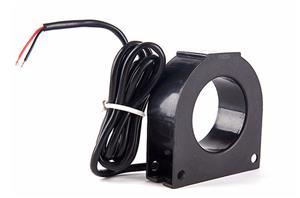
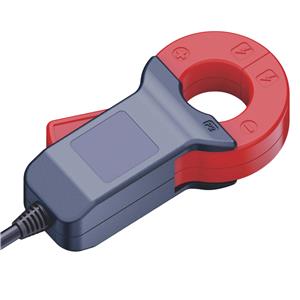
Dc leakage current sensor
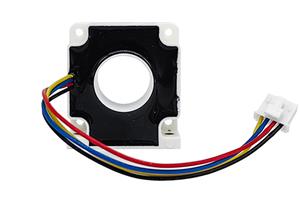
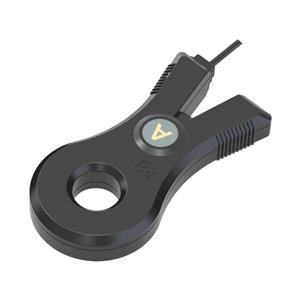
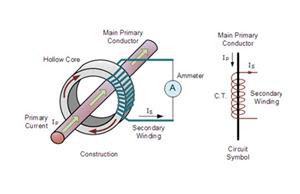
Split-core iron core current transformers are electrical devices used to measure high voltage currents. They can convert high currents into low current outputs and ensure that the current information is not lost during output. This type of transformer consists of an iron core and several coils, with the iron core able to induce current onto the coils which is then stepped down through the circuit.
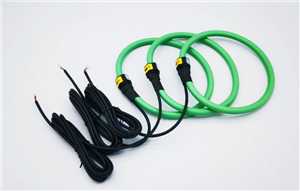
Rogowski coil measurement schematic
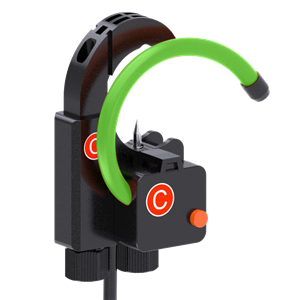
A rogowski coil is a circular coil evenly wound around a non-ferromagnetic material. The output signal is the derivative of the current with respect to time. Through a circuit integrating the output voltage signal, the input current can be truly restored. The coil has the characteristics of real-time current measurement, fast response speed, no saturation, suitable for AC, especially high frequency current measurement.
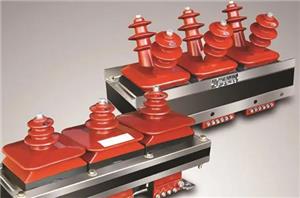
The ring indicates the number of primary and secondary windings of the voltage transformer. One primary winding is removed, and the rest are all secondary windings.
Features ● Output standard DC voltage ● Power-taking CT open-close structure, easy to install and operate ● The power conversion device is fixed with screws, which is easy to install ● Reserved for external energy storage device port
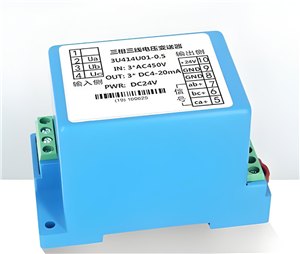
AC Voltage and Current Transducers: Bridging the Gap Between High Voltage and Control Systems
In conclusion, AC voltage and current transducers are far more than simple converters; they are the indispensable, intelligent data highways of modern electrified systems. They provide the critical, safe, and accurate interface that allows digital control systems to "see," analyze, and intelligently manage high-power electrical processes. Their performance directly impacts system safety, control precision, energy efficiency, and asset protection. For system integrators and procurement specialists, selecting transducers is a strategic decision that affects the entire project's intelligence and reliability. Partnering with established component manufacturers like Oswell, who design and build these critical interface devices with a focus on measurement accuracy, robust isolation, and industrial durability, ensures that the bridge between the high-power field and the control room is not just functional, but is a cornerstone of a safe, efficient, and intelligent operational infrastructure.
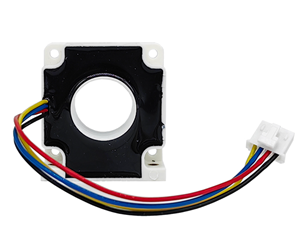
High-precision current transducers are far more than simple current-measuring devices; they are the essential data-acquisition front end for sophisticated power quality analysis. By providing accurate, high-fidelity current signals with wide bandwidth, low phase error, and excellent linearity, they form the foundation upon which disturbances are not only detected but also accurately quantified, analyzed, and understood. This precise measurement capability transforms raw grid data into actionable intelligence, enabling effective disturbance mitigation, ensuring compliance with stringent standards, and facilitating a shift towards proactive and predictive grid management. Investing in such high-performance sensing technology is, therefore, a strategic imperative for ensuring the stability, efficiency, and long-term reliability of modern electrical power systems in an era of increasing grid complexity and sensitivity.
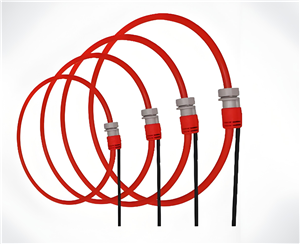
In the evolving landscape of electrical engineering, where waveforms are increasingly complex, the limitations of traditional measurement methods become starkly apparent. Oswell's Rogowski coils transcend these limitations by offering a blend of linearity, dynamic range, frequency response, and safety that is perfectly suited for the modern grid. They are not merely an alternative to traditional CTs; they are an enabling technology for accurate measurement in the age of power electronics and distributed generation, providing the clarity needed to optimize, protect, and innovate within increasingly sophisticated electrical ecosystems.