The function of audio transformer
The audio transformer can realize voltage-converter conversion just like the power transformer, and can also realize audio signal coupling. There are four main functions of audio transformer:Output transformer: used in audio equipment and playback equipment, impedance conversion in the circuit.

Potential transformer or PT can have the same construction as any normal transformer. It has primary & secondary winding. The number of turns in primary windings is greater than the number of turns in the secondary winding because it is a step-down transformer.

In many electronic application scenarios, people will use various types of transformers, whether it is a high-frequency transformer or a low-frequency transformer, the manufacturing process is similar. Next, Zou Gong, a senior design engineer from Shenzhen Yingzhe Technology Co., Ltd., will introduce the general production process of transformers.
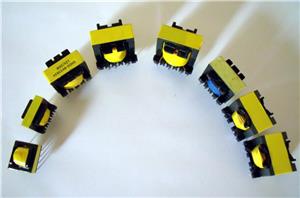
The high frequency transformer is the most important part of the switching power supply. The switching power supply generally uses a half-bridge power conversion circuit. When working, two switching transistors are turned on in turn to generate a 100kHz high-frequency pulse wave, and then the high-frequency transformer is used to step down and output low-voltage alternating current.
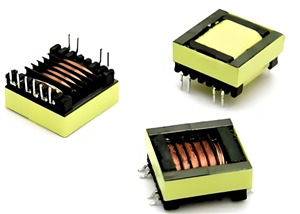
The strategic selection of high-permeability ferrite cores represents a critical engineering decision that directly impacts transformer efficiency, size, and reliability in high-frequency applications. Oswell's systematic approach to core material optimization, combined with advanced manufacturing techniques, demonstrates that 20% loss reduction at 100kHz is achievable through careful balance of material properties and design parameters. As power electronics continue to evolve toward higher frequencies and greater power densities, these core selection strategies will remain essential for developing next-generation energy-efficient systems.