Current Transformers: The "Heart" of Electricity Meters - precisely measuring household electricity usage to ensure fair billing.
Current Transformers: The "Heart" of Electricity Meters - precisely measuring household electricity usage to ensure fair billing.
1. Fundamental Operating Principles and Measurement Accuracy
Current transformers (CTs) serve as the core sensing components in electricity meters, operating on the fundamental principle of electromagnetic induction to accurately measure alternating current. These devices function by producing a reduced secondary current that is precisely proportional to the primary current flowing through the conductor, typically with ratios ranging from 1:1000 to 1:3000. This proportional reduction enables safe measurement of high currents using standard instrumentation. Oswell's CTs achieve remarkable accuracy levels up to 0.1 class, maintaining current error below ±0.2% and phase displacement under 15 arcminutes across the entire 2%-120% of rated current range. The precision engineering ensures that even minimal household electricity consumption—from LED lighting to standby power—is accurately recorded, forming the foundation for fair and transparent billing systems. This technical excellence directly supports utility companies in maintaining measurement integrity while providing consumers with confidence in their electricity bills.
2. Advanced Manufacturing Processes and Quality Assurance
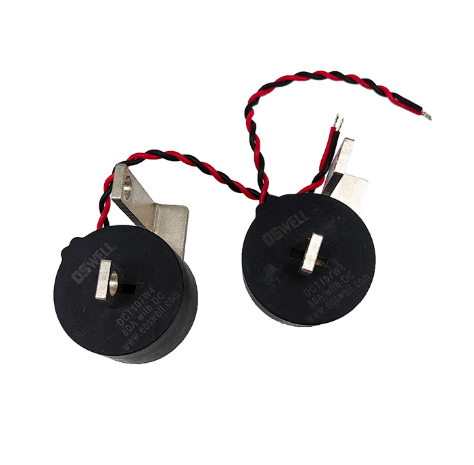
The manufacturing excellence behind current transformers involves sophisticated processes that guarantee consistent performance and long-term reliability. Oswell employs automated winding machines that ensure perfect uniformity in coil placement, eliminating variations that could affect measurement accuracy. The vacuum potting process injects epoxy resin under controlled conditions to remove air bubbles and create a solid, moisture-resistant encapsulation that enhances thermal stability. Each CT undergoes rigorous testing including hipot tests at 4kV for 1 minute between primary and secondary circuits, insulation resistance verification at 1000MΩ (500VDC), and precision calibration against certified standards. These quality control measures ensure that every current transformer delivers dependable performance throughout its operational lifespan, typically exceeding 15 years in residential applications. The use of high-grade materials including specialized core alloys and UL94 V-0 rated plastic housings further contributes to the devices' durability and safety in diverse environmental conditions.

3. Application Diversity and Smart Grid Integration
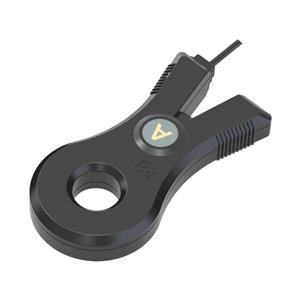
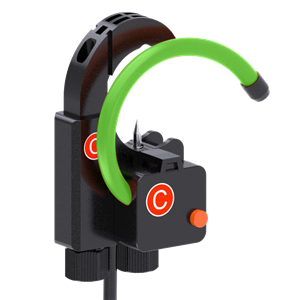
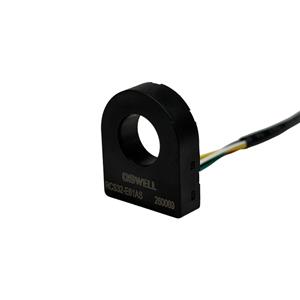
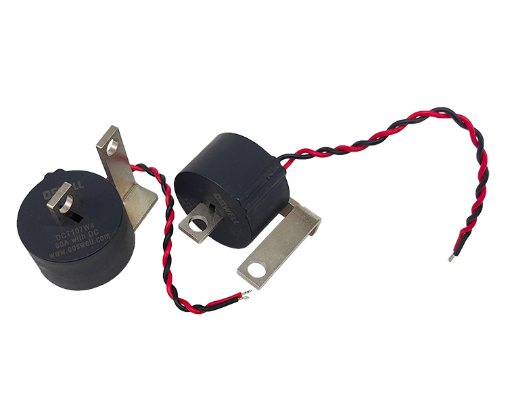
Current transformers demonstrate remarkable versatility across various metering applications, from basic residential monitoring to advanced smart grid systems. In single-phase household meters, compact PCB-mounted CTs with flying lead configurations provide space-efficient solutions for accurate energy measurement. Three-phase versions enable comprehensive power monitoring in commercial and industrial settings, while split-core designs facilitate retrofitting without disrupting existing electrical installations. The integration of DC-immuned CTs addresses modern challenges posed by renewable energy systems and electronic loads that introduce DC components into AC networks. As smart grids evolve, CTs with enhanced frequency response (50Hz-1kHz) support harmonic analysis and power quality monitoring, enabling utilities to optimize grid performance and consumers to manage their energy usage more effectively. This adaptability positions current transformers as essential components in the ongoing transition toward intelligent energy management systems.
Conclusion
Current transformers truly deserve their designation as the "heart" of electricity meters, providing the critical functionality that enables precise energy measurement and fair billing practices. Through advanced engineering, rigorous manufacturing standards, and adaptable designs, these components form the foundation of trustworthy energy management systems. As electrical networks become increasingly complex with the integration of renewable sources and smart technologies, the evolution of current transformer technology will continue to play a vital role in ensuring measurement accuracy, system reliability, and consumer confidence in the evolving energy landscape.