How Oswell’s Automatic Winding Process Ensures CT Consistency
How Oswell's Automatic Winding Process Ensures CT Consistency
Precision Engineering for Superior Electrical Performance
Oswell's automatic winding process represents a significant advancement in the manufacturing of Current Transformers (CTs), ensuring exceptional electrical consistency and reliability. The process begins with automated loading of bobbins onto winding spools, where computer-controlled machinery executes precise wire tension control and layering accuracy. This eliminates the variations inherent in manual winding, such as inconsistent tension or irregular patterns, which can lead to fluctuations in the transformation ratio and phase angle error. The automated system ensures each winding achieves the exact number of turns specified by the design, critical for maintaining the CT's accuracy class (e.g., Class 0.5, 1.0). By guaranteeing uniform winding distribution and precise coil geometry, Oswell's process minimizes magnetic flux leakage and enhances the linearity of the CT's output, resulting in highly accurate current measurement across the entire operating range. This level of precision is essential for applications in energy metering, power quality analysis, and protective relaying, where measurement integrity is paramount.
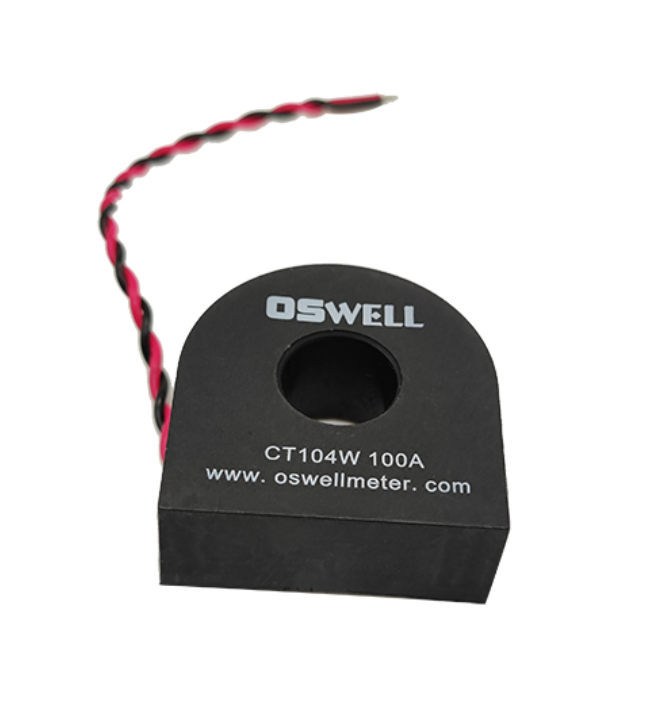
Enhanced Mechanical Stability and Long-Term Reliability
The consistency achieved through Oswell's automated winding extends beyond electrical parameters to mechanical robustness. The automated process produces windings with exceptional structural integrity, where each turn is securely placed adjacent to the previous one without gaps or overlaps. This uniform construction significantly improves the CT's resistance to vibration and mechanical stress, common challenges in industrial environments, transportation systems, and electric vehicle charging infrastructure. Furthermore, the precise winding tension prevents wire loosening over time, a common failure point in manually wound CTs subjected to thermal cycling. This enhanced mechanical stability directly contributes to the long-term reliability of the CT, ensuring stable performance and adherence to its accuracy class throughout its operational lifespan. The result is a product that offers reduced failure rates, lower total cost of ownership, and dependable operation in demanding applications.
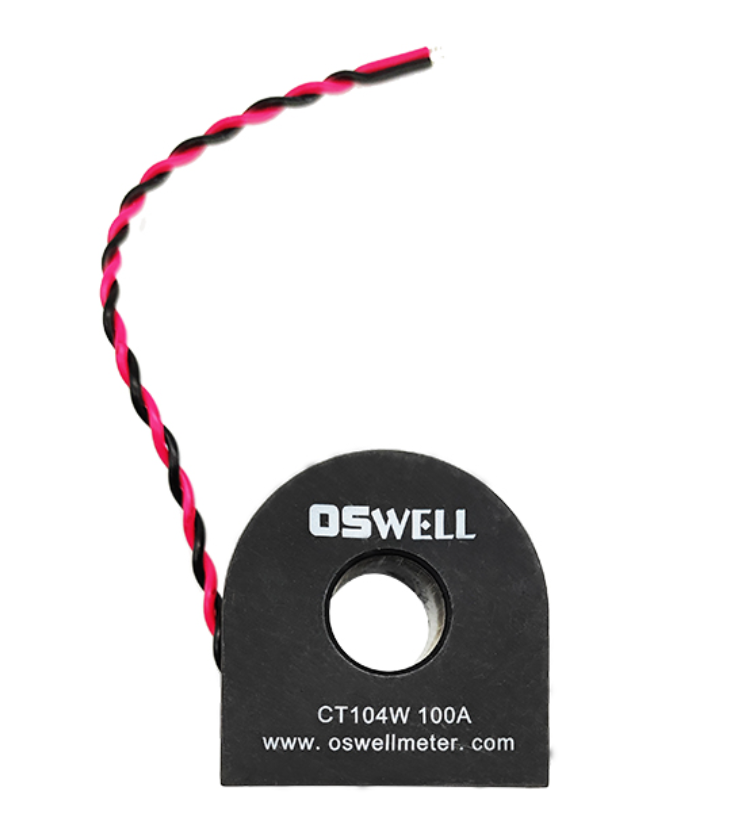
Quality Assurance and Production Efficiency
The implementation of an automatic winding process is integral to Oswell's comprehensive quality assurance system. Each stage of the winding operation is monitored and controlled by programmable logic controllers (PLCs), which log critical parameters such as winding speed, tension, and number of turns for every CT produced. This creates a traceable production record and facilitates statistical process control. The automation eliminates human error, ensuring that every CT, from the first to the thousandth, exhibits identical performance characteristics. This high level of manufacturing consistency is crucial for customers who require large volumes of CTs with guaranteed interchangeability. Moreover, the automation significantly boosts production efficiency, enabling higher output rates while maintaining stringent quality standards. This combination of uncompromising quality and efficient manufacturing allows Oswell to deliver highly reliable and consistent current transformers that meet the precise demands of global power management and metering applications.
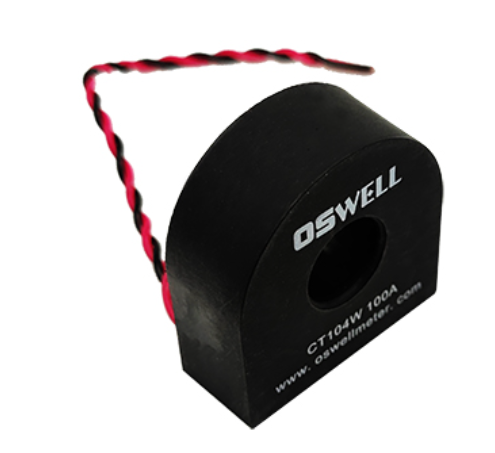
Oswell's automatic winding process is a cornerstone of their manufacturing excellence, directly translating into superior CT performance. By ensuring precision in electrical characteristics, enhancing mechanical durability, and guaranteeing production consistency, this automated approach delivers current transformers that are accurate, reliable, and built to last. This commitment to advanced manufacturing is why Oswell's CTs are trusted in critical applications worldwide, providing the foundation for accurate energy measurement and safe electrical system operation.