Latching Relays for Energy Meters: Enhancing Lifespan and Efficiency
Latching Relays for Energy Meters: Enhancing Lifespan and Efficiency
1. Fundamental Operating Principles and Energy-Saving Advantages
Latching relays represent a significant advancement in energy meter technology due to their unique bistable mechanism that maintains contact position without continuous power consumption. Unlike conventional relays that require constant coil excitation to remain energized, latching relays utilize permanent magnets or mechanical locking mechanisms to hold their state after a brief pulse (typically ≤15ms). This fundamental difference translates to substantial energy savings, as the relay only consumes power during state transitions—critical for battery-powered or energy-harvesting smart meters. Oswell's latching relays achieve remarkable power efficiency with coil pickup power as low as 2.1VA and maintain zero power consumption in both open and closed states. The relay's ability to remember its last position even during power outages ensures uninterrupted meter functionality while extending operational lifespan beyond 100,000 mechanical cycles. This technology particularly benefits three-phase energy meters where multiple switching operations occur daily, contributing to overall grid efficiency.
2. Technical Specifications and Performance Enhancements
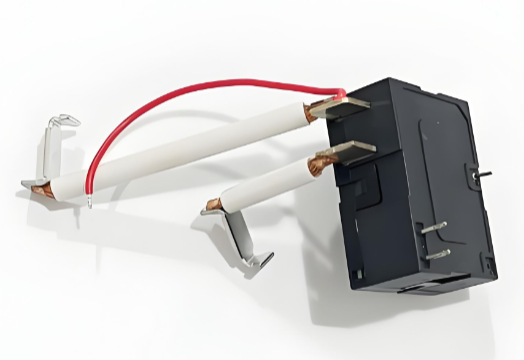
The technical superiority of latching relays manifests in several key parameters that directly impact meter performance. Oswell's designs feature contact arrangements supporting 1A, 1B, 1C configurations for single-phase meters and 3P variants for three-phase applications, with switching capacities ranging from 10A to 120A at 250-277VAC. The relays demonstrate exceptional electrical endurance, achieving up to 100,000 operations at rated load while maintaining contact resistance below 50mΩ. Advanced materials including silver-alloy contacts and flame-retardant PC housings (UL94 V-0 rated) ensure reliable performance across temperature extremes from -40℃ to +85℃. Dielectric strength reaches 4000VAC between coil and contacts, providing robust isolation for meter electronics. These relays incorporate arc-quenching technologies that minimize contact erosion during high-current interruptions, while optimized magnetic circuits reduce operate/release times to under 20ms for single-phase and 30ms for three-phase units. The integration of shunts and current transformers within relay assemblies enables precise current measurement while reducing external component count.
3. Application-Specific Designs and Reliability Engineering
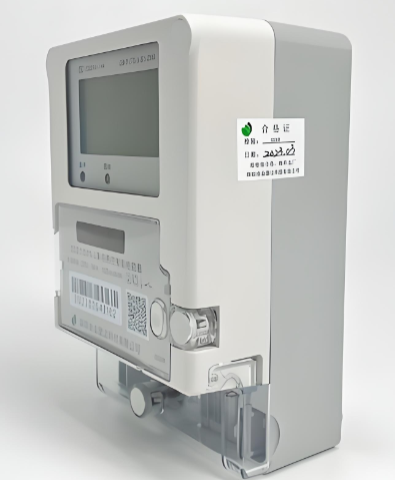
Application-specific adaptations make latching relays particularly suitable for diverse metering scenarios. For residential single-phase meters, compact PCB-mounted relays (e.g., 18.6×10.3mm footprint) provide space-efficient solutions with 60A switching capability. Three-phase industrial meters utilize larger relays with 100-120A capacity featuring reinforced contacts and enhanced arc management. Oswell's ANSI-compliant designs incorporate test buttons and optical indicators for field verification, while UC2/UC3/UC4 certifications ensure compliance with international metering standards. Reliability engineering focuses on vibration resistance (>10G), shock tolerance, and humidity immunity (up to 95% RH) for harsh environment operation. The relays' latching mechanism demonstrates consistent performance across voltage fluctuations (±20% nominal coil voltage), with automatic position detection circuits preventing erroneous switching. These features make latching relays indispensable in smart grid applications where remote disconnect/reconnect capabilities enable demand response programs and theft prevention.
Conclusion
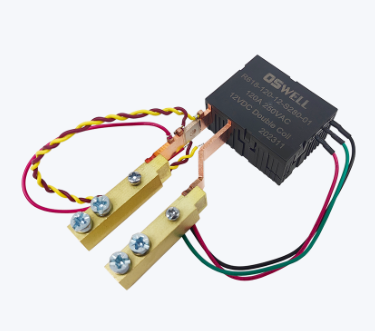
Latching relays have revolutionized energy meter design by combining zero-power holding capability with robust switching performance. Their ability to enhance meter lifespan through reduced power consumption and mechanical durability makes them essential components in modern metering infrastructure. As smart grids evolve toward greater efficiency and functionality, latching relays will continue to play a pivotal role in enabling advanced features while maintaining the reliability expected from critical grid components.