Material Science Behind Oswell's High-Stability Shunt Resistors
Material Science Behind Oswell's High-Stability Shunt Resistors
The Limitations of Traditional Materials
In the precise world of current measurement, particularly for demanding applications like Battery Management Systems (BMS) and DC energy metering, the stability of a shunt resistor is paramount. Early or cost-sensitive designs often utilized materials like brass for their conductive properties. However, brass, a copper-zinc alloy, reveals significant drawbacks under operational stress. Its relatively high Temperature Coefficient of Resistance (TCR) means its electrical resistance fluctuates noticeably with temperature changes. In environments with variable thermal conditions—such as inside an EV battery pack or a solar inverter—this instability introduces measurement errors. These inaccuracies can cascade into critical issues: incorrect state-of-charge readings, inefficient battery utilization, or flawed energy billing data. The quest for precision necessitated a material revolution, moving beyond the inherent limitations of traditional alloys to seek a solution that could deliver consistent performance regardless of thermal dynamics.
Manganin – The Engine of Stability
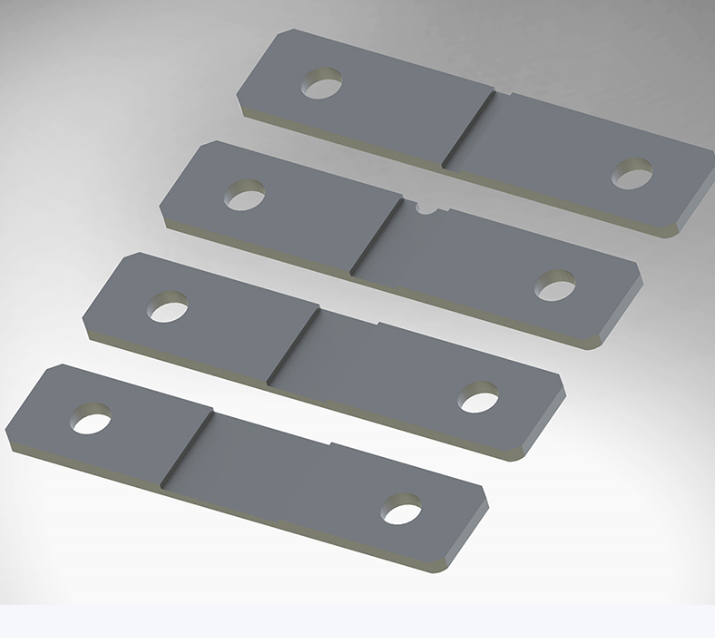
Oswell's answer to this challenge lies in the sophisticated use of Manganin, a copper-manganese-nickel alloy renowned in precision electronics. The core advantage of Manganin is its exceptionally low and predictable TCR. Oswell engineers leverage this property to manufacture shunt resistors with TCR values as low as ±50 ppm/°C, and even down to ±20 ppm/°C for high-precision models. This minimal change in resistance over a wide temperature range (e.g., -40°C to +85°C) is the cornerstone of stability. The alloy's low thermal Electromotive Force (EMF) against copper further minimizes parasitic voltages at connections, ensuring that the measured voltage drop across the shunt is purely due to the current flow. Furthermore, Manganin exhibits excellent long-term stability and low sensitivity to mechanical stress, maintaining its calibrated resistance value over years of service. By selecting and processing high-grade Manganin, Oswell transforms this advanced material into the reliable "engine" that powers accurate current sensing in mission-critical systems.
From Alloy to Application – Oswell's Precision Engineering
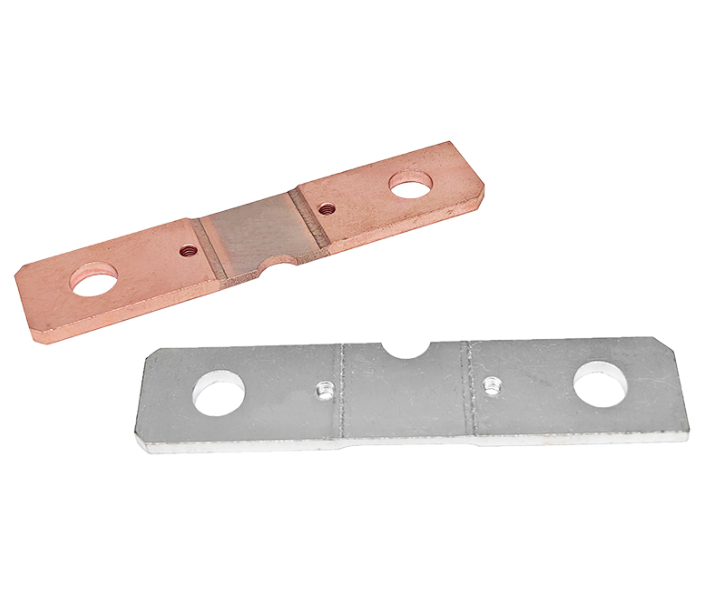
Possessing the right material is only half the battle. Oswell's expertise shines in the precision engineering that transforms Manganin alloy into a high-performance component. The process begins with high-purity raw materials, followed by specialized smelting and rolling to achieve a uniform microstructure. Advanced photochemical etching or laser trimming techniques are then employed to form the precise resistance pattern, allowing for on-target resistance value adjustment with tolerances as tight as ±0.5%. To protect the delicate Manganin element from environmental and mechanical damage, Oswell employs robust encapsulation, such as epoxy resin potting or ceramic coating. This encapsulation ensures moisture resistance, mechanical strength, and long-term reliability. Rigorous testing, including thermal cycling, power aging, and measurement under various loads, validates the performance of every shunt resistor. This end-to-end control over material science and manufacturing processes allows Oswell to deliver shunt resistors that provide unwavering accuracy for electric vehicle BMS, renewable energy systems, and industrial controls.
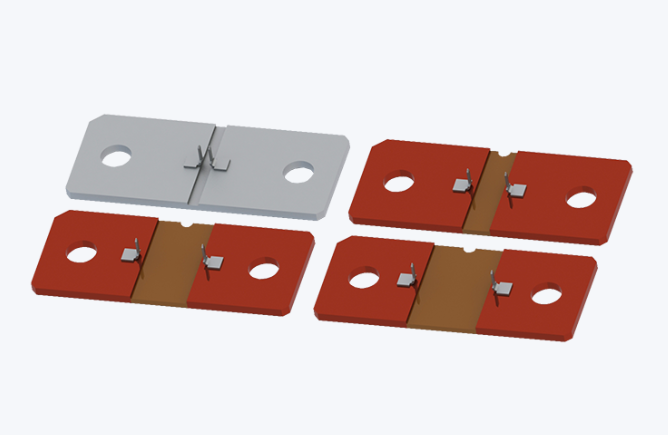
The evolution from brass to Manganin encapsulates Oswell's commitment to scientific advancement and precision. It's a journey from acceptable conductivity to engineered stability, where material science is meticulously applied to solve real-world measurement challenges. By mastering the properties of Manganin and coupling it with rigorous manufacturing discipline, Oswell establishes its shunt resistors as pillars of reliability in applications where measurement accuracy is non-negotiable. This focus on foundational component excellence ultimately powers smarter, safer, and more efficient electrical systems across the globe.