Shunt Sensors in BMS: The Key to Accurate Battery Monitoring
Shunt Sensors in BMS: The Key to Accurate Battery Monitoring
Precision Measurement: The Core of Battery Safety and Performance
At the heart of every reliable Battery Management System (BMS) lies a critical component for current measurement: the shunt sensor. This deceptively simple device, often a low-resistance precision resistor, is the primary tool for monitoring current flow into and out of the battery pack. Its core function is to provide the BMS with a highly accurate, real-time voltage signal proportional to the current. This data is fundamental for calculating the most critical state: the State of Charge (SOC). An inaccurate SOC reading, stemming from poor current measurement, can lead to overcharging, deep discharging, accelerated battery degradation, and even safety hazards like thermal runaway. High-precision shunt sensors, like those manufactured by Oswell with advanced manganin or alloy materials, offer exceptionally low temperature coefficients (e.g., ±25ppm/°C). This ensures that the resistance value, and thus the current reading, remains stable across the wide operating temperature range (-40°C to +85°C) typical of EV and energy storage applications, forming the bedrock of battery safety and predictable performance.
Technological Excellence: Materials, Design, and Integration
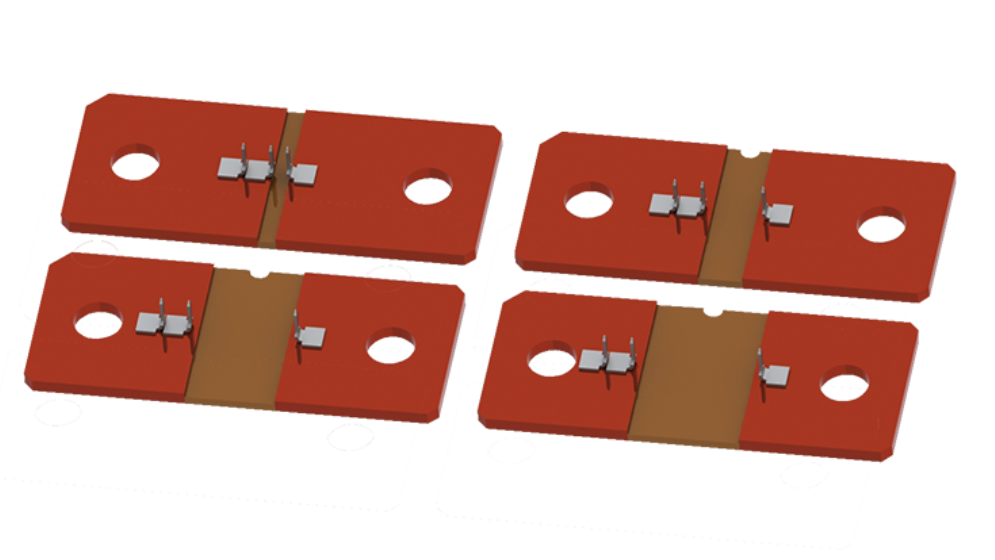
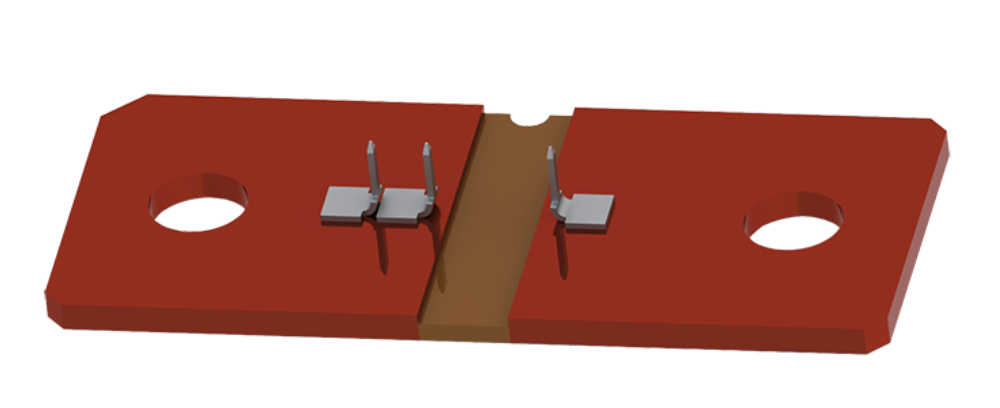
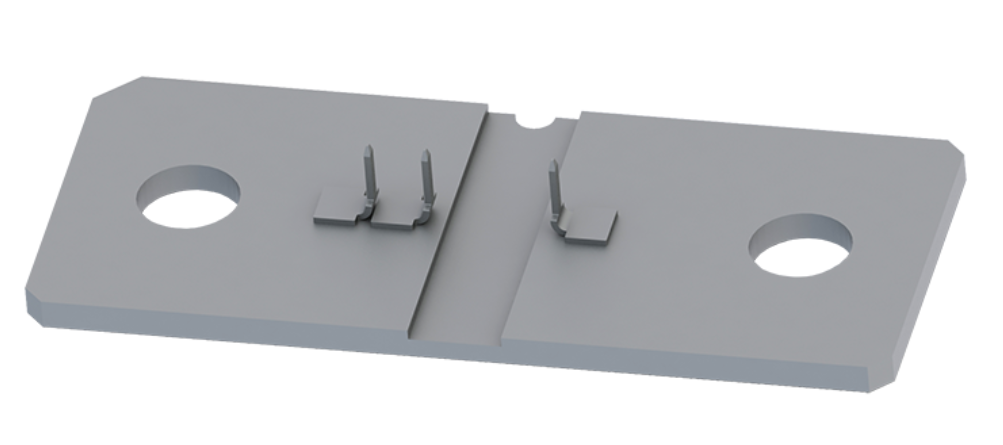
The accuracy and reliability of a shunt sensor are not accidental but are the result of sophisticated engineering. Key to performance is the choice of resistance alloy material. Materials like manganin or zeranin are favored for their low Temperature Coefficient of Resistance (TCR), ensuring measurements are minimally affected by ambient heat. Furthermore, the mechanical design is crucial. A robust, one-piece solid construction, as opposed to a strip-style design, provides superior heat dissipation and long-term resistance stability. This is vital for handling high, continuous currents without measurement drift. Manufacturers like Oswell leverage precision machining and laser trimming to achieve tight tolerance resistance values (e.g., ±0.5%). The integration of high-quality current sense terminals and the use of a four-wire (Kelvin) connection method eliminate the influence of contact resistance and lead wire voltage drops, ensuring the voltage signal sent to the BMS analog-to-digital converter (ADC) is a pure representation of the shunt's voltage drop, maximizing measurement accuracy.
Enabling Advanced BMS Algorithms and System Longevity
The high-fidelity data provided by a precision shunt sensor empowers the BMS to execute complex algorithms that directly impact battery health and system efficiency. Accurate current integration (Coulomb counting) over time is the primary method for SOC estimation. Any small error in current measurement compounds over time, leading to significant SOC drift. A high-accuracy shunt minimizes this drift. Furthermore, precise current monitoring is essential for State of Health (SOH) calculation, which tracks battery capacity fade and internal resistance growth. It also enables sophisticated cell balancing strategies by accurately measuring the current flowing during active balancing processes. In applications like energy storage systems (ESS) and electric vehicle battery packs, the shunt sensor's data is critical for over-current protection (OCP), ensuring the system operates within safe limits. By providing a stable and trustworthy "truth" for current, a quality shunt from a supplier like Oswell allows the BMS to optimize charging cycles, prevent harmful operating conditions, and ultimately extend battery lifespan, maximizing the return on investment for the entire system.
Far from being a simple passive component, the shunt sensor is a pivotal technology that dictates the accuracy and intelligence of a Battery Management System. Its role in providing precise, stable, and temperature-resilient current data is irreplaceable for calculating State of Charge, State of Health, and implementing protective controls. Investing in high-quality, precision-engineered shunt sensors, such as those from Oswell, is a foundational decision that safeguards battery safety, unlocks optimal performance, and ensures the long-term reliability and value of any energy storage or electric mobility system.