3-Phase Latching Relays: Uses in Load Shedding and Energy Management
3-Phase Latching Relays: Uses in Load Shedding and Energy Management
The Critical Need: Managing Three-Phase Demand and Ensuring Grid Stability
Modern industrial facilities, commercial buildings, and data centers are powered by three-phase electrical systems, which are efficient for distributing high power. However, this creates a significant challenge: managing peak demand charges, which are often the largest component of an electricity bill. Utilities impose these charges based on the highest average power drawn during a billing period, and they are designed to offset the cost of maintaining infrastructure capable of meeting these short-term peaks. Uncontrolled peaks can also strain the local grid, potentially leading to voltage sags or the need for costly infrastructure upgrades. Load shedding and automated energy management are the strategic solutions. These systems proactively or automatically disconnect non-essential loads (e.g., non-critical HVAC, water heaters, industrial process segments) during periods of peak demand or high energy costs. The execution of this critical switching function requires a reliable, durable, and energy-efficient component capable of handling the high currents of three-phase circuits. This is where the three-phase latching (bistable) relay becomes indispensable. It serves as the robust, intelligent actuator that physically implements the energy manager's commands, translating software-based control strategies into real, measurable reductions in power consumption and demand.
The Technology Advantage: Why Latching Relays Are Optimal for This Role
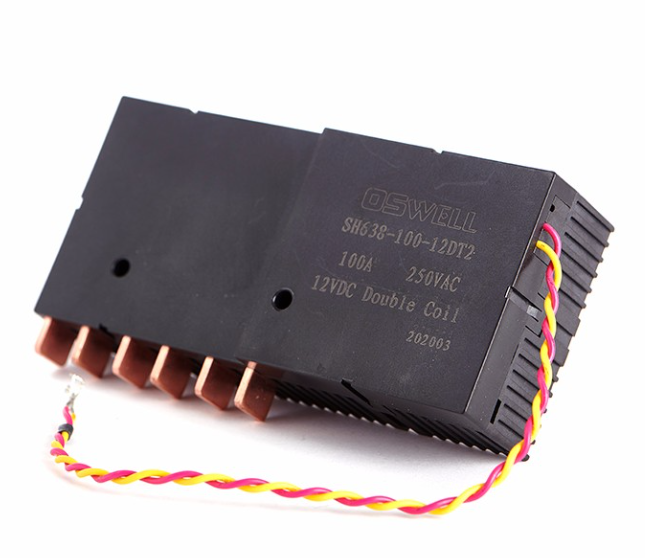
The unique operating principle of a magnetic latching relay makes it ideally suited for the demanding, repetitive switching tasks in energy management systems. Unlike a standard three-phase contactor that requires continuous coil energization to maintain its closed state, a latching relay uses a permanent magnet or a remanent magnetic circuit. It requires only a brief, low-energy pulse of current (of correct polarity) to change its contact state. Once switched ON or OFF, it mechanically latches in that position with zero power applied to its coil. This zero-power holding characteristic is transformative. In a system that may need to switch loads multiple times a day based on pricing signals or demand thresholds, a standard contactor would waste significant energy in the form of continuous coil heat. A three-phase latching relay, however, consumes power only during the millisecond-long switching events. This leads to substantial operational energy savings, reduces heat buildup inside control panels, and makes the system viable for battery-backed or solar-powered remote installations. Furthermore, the absence of constant coil current eliminates a primary source of heat-induced wear, leading to a much higher mechanical and electrical lifespan (often exceeding 100,000 operations) and superior long-term reliability. Its inherent bistable memory also ensures that the relay's state is preserved during a power outage, maintaining the intended load configuration (either shed or connected) when power returns without requiring a complex reset.
Integration and System-Wide Benefits: From Cost Savings to Grid Support
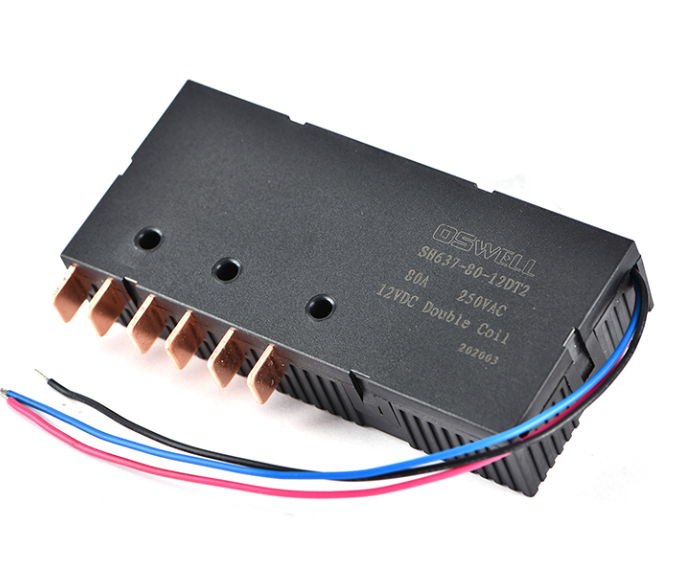
Integrating three-phase latching relays into a comprehensive Energy Management System (EMS) or Building Automation System (BAS) unlocks substantial financial and operational benefits. The relays act as the reliable final control element for executing strategies like demand response, where a facility automatically reduces load in response to a utility signal to earn financial incentives. They enable time-of-use optimization, automatically switching off discretionary loads during high-tariff periods. The system's ability to precisely control large three-phase loads provides a powerful tool for peak shaving, effectively flattening the facility's demand profile and avoiding costly demand charges. Beyond direct cost savings, this capability provides grid support services. By reducing aggregate demand during system-wide peaks, facilities equipped with such systems contribute to overall grid stability and defer the need for new power plants. For component manufacturers supplying the industrial and commercial sectors, like Oswell E-Group, the value proposition is clear: providing reliable, long-life switching components that enable these intelligent systems. The relay's high-current switching capability, pulse-driven interface (easy for modern PLCs and controllers to manage), and robust construction for industrial environments make it a foundational building block. The result is a win-win: end-users achieve lower energy costs and enhanced sustainability, while utilities gain a more predictable and manageable load profile, accelerating the transition to a smarter, more resilient electrical grid.
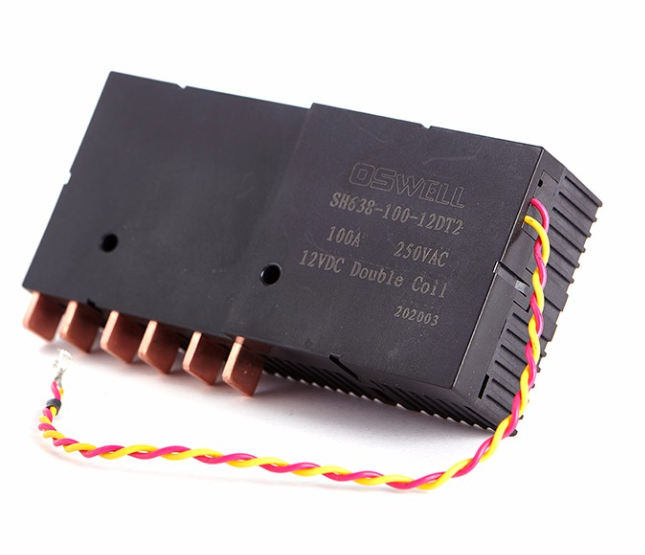
Three-phase latching relays are far more than simple switches; they are critical, intelligent actuators that physically enable modern energy management and grid-interactive strategies. By combining the robust, high-current switching capability required for industrial loads with the ultra-low holding power and exceptional longevity of latching technology, they solve a core engineering challenge. Their integration into automated systems allows facilities to transition from passive energy consumers to active participants in demand-side management. This not only delivers significant and immediate cost savings through peak shaving and tariff optimization but also contributes to broader grid stability and efficiency. As industries and businesses worldwide intensify their focus on energy cost control and sustainability, the three-phase latching relay stands out as a key technological enabler, turning sophisticated energy management algorithms into tangible, reliable, and profitable action.
Related product and article resources
For procurement comparison and technical evaluation, readers can continue with these related product pages and supporting articles.